Monday, November 21, 2011

no contest

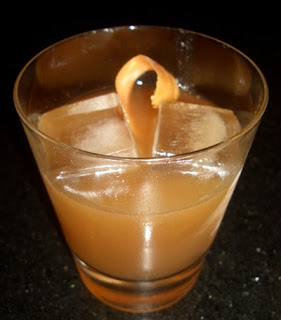
1 oz Smith & Cross Rum
1 oz Ruby Port (Taylor Fladgate)
3/4 oz Lime Juice
3/4 oz Simple Syrup 1:1 (Jaggery)
1/4 oz Angostura Bitters
1/4 oz Peychaud's Bitters

Shake with ice and strain into a Tiki or Collins glass filled with crushed ice. Garnish with a pineapple wedge (omitted).

Two Fridays ago, I made the No Contest that appeared in TastingTable's Best Cocktails of 2011 article. The drink was created by Paul McGee of Chicago's Whistler and was described as "the thinking drinker's Tiki drink." With a structure of an embittered Bishop calling for Smith & Cross Rum, I was definitely game.
The No Contest began with the aroma of Smith & Cross' funky rum notes along with some rich grape ones from the port. The slightly sweet sip paired up the fruitier elements of the lime and grape, and the swallow got a lot drier with the Smith & Cross flavors, Anogstura's allspice, and Peychaud's anise notes shining through. Overall, the No Contest was rather intense for the Tiki genre, and I was quite pleased at how well the large amount of bitters complemented the ruby port.

Sunday, November 20, 2011

pink squirrel

This month's Mixology Monday theme, "Retro Redemption!" (MxMo LXIII), was picked by Jacob Grier of the Liquidy Preference blog. Jacob's challenge was "to revive a drink from mixology's lost decades. Perhaps you feel one of these drinks has a bad rap; tell us why it deserves another shot. Or maybe the original concoction just needs a little help from contemporary ingredients and techniques to make it in the big leagues. If so, tell us how to update it."

When I read this theme, I immediately thought of a post I had wanted to do for a while. At Tales of the Cocktail 2010 at one of the informal tasting events, I had a chance to try Matt Rowley's Ratafia aux Noyau that was simply glorious. Like old fashioned crème de noyau, his was crafted from the aromatic and flavorful kernels of peach pits. Despite the glorious almond flavor from the stones, the FDA frowns upon the small amount of cyanide-creating compounds in them, and all crème de noyau is either distilled after infusion, such as Noyau de Poissy, or artificially flavored and colored, such as the bottom shelf bottles that these days only find their way into Alabama Slammers. Moreover, one of the talks I attended at Tales that year was "Bariana: the Golden Age of French Cocktails." In the classic French drink book Bariana, they called for dashes of noyau like Maloney called for apricot brandy bell-ringer rinses. My efforts for locating a bottle or scoring a sample of Noyau de Poissy were for naught, and in wanting to make some drinks from Bariana, I started harvesting peach pits to make Rowley's ratafia.

After a decent effort during peach season that year, I gathered up enough kernels to make a scaled down version of the recipe Rowley used from the Picayune's Creole Cook Book from 1910:
Peach Kernel Ratafia
• 1/3 oz Peach Kernels
• 5 1/3 oz Brandy
• 3 1/3 oz Sugar
• 2 2/3 oz Water
Pound the kernels along with some of the stones and steep them for a month in brandy. Add syrup made from sugar and water, mix, filter, and bottle.
Unfortunately, the bottle of ratafia sat on the shelf for over a year until this event. The other thing that has sat around gathering dust is a box of powdered drink packets from my parents' house that Andrea and I rescued. While there is no date stamped, my guess is that they are from the late 1960s to mid 1970s. One of these glorious packets is for a Pink Squirrel. Pink Squirrels when mixed without a powdered packet require crème de noyau, so everything seemed to fall into place here.

Gary Regan in The Joy of Mixology traced the Pink Squirrel back to the 1966 edition of Old Mr. Boston and he claimed that the drink was still going strong when he bartended at New York's Drake's Drum in the mid 1970s. Gary provided the recipe as:
Pink Squirrel
• 1 oz Crème de Noyau
• 1 oz White Crème de Cacao
• 1 oz Cream
Shake with ice and strain into a cocktail glass.
Made like this, the drink was not pink for our liqueur was not artificially colored, but it had a wonderful almondy and vanilla nose from the infusion. The sip was sweet and creamy, and the swallow was almondy and chocolate. Overall, it had the format of an Alexander and made for a decent dessert cocktail.
The scarier prospect was the Holland House mix that was possibly as old as I am. Here are the instructions and please note the packet's ingredients.
Pink Squirrel
• 1 1/2 oz Milk or Half & Half
• 1 tsp Sugar
• 1 Packet
• 1 1/2 oz Vodka
Shake or blend with ice. Strain into a cocktail glass. I stirred sugar, packet, and cream until dissolved. Added rest of ingredients and ice, shook, and strained into a cocktail glass.
Ingredients of Packet: sugar, natural flavors, artificial flavors, silicon dioxide, xanthan gum, artificial color.
The strangest part about this Pink Squirrel was that it smelled like Strawberry Quik. It was not almondy or chocolaty in the least. It was similarly creamy; however, it was not as sweet as expected despite additional sugar being added to a packet that listed sugar as its first ingredient. Just like it smelled, the swallow presented a very chemical Strawberry Quik taste. After a few sips shared between Andrea and me, this drink got sinked. Perhaps a better way to demonstrate the Pink Squirrel of that era would be to purchase bottom shelf liqueurs, but then I would have been stuck with them unless I somehow located nips of noyau or bombed the bottles later as a "gift" at a party.
Definitely, made with decent liqueurs in Alexander format, the Pink Squirrel is passable. It lacks the complexity of the Golden Cadillac, but the aroma of the ratafia made the experience worth while. Thank you to Jacob for reviving a dusty relic, and to Paul Clarke for helping me raid my parents' liquor cabinet again this month.

Friday, November 18, 2011

journey through the night

2 oz Tru Organic Gin
1 1/4 oz Plymouth Sloe Gin
1/4 oz Maraschino Liqueur
1/2 oz Lime Juice

Shake with ice and strain into a cocktail glass.

On Thursday last week after the Science of Cocktails lecture at Harvard, a few of us caught a nightcap at Russell House Tavern. When I first saw the Journey Through the Night a few months ago, I inquired about the proportions for I was wondering whether it was an equal parts Last Word variant. Alas, it was not and my attention was drawn away to other tempting libations on the menu on my next few visits. That night it called out to me again, and I answered. While the name reminded me of Louis-Ferdinand Céline's Journey to the End of the Night, it may be named after a book by Dutch author Anne de Vries. However, I did not have a chance to ask what inspired bartender Kyle Powell when he created it.
The Journey Through the Night showcased the Tru Organic Gin's aroma along with some Maraschino and sloe berry notes. The sip presented the fruitiness of the sloe gin and lime, and the swallow ended rather crisp and dry with gin flavors followed by Maraschino and additional lime notes on the aftertaste.

chappaquiddick

1 oz Berkshire Mountain Distillers Ragged Mountain Rum
1 oz Ron Bermudez Rum
1 oz Lime Juice
1/2 oz Honey Syrup
1/2 oz Falernum
1 dash Bittermens Tiki Bitters

Shake with ice and double strain into a cocktail coupe glass. Garnish with freshly grated nutmeg.

For my second drink at Eastern Standard, I was drawn to the Chappaquiddick on the Tikisms section of the menu. It was described as a Daiquiri variation, and its falernum reminded me of the Royal Bermuda Yacht Club. I was a little surprised that they would name a drink after the location of a famous dark political incident, so I asked bartender Naomi Levy why the drink was called that. She explained that Kevin Martin created the drink and how he was inspired by the beauty and tranquility of the Japanese gardens on the island. To Kevin, it was the closest to an island paradise as one could get in Massachusetts.
The nutmeg garnish contributed greatly to the drink's aroma along with lime and later clove notes as well. The sip was an elegant balance of honey and lime akin to an Air Mail, and the swallow presented the rum, falernum's clove, and Tiki bitters flavors. As the Chappaquiddick warmed up, it turned a little tarter on the balance.

Thursday, November 17, 2011

kyselý

1 1/2 oz Becherovka Liqueur
3/4 oz Lemon Juice
3/4 oz Spiced Syrup (*)
1 Egg White

Shake once without ice and once with. Double strain into a rocks glass and garnish with Fee's Whiskey Barrel Aged Bitters.
(*) Contains star anise, clove, and cinnamon.
Wednesday last week, Andrea and I ventured over to Eastern Standard for dinner. For my first drink, I requested the Kyselý from bartender Kevin Martin. Kevin explained that kyselý means "sour" in Czech, and this drink was akin to the Becherovka version of a Pisco Sour. The drink appeared in the egg section of the menu which had the humorous warning of "consuming raw eggs may increase your risk of being held in high regard by the bar!" For egg-fearers, the Eastern Standard classic, the Metamorphosis -- the Becherovka Bee's Knees with honey and lemon, was also on the menu. The Kyselý began with a spiced aroma that contained cinnamon, star anise, and clove notes. The spice continued in the sweet lemon sip with cinnamon and in the swallow with clove and star anise.

pequod sour

Juice of 1/2 Lemon (1/2 oz Lemon Juice)
One-half spoon Sugar (1 tsp)
Two sprigs Mint
One-half Water (3/4 oz)
One jigger Whisky (1 1/2 oz Sazerac 6 Year)

Stir juice, water, mint, and sugar until the sugar is dissolved. Add whiskey and stir again. I opted to remove the mint and pour into a glass. The original recipe calls for garnishing with fruit but I went with a fresh mint sprig instead. This is a room temperature drink.

Two Tuesdays ago, I was flipping through the Old Waldorf-Astoria Bar Book and spotted another room temperature drink since the Creole Lady I found there last time was so delightful. While most room temperature drinks are spirits based, the Pequod Sour incorporates citrus into the mix. Pequod was the name of Captain Ahab's fictitious whaling ship in Herman Melville's Moby Dick and derived from the Pequot Indian tribe that inhabited parts of New England not terribly far from where the Waldorf-Astoria stands in New York.
The Pequod Sour presented a rye and mint aroma that led into a somewhat tart malt and lemon sip. The drink smoothed out on the swallow and showcased the rye's barrel notes and ended with mint. Overall, the Pequod Sour was simple but elegant, and the addition of water certainly aided in softening the drink.

Wednesday, November 16, 2011

los muertos

1 1/2 oz Blanco Tequila (Espolón)
1 oz Sweet Vermouth (Vya)
1 oz Lime Juice
1/2 oz Grapefruit Marmalade (Mediterranean Organic Pink)

Shake with ice and double strain into a Double Old Fashioned glass full of fresh ice. Garnish with a grapefruit zest.

Two weekends ago, I finally spotted and purchased a jar of grapefruit marmalade at Harvest Co-op in Central Square so I could make a recipe that appeared in the TastingTable Best Cocktails of 2011 list. The Los Muertos was created by Alex Smith of Gitane's in San Francisco. Beside the marmalade, there was the pairing of sweet vermouth and lime which reminded me of the Fig Leaf Cocktail, but instead of rum, this drink was tequila based. Or perhaps with the dual citrus components and the sweet vermouth, it later reminded me a little of the whiskey-based Oriental.
The Los Muertos began with a grapefruit aroma that was punctuated by the tequila's agave notes. The sip showcased the citrus elements with a pleasing grapefruit and lime flavor, and the swallow went more vegetal with tequila and vermouth notes. When I first saw the recipe, it looked like it needed more sugar especially with our grapefruit marmalade; while the drink was indeed on the tart side, it was refreshingly so. Andrea commented that the Los Muertos was "smooth... all the flavors are very rounded" which I attribute in part to the effect of the marmalade's pectin.

bourbon milk punch

1 1/2 oz Four Roses Bourbon
1 1/2 oz Milk
1/2 oz Diplomatico Rum
1/2 oz Cinnamon Syrup
2 dash Housemade Aromatic Bitters

Shake with ice and strain into a Highball glass containing fresh ice. Garnish with freshly grated nutmeg.

The second drink I had at Deep Ellum two Sundays ago was the Bourbon Milk Punch which Andrea enjoyed last time we were there. Milk Punches of this sort appear in Jerry Thomas' 1862 Bartenders Guide: A Bon Vivant's Companion and became popular brunch drinks especially in New Orleans. More modern versions often go the vanilla-flavored route, but the Deep Ellum took the cinnamon path. The one bartender Jennifer Salucci made me began with a nutmeg aroma than preceded the sip full of the milk's richness and the aged rum's caramel notes. The swallow then presented the Bourbon, cinnamon, and the bitters' spice flavors, and I was quite impressed at how well the whiskey and cinnamon balanced each other in intensity.

Tuesday, November 15, 2011

the trenton

1 3/4 oz Laird's Applejack
1/2 oz Cinnamon Syrup
1/2 oz Cardamaro
1/4 Cinzano Sweet Vermouth
2 dash Herbsaint
2 dash Housemade Aromatic Bitters
2 dash Peychaud's Bitters

Stir with ice and strain into a rocks glass. Twist an orange peel over the top and discard.

Two Sundays ago, Andrea and I went over to Deep Ellum for drinks. The first cocktail I had was the Trenton that recently appeared on their menu. After having the combination of apple brandy and Cynar with the Michigander, I was ordering a drink made with applejack and Cardamaro. Instead of Cynar's artichokes, this Italian liqueur is made with cardoon, which is a relative of artichokes, along with blessed thistle and other botanicals. I wrote about Cardamaro in a post about Russell House Tavern's Sacrilege, a drink which had a similar structure to the Michigander with its lemon juice and honey syrup. To bolster this liqueur and the applejack, the Trenton included a variety of other spiced and herbal elements including cinnamon syrup and Herbsaint.
The Trenton that bartender Jennifer Salucci made for me presented an herbal aroma from the Cardamaro, a grape one from the sweet vermouth (or perhaps the Cardamaro's wine base), and orange oils from the twist. As the drink warmed up, the Herbsaint's anise scent soon entered into the equation. While the sip was mostly from the applejack, the swallow was rather complex with Cardamaro and cinnamon flavors at the beginning and anise notes from the Herbsaint and Pechaud's Bitters at the end.