Showing posts with label *essay. Show all posts

Thursday, October 30, 2025

:: how to talk to your bar hero ::

I recently returned from Portland Cocktail Week where there was a mixed array of attendees, presenters, and staff in the bar industry at all levels from being in their first few years to being well into their second decade with tons of accolades. There is always the question of how do you approach someone that you have heard about or look up to and make it seem authentic and not awkward? And if you are at a level where folks might want to learn from you, how can you make yourself more approachable?

Back in the first year of graduate school, I joined the college radio station's punk programming team, the Record Hospital. I was trained by senior DJ Morgan Andrews who also played bass for the Boston band the Swirlies at the time. While Morgan gave me a lot of tips on everything on how mix records to how to do a proper ticket give away, the most valuable advice that he gave me that still carries on is, "If you want to meet a big rockstar, don't talk about music. Talk about something like skateboarding. That way they are on the same level as you."
I remember talking to Dale DeGroff the first time. He, my wife, and I were all taking a way too early flight from Tales of the Cocktail 2010 to an airport in New York City (and we would be connecting on to Boston). When I spotted him reading the newspaper in the terminal and mentioned to my wife that I would like to talk to him, she encouraged me. I did not have a gameplan in mind, but luckily Dale is always on. He immediately asked where I was from and then praised how well various Boston bars and bartenders had done at the awards or in the events that they helped run that past week. That meeting went well mostly due to the fact that Dale is a consummate hospitalitarian, but I have had other meeting moments of people that I had looked up to on paper (especially due to their recipes that I had made in my home bar) that have come off as at best awkward and at worst traumatizing to me (or both of us) and that I wish had been avoided.

When I first met David Wondrich at an event in Boston, we talked extensively about music which was what he was writing about before he started focusing on cocktails for Esquire and his books. In fact, most future meetings with Dale have led into discussing music especially jazz, and it was probably a joy for him not to be talking about cocktails and bartending for a brief moment. Especially when Dale had a chance to talk about all the jazz greats that he got to meet or convinced to play an impromptu set at his bar. I have enacted similar tactics with other bar professionals, although first that commonality in an outside field or interest has to be gleaned whether in conversation, in observation, or by online research.
During Portland Cocktail Week, I was surrounded my a lot of young bartenders with a smattering of amazing veterans like Shawn Soole, Kate Gerwin, and Toby Maloney. I tried to talk to as many people as I could especially while waiting in line for an event or on the shuttle bus. I connected with one 25 year old bartender not by discuss bartending or recipes but through literature; I was able to share books that I was reading during those years such as post-WWII Japanese authors and beat authors that taught me much about life and discovering our place in the world when I was their age. With a married distiller couple, I had an amazing conversation about our respective experiences vegetable gardening and pickling this season instead of discussing their whiskey (that I knew I was going to hear about later that evening). Others displayed clothing or other items of punk, goth, or metal theme that made for interesting ways of chatting with them about art, culture, travel, and music; it did lead into some discussions about the job ranging from how to advance in the craft to how to rework a resume. Even cool tattoos helped start a conversation with bartenders that were in a different style of bonding than the circa 2010 discussions of bars, recipes, and techniques.

Besides taking the initiative, I also made myself more approachable by dressing down in t-shirts and wearing brand swag of things like Fernet Branca, Malört, or Jagermeister instead of dressing up to my professional statute. Perhaps the professionalism is necessary when doing business or at certain brand events, but for Portland Cocktail Week, it seemed like a bit of overkill and out of place for the liberal bastion of "war-torn" Portland. Smiling, keeping a sense of humor, and joking with folks made me more approachable. A few folks sought me out for advice or renegade mentoring sessions (past the nine official ones I did that week) because I made myself appear welcoming.
There were definitely a few people that I wanted to speak to that week but their intensity of clothes or facial expression was a little off putting. One bar professional was dressed to the nines, and I did not feel as comfortable approaching them although I did introduce my mentee to them since they were in the same city. Another bar professional who had a serious look to them, although I later chatted with them (since we had briefly met at the USBG nation event in Atlanta this past May) that led to an hour long phone call about career trajectories a few days after PDXCW was over.

The bottom line is to always be searching for that talk about skateboarding moment when not only looking up but over or even down to the less experienced. You never know where that great conversation will lead or how it will inspire you, so make yourself less intimidating and more inviting to see what can transpire. My wife was pleased and noted how much of the old me had returned back from Portland and how inspired I seemed as a result of these interactions all week.

Tuesday, October 28, 2025

:: cocktail rock: drinks inspired by the clash ::

I recall my amazement back in 1982 when The Clash’s video for “Rock the Casbah” came on MTV. The edgy haircuts, the musicians stomping in the sand in front of an oil rig, the military-cut outfits, and of course the armadillo running by in various scenes caught my attention as something very different from the new wave and pop videos that station had been playing. I got exposed further to the band when my brother bought the 2-CD set of The Story of the Clash, but my true education of fitting The Clash into the scope of things was when I became a radio DJ at WHRB’s punk, hardcore, and experimental programming, the Record Hospital, during graduate school. There, I had access to music that had similar political messaging as well as punk that hybridized with reggae, rockabilly, and other influences.
The Clash formed in 1976 in the early moments of the British punk scene around a year after the Sex Pistols began and concurrent with groups like The Damned, The Vibrators, and The Jam. The original band line up consisted of Mick Jones and Joe Strummer on both guitars and vocals, Paul Simonon on bass, and Terry Chimes on drums. Chimes’ initial time with the band was short for he was replaced by Topper Headon in May 1977 soon after the release of their first album, and the roster remained more or less as such until Headon was kicked out until he beat his drug habit and until the band was officially retired with Strummer’s death in 2002. Joe Strummer in a New Musical Express article in late 1976 described the band’s manifesto as “I think people ought to know that we’re anti-fascist, we’re anti-violence, we’re anti-racist and we’re pro-creative. We’re against ignorance.”

The band’s sound over the years fused their version of punk with reggae, dub, jazz, ska, funk, rockabilly, and hip hop throughout their tenure, and they sung about issues including racism, drugs, classism, aristocracy, police, and government overreach. The ties to Jamaican music were most strongly linked to bassist Simonon who grew up in heavily black neighborhoods in London where he bonded with the West Indian population there and witnessed police actions that rang out as institutionally racist to him. The band’s progressive voice was rather radical for the times and ventured into socialist, humanist, and anti-capitalist realms at various points.

It is hard to do The Clash justice in just a few paragraphs, so here are a few highlights. The most iconic image of the band is Simonon at a 1979 show smashing his bass in frustration of how the bouncers were treating the audience (see the final image below). In 1981, the group invited hip hop acts like the Sugarhill Gang and Grandmaster Flash to open for them, and this appreciation and cross-pollination also reared itself in songs like “The Magnificent Seven” and later in Jones and Strummer’s side project Big Audio Dynamite. In more modern times, their “Straight to Hell” song about societal injustices circa 1982 was sampled into the pro-immigrant 2008 hit “Paper Planes” by M.I.A.

For this project, I asked bartenders to help me by submitting cocktails based on songs or lyrics from The Clash, and if they were up to it, explaining how and why they connected to the band and song in creating the recipes. With stirrings of rebellion, political consciousness, and humanitarian issues in current day society, it felt like the right time to pay respect to The Clash with this cocktail biopic.
London Calling
1 1/2 oz London Dry Gin
1/2 oz Fino Sherry
1/2 oz Lemon Juice
1/2 oz Simple Syrup
2 dash Orange Bitters

Shake with ice, strain into a coupe glass, and garnish with an expressed grapefruit twist.
It felt like a slight not to include this drink invented at London’s Milk & Honey by Chris Jepson. He submitted the drink to a cocktail competition hosted by Drinks International in 2002, and it has become a modern gin staple. The Gin Sour with fino sherry tribute to The Clash’s 1979 song has a classic feel to it reminding me of the dry vermouth version, the Laughing Soup, from Boothby’s 1934 World Drinks and How to Mix Them although others have associated it with the Barbara West also from the 1930s.
Death or Glory by Beau Sturm at Trina's Starlite Lounge
Death or Glory
3/4 oz Smith & Cross Rum
3/4 oz Old Monk Rum
1/2 oz Angostura Bitters
1 oz Cherry Heering
1/2 oz Lemon Juice

Shake with ice, strain into an old fashioned glass, and garnish with an expressed lemon twist.
The first The Clash-named drink that I personally had was this one paying respect to the 1979 song “Death or Glory”. It was created at Trina’s Starlite Lounge in Somerville, MA, in 2013 by one of the co-owners Beau Sturm and was included in my second book, Boston Cocktails: Drunk & Told. Both Beau and co-owner Josh Childs have had some bangers of musically-inspired drink names on the menu, and this one lured me in when Angostura Bitters was the third ingredient in the description instead of last. If love and hate were tattooed across the knuckles of my hands, I would be raising up the former in the approval given the elegant balance of this complex recipe.
Clash City Rockers
1 1/4 oz Rum-Bar Gold Rum
3/4 oz Smith & Cross Rum
1/2 oz Akashi-Tai Yuzu Sake
1/2 oz Passion Fruit Purée
1/2 oz Honey Syrup (3:1)
1/2 oz Clementine Juice
1 dash Orange Blossom Water
1 pinch Salt

Shake with ice, strain into a coupe glass, and garnish with a dehydrated clementine slice.
Gergő Muráth dubbed this drink after one of The Clash’s singles released following their first album in the UK that was later included in the American release of said debut. Gergő developed it in 2019 while bartending at Trailer Happiness in the same London district, namely Notting Hill, that The Clash first called home. He picked the name for it is one of his favorite songs from the band, and he appreciated its connection to other musicians such as reggae DJ and producer Prince Far-I who are mentioned in the lyrics. The pair of Jamaican rums is duly noted here.
rums of brixton by jace sheenan of eastern standard
Rums of Brixton
3/4 oz Pusser’s Rum
3/4 oz Neisson Rhum Agricole Blanc
1/2 oz Orange Juice
1/2 oz Lemon Juice
1/2 oz Orange Syrup (*)
Absinthe (as a rinse)

Shake with ice, strain into an absinthe-rinsed coupe glass, and garnish with an expressed lemon twist.
(*) Orange Syrup:
Zest of 1 Orange
8 oz Orange Juice (freshly squeezed and strained to be pulp-free, by volume)
8 oz Sugar (by volume)

Combine zest and sugar and let sit for one hour. Add orange juice, whisk until the sugar is dissolved, strain, bottle, and refrigerate. Syrup kept cold should be good for 2 weeks.
Jace Sheehan, bartender at Boston’s Eastern Standard and Equal Measure when this was submitted, offered up this recipe dubbed after the song “Guns of Brixton” from the 1979 album London Calling. Jayce explained the drink he crafted for a guest tiki shift in 2016, “The inspiration behind the cocktail stems from my love of punk music and the correlation to current affairs. The song was originally written to describe the heavy-handedness of police, the recession, and other urban factors of the time. Pusser’s English rum [founded 1979] as the base is an ode to this era.” The extra time taken to make the orange syrup is worth it!
Police and Thieves
2 oz Gin
1/2 oz Lime Juice
1/2 oz Pineapple Juice
1/4 oz Grapefruit Juice
1/2 oz Cinnamon Syrup

Shake with ice and strain into a coupe glass.
Frank Cisneros submitted this recipe name after a song on The Clash’s first album in 1977 that was a cover of Junior Murvin’s 1976 reggae track. Frank came up with this crowd pleaser for the opening menu at the Gin Palace in Manhattan where it became one of the most popular drinks during the bar’s span from 2012 to 2015.
wrong 'em boyo by craig eliason
Wrong ‘Em Boyo
1 oz Navy Strength Jamaican Rum
1 oz Plymouth Gin
1 oz Salers Gentian Liqueur
1/2 oz Blanc Vermouth
2 dash Fee’s Walnut Bitters

Stir with ice, strain into an old fashioned glass with a large ice cube, and garnish with an expressed orange twist. Suze or Avèze will substitute for Salers in a pinch.
Cocktail enthusiast and home bartender Craig Eliason who I know from eGullet and Kindred Cocktails sites offered up this honorific to the track from the 1979 London Calling album that was a cover of a 1967 song retelling the Stagger Lee legend by The Rulers from Jamaica. Much like me, Craig first encountered the band through the “Rock the Casbah” video on MTV, and he fell in love with the band after buying London Calling. Craig described, “Split base of gin from England and rum from Jamaica seems an obvious choice for the band. I also think the earthy gentian quality of Salers fits the bitter energy of the band. The rather high ABV doesn’t feel out of place, too!” His mix definitely captures the group’s energy and influences rather well in the glass.
sherry don't like it by anthony deserio
Sherry, Don't like it?
2 oz Yobo Kish Earth Mushroom Soju
1 oz Amontillado Sherry
4 dash Coffee Bitters

Stir with ice and strain into a coupe glass rimmed with a sugar-cracked black pepper rim.
Connecticut bartender Anthony DeSerio made up this unique aperitif cocktail for his bar that he named after a spin on the lyric “Sharif don’t like it” from The Clash’s 1982 “Rock the Casbah”. Sharif is Arabic for a title of respect for a noble or highborn, but Anthony does not feel that sherry gets the respect it deserves. He paired it with an umami-laden California-made soju crafted with smoked mushrooms that the brand developed in partnership with Top Chef-competitor Kristen Kish.
Should I stay or Should I Go Now by Sam Treadway of Backbar
Should I Stay or Should I Go Now
1 oz Amaro Montenegro
1 oz Amontillado Sherry
1/2 oz Benedictine
1/2 oz Jim Beam Black Bourbon

Stir with ice and strain into an old fashioned glass.
Sam Treadway, bar director at Backbar in Somerville, MA, has been amazing me with his creativity with gems like this one since I started sitting at his bar when he helped to open up Drink in Boston back in 2008. Sam named this one after a lyric from the 1982 hit from the Combat Rock album (the song title itself lacks the word “now”), and he used the menu subtitle, “When deciding on your next move, just drink this. If you stay to have this lower ABV riff on a Black Manhattan then the rewards will be double.” Sam explained how the lyric “one day it’s fine and next it’s black” made him latch on to the Black Manhattan (a Manhattan made with an amaro in place of the sweet vermouth) as inspiration and the double-aged bourbon, Jim Beam Black, for fortification.
Overpowered by Funk by Frederic Yarm of C-Side Bar
Overpowered by Funk
1 oz Smith & Cross or similar Jamaican Aged Rum
1 oz Cachaça
1/2 oz Cynar
1/2 oz Crème de Banane
2 dash Angostura Bitters

Stir with ice and strain into an old fashioned glass with a large ice cube.
After I put out the call for recipes, a bartender called dibs on a song, “Lost in the Supermarket”, that I already had a recipe for; therefore, I developed this one inspired upon spotting the song title in the band’s 1982 Combat Rock album. Like the Wrong ‘Em Boyo recipe, I too latched onto the reggae aspect to reach for my bottle of Smith & Cross, and I followed up with cachaça since the duo worked well in the Jah Rule that I had just made from the Easy Tiki book. I rounded things off with the funky amaro Cynar as well as banana liqueur. I never did receive the Lost in the Supermarket recipe from that bartender, but mine as a Rob Roy-Apple Negroni mashup can be found here on the blog.

Sunday, October 26, 2025

:: mentoring sessions at pdxcw ::

I just got back from Portland Cocktail Week two Friday nights ago. Before the event began, I had signed up to do mentoring sessions in the morning (meaning that I had to up and awake to make it to check-in by 8:55am and alive and present by 9am). I offered up my time for 9 official slots that were opened up to folks on the website, and 3 more happened from people reaching out before arriving in Portland (who couldn't get a slot with me -- the first 5 I registered for went in 18 minutes which made me add the other 4) or during the event. I sat in as a mentee on Monday to learn how to do the half hour session and what it felt like before doing the rest over the following 3 days. A lot of it was sussing out their personality and job type before getting at why they selected me for the session opposed to the other excellent mentors during the time slots.
In the end, I had such a diverse crew who wanted to talk about writing a cocktail book, researching local flora for flavor (we both have academic backgrounds), moving up the ladder in the craft cocktail world, menu design to fit their restaurants theme and how to get press for it, and more. None of it was about actual recipes. In one, I actually rewrote their resume and handed it back to them later. And for another, they were in Chicago and wanting to progress, so when the session next to me was wrapping up, I called over the mentor there to talk to them -- namely Toby Maloney recently of The Violet Hour to chat with them about their city's scene (I'm not sure this baby bartender even knew who I was introducing them to, but it would probably dawn on them later). Overall, it was a touch over 6 hours for those sessions. I got a lot out of it even if it cost me sleep (I needed it especially after visiting Rum Club one night) and sometimes the ability of getting a solid breakfast. Overall, I walked away feeling extra inspired by what they were interested in, warmed by the connection, and excited by their enthusiasm, that I offered them my contact information if they wanted to follow up. Can't wait to do this again to help the next generation when I return to Portland Cocktail Week in the future.

Tuesday, June 10, 2025

:: somerville distillery rum ::

I first learned of my areas rich history in rum production when I read Wayne Curtis’ And A Bottle of Rum circa 2007-08 where the book alerted me that my city of Somerville, Massachusetts, had a role in rum production alongside the better known neighboring city of Medford. It also pointed out that there was a monument a few blocks from my home where Paul Revere took a detour on his midnight ride to avoid the Redcoats and seek shelter at the home of his friend, rum distiller Isaac Hall. Isaac’s relative John Hall started distilling rum in Medford in 1715 and the city’s tradition lasted until 1905. Very little remains of the industry save for Isaac Hall’s home (that became a funeral home by the time Curtis wrote about it and a Islamic cultural center when I last stopped by around a year ago), a plaque in downtown Medford that I include in my post about my drink the Rum River Mystic, and the brand name Medford Rum which is in the hands of South Boston’s GrandTen Distillery after it was acquired from the previous owner M.S. Walker in 2013.
Somerville’s distilling industry was delayed by a century and a half to open and even less remains as artifacts or remembrances. The later start of Somerville’s distilling was possibly due to the city mostly lacking access to water such as the harbor in Charlestown or the Mystic River flowing through Medford. Somerville’s current geography only has a minor portion near Assembly Square touching a river. However, railroad lines were probably Somerville’s answer with its distillery being adjacent to the Fitchburg Railroad which opened in the 1840s as a means of bringing in molasses raw materials in and finished rum out.

The distillery was opened by Daniel E. Chase when he broke away and moved his operations over from Charlestown. According to Somerville, Past & Present from 1897, Chase was born in Warner, New Hampshire, in 1829, and moved to the Boston area in 1850. The first mention of his entry into the rum industry was when he joined the firm of Ezra Trull & Company in 1857, and when Trull died in 1864, the name changed to Chase and Trull. The book mentions that they “were at one time the largest distillers of New England rum in the world.”

An article on the Edward Everett House in Charlestown written in 1996 offers up a different timeline with distiller Ezra Trull owning that house until his death in 1870. The book Metropolis of New England from 1889 confuses the matter by mentioning that Trull died in 1886 although no first name was mentioned. There were perhaps more than one Trull family member, such as his brother John, involved; before the distillery in Charlestown became Chase & Trull, the distillery was called Trull Brothers’. Perhaps Chase set out on his own when the distillery became the firm of Chapin, Trull, & Co. in 1877, and Nahum Chapin ran the Charlestown distillery after 1886.

Charles Coulombe’s wrote in Rum: The Epic Story of the Drink in 2004, “Nor did the trade with Africa cease, although the end of slavery as a result of the Civil War forced it into more benevolent channels. The Chase distilleries in Somerville and the Lawrence distilleries in Medford, both in Massachusetts, continued to make rum for export. Together with Bibles, the liquor arrived on the West African coast, and in turn bought palm oil for the Lever Brothers and black mahogany for various manufacturers.” The book Boston Looks Seaward 1630-1940 in a chapter called “Rum and Bibles” expounds on this with:
“Although less adventurous than in the past, Boston’s rum trade with the Gold Coast of Africa flourished until the Volstead Act closed down the local distilleries in 1919... The Chase Distillery of Somerville manufactured a large share of the rum, and such shipping firms as John G. Hall, Charles Hunt & Company, Crowell & Thurlow, and the John S. Emery Company carried it, as well as missionary supplies, flour, and lumber, to the West Coast of Africa. Several staid Bostonians, staunch supporters of the temperance movement, participated in this trade, and often a teetotaler Boston sea captain hedged his barrels of rum with boxes of Bibles. Instead of ‘black ivory,’ more than a score of Boston schooners brought back mahogany for a Kentucky manufacturer and palm oil for Lever Brothers of Cambridge.”
The Somerville Directory of the Inhabitants and Institutions proffers up the distillery’s address at 15 Bleachery Court and that they were making “double copper-distilled molasses rum.” Peter’s Rum Labels website provides that they not only produced the Somerville Distillery Rum brand, but the distillery sold Chase’s Fine Old Blend Whiskey (no mention if they distilled grain or merely rectified the spirits for sale). And that site points to The Pre-Prohibition Glass-Collector’s Site which offers up tax records for the distillery that begin as early as 1898 and last reported in 1914. Many of the years’ records were never saved, and the distillery could have been in production before well before 1898 (I show evidence of the distillery being open a decade before this below). Those years show that spirits were deposited in the warehouse, spirits were withdrawn for export with payment of a tax, and that spirits remained at the end of the year. The last record of 1920 mentioned the distillery but did not provide any tax data perhaps due to a final inspection with the onset of Prohibition.

The Massachusetts Historic Commission wrote up an article about Duck Village in Somerville, and it mentions that the house at 85 Properzi Way was built for Daniel and Mary Chase circa 1890, and that Chase’s business a half mile away remained active until at least 1915. Having lived and worked near 15 Bleachery Court (although the current street location has been shifted over), I knew that the distillery laid under the current ice skating rink and parking lot with no trace of its existence left behind by marker or sign (see split image at the end). This lack of evidence all changed after a connection I made in Colorado Springs when I gave my talk on The Cultural Significance of Cocktails pointed me to Matthew Dickey of the Boston Preservation Alliance. Over a few Guinness stouts at the Eire Pub, Matt introduced me to the MapJunction website that overlays historic maps along with modern aerial and satellite photos. I was able to find the distillery clearly labeled on the map in 1888, 1895 (top map), and 1900. For decades after Prohibition, the area appeared to be barren until it was developed into the Founders Memorial Ice Skating Rink.
Of the three maps, the 1888 one (above) opened up a world of information. It clearly shows the layout of the building including the location of the still, fermentation tanks, and two bonded warehouses. The label for the coal pile suggests that was the fuel to power the still (no evidence whether it was direct fire or using the new 1870s technology of steam jacketed). Next to the coal pile were refuse tubs (unlike the Medford distilleries, they could not dump their waste into a river) and return tubs where the water to condense out the distillate in the worm tube was kept. The map also describes how there was one private and one government watchman to keep tabs on the distillery, and safety was ensured by hand grenades and water pipes. Hand grenades in a distillery? Back then, that was the name for hand-thrown fire suppression devices to extinguish smaller fires. The original ones patented in 1863 were glass and filled initially with salt water (since it was harder to freeze) and by 1912 with carbon tetrachloride; firefighting had grenades was phased out in the 1950s well before it was learned circa 1970 that this effective chemical was actually carcinogenic.
Unfortunately, no dram of Somerville Distillery Rum remains. Most of it was probably packaged into barrels for export across the Atlantic and for sale at local taverns. In conversation with rum scholar Matt Pietrek, I surmised that the distillery as “a major producer of non-noteworthy rum” especially in comparison to how well received and respected the rums from Medford were. However, given that the Massachusetts rum that I tasted in 2010 at Steve Remsberg’s house was rather good – an aged rum from the Everett Distilling Company around 4 miles from my home and sold by Brooklyn’s Austin, Nichols & Co. of Wild Turkey fame – yet never got much mention in the literature either. Then again, that rum sat around for 17 years before being bottled due to Prohibition, and much of the Somerville product and the Everett rums sold before Prohibition would not have experienced any wood rest that long due to financial considerations. Given Chase’s pair of bonded warehouses, it was definitely an aged spirit even if were to be sold off relatively young. Perhaps the major cooperage in town under three-quarters of a mile away from the distillery, S. Armstrong & Co., that utilized mills in Athol, Massachusetts, and Brookline, New Hampshire, made sourcing barrels rather convenient.
With the map information and a few other primary sources made available in the last few years, this concludes the research project that I started back in June 2009 (according to my Microsoft Word document file information). The initiation would have been a little over a year before I would have the rare chance in New Orleans to taste Massachusetts rum distilled before Prohibition. Since 2009, rum distilleries started appearing in Massachusetts like Privateer, Bully Boy, GrandTen, Berkshire Mountain, Short Path, and others to continue on the tradition.

Wednesday, February 12, 2025

:: the cultural significance of cocktails ::

Two Thursdays ago, I gave a talk entitled "Cheers to Heritage: The Cultural Significance of Cocktails." The whole thing came about when bar guests from the hotel next to Josephine came in one night back in June 2023 and we talked about cocktails. One of them mentioned that she inherited her parents' signed copies of a cocktail book and the associated cooking book published circa 1910. When she described how her parents got them signed at Harvard, I figured that the Boston connection and the time frame could be author Louis Muckensturm. That night I went home and made the Fernet Cocktail from Louis' Mixed Drinks 1906. When they came in the next evening, I showed them the photo of the drink with the Cocktail Kingdom reproduction book in the background, and that cover triggered a lot of excitement. I was soon asked if I would be interested in giving a talk for a historic society in Colorado, and I said sure and handed them my card. At Drink, I frequently was asked if I would be willing to bartend their bachelor party in California or similar, and I would always hand them my business card knowing that I would never hear from them again. However, the preservation society contacted me in January 2024, and we honed in on a topic by June.
The talk I gave at the Colorado Preservation conference in Colorado Springs was on cocktails being a vital part of our intangible heritage akin to cultural dances, historical buildings, Belgian beer styles, architecture, and certain foods like labneh. This talk included cocktails as a tie-in to culture, community, tradition, and history that are passed down from generation to generation, how this was almost lost during Prohibition and the Dark Ages, and three figures that helped record to preserve cocktail history or restore cocktails and bartending professionalism to their rightful place (Charles H. Baker Jr., Dale DeGroff, Brother Cleve). One of the cocktails that I discussed was the Saratoga – actually two cocktails both published a year apart in the 3rd edition of Jerry Thomas 1887 and the 2nd edition of Harry Johnson 1888 (but not in the 1876 and 1882 editions, respectively). I looked into the development of cocktail culture by way of horse racing and gambling at this mineral springs resort town north of both Manhattan and Albany that was built up due to the North choking out horseracing venues in the South during the Civil War.
I also talked about characters that brought this about like John Morrissey, the bare-knuckle boxer who got involved in gambling through being a casino bouncer that led him to open the race track in Saratoga plus casinos including the one where the Jerry Thomas Saratoga was created; Wondrich points out that Thomas and Morrissey knew each other from their time in Manhattan. I also covered the rather colorful King of the Dudes, Evander Berry Wall, who won an epic dude-off that had 40 outfit changes between breakfast and dinner in Saratoga in 1888 – the same year that Harry Johnson’s Saratoga recipe was published. I also covered modern drinks that looked back at historical moments that tie into a community and sense of history and place like the 1919 Cocktail created by Ben Sandrof at Drink about the Great Molasses Flood that happened at another stretch of Boston Harbor a mile and a half away. And ice cream drinks created in Colorado for Temperance (the Black Cow) and in spite of Prohibition (Aspen Crud or boozy milk shakes) that are still enjoyed today.
If you would like to view the slidedeck and read about this and other details, I uploaded a PDF of the 44 slides on my Google Drive.

Wednesday, September 13, 2023

:: rum choice for cocktails talk ticket link and interview ::

Tickets now available for my rum talk, "Rum Choice for Cocktails: How to classify rums, understand their flavors, and use what you’ve got" at Gustazo in Waltham next Thursday the 21st at 7pm -- $15 to cover the cost of 2 half cocktails:
https://www.eventbrite.com/e/cocktail-class-with-fred-yarm-gustazo-tickets-717519749887

More information about Boston Rum Week: https://bostonrumweek.com

I'll also be a judge for the Daiquiri competition at Shore Leave on Monday the 18th. And here are my answers to the interview questions to help promote my talk:
Rum is often used in place of whiskey to make "riffs" on classic cocktails; for instance, the Rum Old Fashioned. Do you have any personal guidelines, observations, or tendencies about developing new cocktail specs based on whiskey-to-rum substitution? And how do you contend with the wide range of flavor profiles that rum has to offer?

Substitutions depend on what whiskey was used in the original. For something smoother like a Bourbon, an aged rum with a good pot still component such as a Barbados rum works well. For a spicier whiskey like rye, a more aggressive aged Jamaican rum like Smith & Cross will deliver. Scotch can be tricky, but sometimes the earthy and smoky Batavia Arrack can fill in. Rum also functions well in a split-base situation, such as including funky Jamaican rum with rye or Scotch, aged Demerara or other less aggressive rums with Bourbon, etc. A lot has to do with what the other components are, such as using an easier rum when combined with an amaro like Braulio or opting for a more aggressive rum when mixed with something smoother like Benedictine or a fruit liqueur.

What are your thoughts on the resurgent New England rum scene? Do you think there is such a thing as "New England-Style Rum"?

At Tales of the Cocktail in 2010, my wife went seeking an answer to this question especially since our house is between the locations of the old rum distillery in Somerville and the famous rum distilleries in Medford, Mass. She spoke to Wayne Curtis, who introduced her to Jeff Berry, who brought her over to Steve Remsberg. Steve asked her if she had ever tasted old New England rum, and then bestowed the honor of inviting us to a rum tasting at his house after Tales was over. The first rum the whole group tasted before we moved on to old Jamaican specimens and pre-Fidel Cuban rums was a 17-year-old Austin, Nichols & Co. Old New England Rum distilled and aged in Everett, Mass., with a hope that the style would be revived. It was something between a rum and a Bourbon, with light stone fruit notes and a twang at the end over the aged molasses flavors. Mind you, this was a year before Privateer started, although there were a few like Thomas Tew and Ryan & Wood starting the concept moving in 2009 and 2006, respectively. New England-style rum seems to carry on the tradition of using molasses and pot stills (although some of the pot stills are almost like a column when run in hybrid mode), ex-Bourbon barrels, and eschewing sweeteners and additives. The more moderate climate than the Caribbean also centers the flavors a bit. While there is not a definitive note like the hogu of rhum agricole, much of New England-style rum clusters well on a flavor spectrum.

What is the level of acceptance you've seen of cocktails based on highly funky rums among the Boston-area cocktail-drinking community?

Jim Romdall at a Tales of the Cocktail talk declared that funk is the seasoning to rum cocktails, and that all rum cocktails taste better with a bit of funk. While not everyone is ready for a full two ounces of Smith & Cross in a drink, there is a large contingent here in Boston that gets excited about those drinks and seeks them out. For the less cocktail-savvy contingent, perhaps leaving out the funk or making it more accessible, like a barspoon or two of agricole as a supplement, might be a better choice. But for the more experienced, full-on or split spirits drinks utilizing Batavia Arrack, high-ester Jamaican, and rhum agricole have gotten folks excited, especially when I could hold a conversation such as when I bartended at Drink or could put it on a menu with the right descriptors.

How have your personal preferences towards cocktails shifted over the years?

When I started in 2006, there was so much excitement about the classics and modern recipes of the day coming from New York City and elsewhere that were based on them. For example, the 1940s-era Stork Club Cocktail was something that I found cool when it was on the menu at Green Street, but these days few would opt for an orange juice-Pegu Club over a Naked & Famous. As the bar scene locally and on the internet got more savvy, complex recipes were more accessible even if they served a small percentage of the cocktail drinkers. Learning how to balance aggressive things like Fernet Branca or bring out flavor synergies with Swedish punsch became a badge of pride. Lately, since the majority of my drinking occurs after I get home late at night from a bar shift, I tend to drink more stirred and spirits forward drinks with amaro being a frequent ingredient. I will not say no to a forgotten classic, but since I try to drink something new every night, most of those have been covered. If it is not the new drink of the night, an Old Fashioned or a Daiquiri sure hits the spot.

Are there any trends you would like to see take root in the cocktail world?

There are lots of fortified wines that got overlooked as sherry took the pole position. Madeira has a historical basis in mixed drinks and has four noble varieties ranging in sweetness that work especially well with rum and whiskey. Rancio sec, though not fortified, falls somewhere between Madeira and sherry and has generally been overlooked throughout the ages. Aromatized wines like quinquinas, such as Byrrh and Dubonnet, are still overlooked despite having a historical role in the cocktail lexicon, and frequently I see the classics modified to sweet vermouth that lacks the bitter complexity (but are found in all bars). There are so many answers to this question, but it makes me seem less curmudgeonly than answering the question of what trends that I would like to see go away.

Do you have a "kryptonite" cocktail ingredient, that you are intrigued by in principle, but find frustratingly difficult to incorporate into cocktails?

Finding a use for crème de violette other than in an Aviation that I would want to repeat would be awesome.

Wednesday, January 25, 2023

:: as a beginner bartender, how can i be less nervous? ::

When Dr. Jorge Vera of Convite Mezcal asked the audience if there were any questions following my talk, one person spoke up and asked, “I am just a beginner in the world of bartending, so how can I control the nervousness?” To which I replied the following:

There are many ways. One is to learn to own the space – this is your bar. When you are a server, the guests rent the table in a way, and you are approaching their domain. If they choose to sit at the bar, it’s your bar. You own this bar, and you take pride in it. When there is a problem in a restaurant, servers will often run away, and bartenders often will not. I can act fifty pounds heavier and confront the problem.

Other things you can do are go out and experience a bar – another bar – and see how every interaction makes you feel. Like when the lights are too bright, the music is too soft or too loud, the bartender doesn’t give you water, the bartender doesn’t get you a drink fast and instead talks to their friends. How does that make you feel because that is the way your guests may feel. Now you know. You’re going to make a lot of mistakes, but seeing other people make mistakes and learning from it will aid you.

It’s not about being perfect but being aware, being mindful of what you’re not doing right. And asking a mentor, an older bartender “What do I do?” I remember I had one coworker who was a great mentor. When you say that you have a problem or a bad shift, some bartenders will just say, “That sucks.” Instead, this bartender explained what I ought to do in those situations and these are things that have worked for them.
When I first started bartending, all of the guests knew I was new, I was vulnerable, I was fresh meat in the water for the sharks. Some made it a game of making fun of you, and being mean, and eventually you learn tricks. You’ll learn your own tricks. One is to have more energy than them – be animated, have a smile, seem like you want to be there, that you care about them, and very few people will give you a hard time for they do not want to lose that energy. Also being able to conjure that angry parent voice… You control the candy. They will be like, “I don’t want to hear that voice from him again.” Learn to conjure it and then bring it back to normal to see how they react. If they continue pushing you, then just say, “No más!”

There are other ways if a person is giving you a hard time or you just don’t like that type of person. Sometimes you are working with another bartender who can deal with people that make you uncomfortable or angry and they will handle it, and there are people where I love that challenge and I’ll switch with them to the other side of the bar and I’ll make their life easier.

This is a career and you’ll get better if you want to get better. Find books, find podcasts, find teachers – they’re here. They will teach you. You either have to come to them or observe [them working]. When you see bartenders doing something right, steal from them. I remember I used to say “Hey guys, welcome to my bar” and ‘guys’ has a gender. And then I had guests that were transitioning and I became self-conscious about how that phrasing seemed very disrespectful. They’re not coming here to be judged or have any linguistic slight. So I stole from a bartender named Sother Teague. When you sit at his bar at Amor y Amargo in New York City, he says “Welcome friends!” So, “Amigos!” — well that has gender… oh crap! Amigxs with an ‘x’? Perhaps “Mi gente” since it doesn’t have a masculine or feminine aspect. So I stole that from – borrowed it, stole it without shame since I attribute that to him.
Know when you are lacking something, seek out the answer whether you ask or observe, you will find ways. Not all of the ways will work for you. And some will work better depending where you are working, who you are working with, and who is the guest. It will vary if you are working at a dive bar, a fancy cocktail bar, a casual restaurant, or a fine dining restaurant. You will acquire different tools, and the more diversified the tool kit, the better.

To reiterate, you’re going to spend hundreds of hours behind your bar, sometimes thousands. I actually did the math of how many hours I worked at different places. It’s your spot. You get there before the guests, you can wage a war of attrition and you’ll be there at the end. Take pride. Take ownership. And realize what you’re doing wrong. You don’t have to be perfect now. You only have to get better. Wonder what went wrong that night. I always beat myself up over it and get overthoughtful about what I did wrong.

You may be a bartender for a couple more months, and you may be a bartender for decades. Even if it’s not long term, getting better at the craft is applicable elsewhere. Once you become a good bartender, you become a good businessperson. You can then move on. The skill set is how to deal with people. True, you make drinks – it’s arts & crafts and it’s fun. Does it matter? Yes and no. I make great drinks – I hope, but people come back to me because I try to make them feel good, try to make them feel special, try to give them what I think they want. There are two concepts, the Golden Rule and the Platinum Rule. The former is “Do unto others as you would want to be done to yourself,” and the latter is “Do unto others as you think they would want to be treated.” What you want is not necessarily their need, but if you can figure out what their need is, you can do better for them.

Monday, January 23, 2023

:: mindful bartending, my master class at casa convite:

Below is the master class that I gave at Casa Convite for bartenders in Oaxaca on January 12th. It was on "Mindful Bartending" and bartender Jorge Vallejo from Chicago followed with "Mindful Menu Design" (and he translated my words and thoughts into Spanish).


Greetings, I am Fred Yarm and I was last at a bar called Drink in Boston where I was the general manager, bar manager, and bartender, and our bar was rather unique in that we were a cocktail bar without a drink menu. This required a lot of connection with the guest – we needed to start a conversation to get them the best drink possible, and I often made use of a concept called mindful bartending.

My interest in mindful bartending came from reading Gary Regan’s thoughts on the matter in his 2011 Annual Manual for Bartenders, which led me to attend his Cocktails in the Country retreat in 2015. Many of these thoughts either stemmed from his teachings or from what I learned through experience or through other resources afterwards.

In This Must be the Place: Memoirs of Jimmie the Barman, Jimmie who worked in the Mountparnasse section of Paris in the 1920s said, “Almost anyone can learn to mix drinks accurately and fast. That is the least of it. I have always believed success behind the bar comes from an ability to understand the man or woman I am serving, to enter into his joys or woes, make him feel the need of me as a person rather than a servant.”

Mindfulness is often associated with Buddhism, but one need not be a Buddhist to practice mindfulness. And it’s not a one size fits all, but is a way that is tailored to the individual and establishment and can change over time.

In a bartending sense, mindfulness means that you are aware of everything that is going on around you and focusing on all of your guests’ needs. It is not something that needs to be 100% perfect but it is worth striving for that.

Mindfulness of a bartender begins by leaving one’s personal problems at the door so that they can focus on the guests and set their intentions to be of service to them. Once that happens, it’s easier to be aware of what the guests want, what else is going on with their coworkers and what is happening in the whole restaurant.

Part of that preparation for the shift can come from some sort of meditation. Silence, loud music, or actual meditation can separate one from thoughts of life’s troubles. I have never personally taken it as far as proper meditation, but it was something Gary did. Lately, for me it was listening to podcasts while walking to the bar. Whatever can block out the conversations in your mind will work.

Intuition is an essential tool for the bartender that takes a lot of practice to hone in on. A bartender can sense when guests need something, when a guest should not be served any more, or when there is tension between two guests. Tricks to accomplish this include scanning the entire bar on a regular basis if not the entire restaurant. Observe the body language and vibes of the guests. Try to figure out why the guests are there, how much they want to be interrupted and by whom. An example of this was when I was first bartending at night, a senior bartender asked what I observed at the corner of the bar. I replied “An older man with a middle-aged woman.” He countered, “What else? … Look at their hands.” I then noticed, “He has a [wedding] ring and she does not.” My mentor explained, “Exactly. That is everything you need to know. They do not have names, do not want to be spoken to, and will be paying in cash (as opposed to a credit card that could be traceable).” He was right. Indeed, everything can be a clue.

Nobody goes to a bar for a drink. You can drink at home, but people go out to celebrate, meet other people, find romance, conduct business, or read. People will go out for a drink if they hear that the place has quality cocktails, but they will not return if that is all they get. The most important goal of a bartender's job is to make sure that every guest leaves the bar happier than when they walked in. Something Maya Angelou once said that has a lot of applicability to bartending, “I've learned that people will forget what you said, people will forget what you did, but people will never forget how you made them feel.” 

Communication is also important, and listening is just as important as talking. Listen intently and make sure that the person who is talking is aware that they are heard. Guests respond very well when they realize that the bartender is focusing all of their attention on them. Communication with coworkers is also important because if you are mindful of their needs, they often gladly reciprocate when you are falling behind.
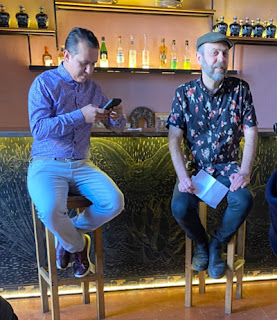
Communication is also important in terms of phrasing. Telling people that they ought to think about doing something often works better than telling them what they should do. People will be more receptive if the phrasing of the request is mindful. This even worked in a supervisory role where I brought to their attention an issue and asked that they consider changing certain behaviors instead of making demands. Moreover, asking for help also works well especially in getting one of their friends to correct a behavior.

Communication without anger is key. Take a moment, breath, observe, and practice mindfulness to proceed without reactivity. Figure out what is making you angry. Same with the guests and figure out what is driving them. Anger is based in fear and embarrassment. Reducing any fear such as confusion of what the guest ought to do in a situation works well if applied early. (At our menu-less bar, teaching the other bartenders on how to anticipate fear and embarrassment in the ordering process led to happier guests and fewer bad reviews online). Being pre-emptive in addressing these issues pays dividends.

Gary Regan declared that fear and love are key, and every other emotion is based on these two. Anger is based on being afraid; if you take away fear, you can take away the anger in a situation. You can count to ten and in that time figure out what you are afraid of. And when you get angry, it is really only affecting one person – you. Finally, mindfulness can change your reality. For example, if you pretend to like the people you really do not, those people will change the way they interact with you.

Another point is that it is important to stay humble.

Regardless of any accolades and accomplishments of a bartender, each guest is a new challenge that you need to prove yourself to them. True, prior experiences offer confidence, knowledge, and a depth of tools to make the next guest’s experience better and to make that moment matter. In my mind, it is the only moment that matters. No guest will be consoled that their mediocre (or worse) night out was handled by someone who on paper should have been above average.

During the beginning of the Pandemic, one of my quarantine reads was The Book of Ichigo Ichie: The Art of Making the Most of Every Moment, the Japanese Way. Ichigo ichie is a tenet of Zen Buddhism, and it is often used as a greeting or a goodbye. It conveys that the moment is unique, special, and once in a lifetime. In martial arts usage, it means that there is no “try again” in life-or-death moments, but in casual usage, it is a means to focus on the moment at hand for it will never happen again. That guest sitting at your bar will never have a first greeting, first cocktail, or first night sitting at your bar ever again. They will be celebrating that birthday, anniversary, or promotion only once. They may return, but that special moment has fled. The book quotes the Greek philosopher Heraclitus who declared, “No man ever steps into the same river twice, for it’s not the same river and he’s not the same man.” Ichigo ichie will lead to greater satisfaction if one is not weighted down by the past or anxious about the future; if one can live fully in the present, the journey can be a unique and once-in-a-lifetime experience.

Subtle self-promotion does have its value especially in gaining the confidence in the guest, but this needs to be backed up with action eventually if not first. I am not without an ego for sure, but I try to put it on a back burner for most of my bar shifts unless the guest begins to inquire. Self-aggrandizing perhaps has its place to some extent in reassuring a guest as to why that moment is unique. Many have a curiosity as to why this interaction feels different and special, and they desire an explanation. Without prompting, that same story reveal is unnecessary and pretentious, and it could across as insecurity and seem like a way to make up for shortcomings by resting on laurels or worse – acts of fiction and delusion. Micah Solomon in The Heart of Hospitality: Great Hotel and Restaurant Leaders Share Their Secrets wrote, “The heart of hospitality, for me, is the ability to focus completely and totally on one person, even if only for a matter of seconds, yet long enough that you’ve got a clear connection, a channel between the two of you.” Working towards that connection is the goal with many ways of getting there.

In thinking about other bar mentors in the industry, I wondered what would legendary NYC barman Sasha Petraske say about all this [since he was a bit of an iconoclast]. In his Regarding Cocktails book, he instructed, “Do things not for applause or personal gain, but simply because it is the right way to do things.” Indeed, Sasha promoted the idea of hospitality over self-needs to choose the best path possible for the guest.

In returning to Gary Regan, he stressed to not underestimate your ability as a bartender or server to change the world one customer at a time. If you make one guest happy and they pass that on to other, and if you consider how many guests you see in a work shift, in a week, and in a year, it can make the world better.

Saturday, July 2, 2022

:: the ego and the bartender ::

My coworkers enjoy mentioning to my bar guests – both in front of me or behind my back – a variety of facts about me ranging from me being the author of two cocktail books to having a doctorate in biochemistry that they have procured from my Facebook or from working with me for all these months. Aside from my stating it here, it is usually something that takes a bit of time to tease out of me in conversation, and I think that my coworkers do it partly to embarrass me. Guests have asked why I am so humble about my accomplishments as if I should be boasting while working and wearing my accomplishments on my sleeve. And that got me thinking.

It took me a day or two of mulling over the proper response. What I came up with was the thought that regardless of any accolades and accomplishments, each guest is a new challenge that I need to prove myself to them and to the bar. True, prior experiences offer confidence, knowledge, and a depth of tools to make the next guest’s experience better and to make that moment matter. In my mind, it is the only moment that matters. No guest will be consoled that their mediocre (or worse) night out was handled by someone who on paper should have been above average. Guests did seem to understand that when I began to reply that all those facts would be meaningless if the drink was not balanced or to their liking and the service was lacking.
During the beginning of the pandemic, one of my quarantine reads was The Book of Ichigo Ichie: The Art of Making the Most of Every Moment, the Japanese Way. Ichigo ichie is a tenet of Zen Buddhism, and it is often used as a greeting or a goodbye. It conveys that the moment is unique, special, and once in a lifetime. In martial arts usage, it means that there is no “try again” in life-or-death moments, but in casual usage, it is a means to focus on the moment at hand for it will never happen again. That guest sitting at your bar will never have a first greeting, cocktail, or night sitting at your bar ever again. They will be celebrating that birthday, anniversary, or promotion only once. They may return, but that special moment has fled. The book quotes Heraclitus who declared, “No man ever steps into the same river twice, for it’s not the same river and he’s not the same man.” Ichigo ichie will lead to greater satisfaction if one is not weighted down by the past or anxious about the future; if one can live fully in the present, the journey can be an unique and once-in-a-lifetime experience.

Subtle self promotion does have its value especially in gaining the confidence in the guest, but this needs to be backed up with action eventually if not first. At my bar Drink here in Boston, we have no menu, and I am able to offer up hundreds of recipes and their histories and why they work in a glass given the guest’s description of what they want to be drinking that moment. I am frequently asked how I know so much about drinks, and at that point I will reveal that I have been writing about drinks for 16 years. I am more likely to mention my Instagram or blog than my books or other accomplishments, especially if the drink they were served was written up there. It also describes the personal research that I do at home every night by making a new drink to post and later write about. I am not without an ego for sure, but I try to put it on a back burner for most of my shifts unless the guest begins to inquire.

The concept of ego reminded me of my bar backing experience and how I describe it to new hires at the bar. I declare that we are laying the foundations of becoming a good bartender by learning the basics; however, we are also breaking down selfish tendencies in order to work better as a team. Recently, a clip from the Mayans MC show appeared on my Facebook feed. One of the members spoke to a new prospect and paraphrased Carl Jung to encourage him through the difficult and seemingly abusive process. Member EZ explained, “Look man, I know it’s tough. But don’t give up all right. Become the mass and a particle in the mass… It means that being a prospect is about destroying the ego. Learning to exist for the great good of the group. There is freedom in that. Giving up your own wants and desires for the benefit greater than yourself.”
Self-aggrandizing perhaps has its place to some extent in reassuring a guest as to why that moment is unique. Many have a curiosity as to why this interaction feels different and special, and they desire an explanation. Without prompting, that same story reveal is unnecessary and pretentious, and it could across as insecurity and seem like a way to make up for shortcomings by resting on laurels or worse – acts of fiction and delusion. Micah Solomon in The Heart of Hospitality: Great Hotel and Restaurant Leaders Share Their Secrets wrote, “The heart of hospitality, for me, is the ability to focus completely and totally on one person, even if only for a matter of seconds, yet long enough that you’ve got a clear connection, a channel between the two of you.” Working towards that connection is the goal with many ways of getting there.

In thinking about other bar mentors in the industry, I wondered what would legendary NYC barman Sasha Petraske say about all this since he was a bit of an iconoclast. In his Regarding Cocktails book, he instructed “Do things not for applause or personal gain, but simply because it is the right way to do things.” Indeed, Sasha promoted the idea of hospitality over self-needs other than the need to choose the best path possible for the guest. Despite many famous drinks coming from him or his establishments, in Class Magazine, he had similar things to say about the drink itself. He declared, “Cocktails are not worth intellectualizing, they are just something to be experienced. The fact that people talk about cocktails like one might talk about like wine, which you have to grow, is laughable. A cocktail is a simple thing – what matters is if you make it right.”
Finally, I considered what Gary Regan would say, so I sought out my notes and PDFs from the Cocktails in the Country retreat that I attended in 2015. He harkened things back to mindfulness and to service by offering up, “A mindful bartender trusts her intuition. She is primarily focused on what the customer in front of her is doing or saying, or upon the drink she is making, but she is also aware of what’s going on at the other end of the bar, and in the entire restaurant. She keeps tabs on the atmosphere of the place, and she constantly monitors the events, actions, and people that might affect the mood at the bar or within the restaurant. A mindful bartender pays attention to the personal preferences of her guests, and she makes each person’s drinks accordingly. A mindful bartender leaves her personal shit at the door... A mindful bartender sets her intentions to be of service to her customers.” Gary towards the end of the PDF packet handled the accomplishment part by explaining, “You’re a person who has attained recognition, you influence many others with your words and your actions, you make more dollars than most others in your line of work, you are hailed as an innovator, a creative genius, a mixologist at the top of your game, and as someone whose passion and perseverance has paid off well. And that’s absolutely fabulous. Good for you. Remember, though, and this is very important: You are No Better than Anyone Else. You are no better than the rookie bar-back you just hired. You are no better than the dishwasher. You are no better than the liquor salesperson. You Are No Better Than Anyone Else. If you can embrace that fact—and it is a fact—then this will help you to stay grounded, and that’s very important to anyone in your position.”

Given this all, there is a noble path to success and to continuing to provide good experiences for our guests if we stay humble and grounded. One step at a time, one guest at a time, one moment at a time. Every so often, look behind and see the wake of positive effects that have been generated before mustering the energy and enthusiasm to continue on that journey forward.

Sunday, August 22, 2021

:: calmness in the storm ::

Any essay written in response to a thread on Reddit; also a follow up to the 2017 article I wrote for the USBG blog that I republished here entitled The Stress of Being Weeded.

On Reddit about a month ago, a bartender forum user asked “How do you deal with the drown?” They meant, how should one handle the rush where one can neither breathe nor provide good service as well as handle the existential dread and/or panic attack. If we have been making money, we’ve all been there before perhaps once or more per week. Although with some pooled house restaurant situations, a bartender can still make a solid living without seeing this level of post-capacity demand, but even then, it still can occur. Frequently, in a busy drinks-forward establishment, this is a regular fear that needs to be quelled.

I offered up two suggestions. My first was, “Look at your watch and get a reality check of ‘two more hours until it slows down and three more until last call’.” Knowing the time frame of how bad things will be put the mind at ease that it will not be an indeterminate period of torture. At my current place, our kitchen closes earlier than it used to pre-Covid, so that major rush often has me thinking that it will be 90 minutes until things slow down, and that is easy to process. Assessments can be made of what tasks can be skipped and saved until it slows down or the bar closes. Glassware, for example, can pile up a bit but not too much if supplies start running low. At more drinks-forward bars and at later night restaurants, often this window can be 2-3 hours, and knowing that and counting down provided a sense of hope.

The other aspect is mental once you have established the time frame. My second suggestion was, “Get yourself in a zen mode early with ‘I will move efficiently and serve as many people as possible, but when it gets busy, folks will have to wait.’ It’s a point of reality and not one to panic over.” Another user agreed. They replied, “Think about volunteers that feed starving children, of course they want to feed as many children as possible, but if they don’t feed themselves, they can’t help anyone. But in our line of work, it’s not life or death. If someone has to wait a few minutes for their drinks, so be it. Don’t stress it. Your guest aren’t waiting for you, they are waiting for the guests in front of them in the line.” It was very well stated, although the part about the guests might be inaccurate when viewed through their eyes.

What I did not cover in my comments in that thread is to anticipate the rush that night. Come in expecting it. Stay hydrated knowing that there will be a point in the night where one can no longer take a moment for oneself. That can be expanded to coming into the shift well fed and taking bathroom and snack breaks before this rush occurs. Remember to make sure one’s shoes are tied tight: my definition of being weeded is when one’s shoes are untied, it is noticed, but the time is not there to remedy that.

Sometimes one faces these shifts solo, but often it’s a team. If one has confidence in the team, live up to the others’ expectations and they will do so in return. If there is a weak link, this can be an issue. It has become all too common with this job market that managers will bring in inexperienced folks to work the shift. This can double one’s work as there is a need to make up for their inefficiency and slothfulness by taking additional orders as well as taking time to bail them out of problems like them not knowing how to make a basic drink. If there is a sign of improvement, continue to take the time to improve them and hope for the best. With a recent hire at my job where they claimed to have been a bartender for years, speak to the manager about how toxic it is to the team to have someone on a busy night claiming to be experienced but incapable of handling anything faster than a lunch shift. One day, we will return to moments where my coworkers declare that the Saturday night crew is the “dream team,” but that seems to be a rare phenomenon now according to bartenders here around town. Relatively, we all have a dream team given the best of our staffing resources. Not looking back to how things were in the past seems to be important; however, the guests are coming in expecting service the way they remembered before the pandemic.

There are other things that can be fixed if the problem persists. Things like streamlining the menu, simplifying the cocktails, batching drinks, rearranging the well, and the like can lead to more happy guests and staff. All too often, menus end up cocktails that one dreads making at those times like the egg white drink with the pretty stencil that is a great treat to offer folks on a Tuesday but not so much on a Saturday. Eliminating those menu items or reducing their availability to only certain nights of the week can help.

In the end, the best service is often provided by a bartender exuding a smile and a sense of calm no matter how busy things can get. Efficiency of movement will provide better results than frantic actions that can lead to mistakes, breaks, and mis-pours. Getting agitated and absorbing the adrenaline rush heads one towards that frantic zone. So, taking a deep breath, looking at the watch, and making sure the bar and oneself are set up for success before that moment arrives, and calmness even in the storm is possible.

Monday, October 5, 2020

:: what covid and spirits collecting taught me about life ::

The Washington Post a few days ago had an article entitled, "Covid-19 makes us think about our mortality. Our brains aren't designed for that." This reminded me of the first few weeks of the pandemic quarantine where I noticed on social media that many people were tapping into their special bottle reserves. Personally, I too went deep into my spirits reserves and drank things such as pours of Booker's Bourbon bottled in 2007 and Daiquiris made with Plantation Panama 1997. We also tapped into our reserve beer cellar, but that was partially out of necessity for we ran out of regular beer (we were far from running out of regular spirits though). Thoughts began to drift through my head questioning my mortality and the reason for holding on to things of value. Some of those have great worth only to myself or a select few in the world, and without offspring to pass them on to, what was the point not to be enjoying them now? Alcohol collecting is one of the few hobbies where the appreciation of your collection leads to its diminishment and demise.

The article in The Washington Post described how Covid induced grief, fear, and anxiety: "It is the existential anxiety caused by reminders of our own mortality." It continued on, "Simply put, to function as a conscious being, it's imperative that you be in denial about your impending death. How else would you go about the mundane aspects of your daily life — cleaning the gutters, paying the bills, sitting in traffic — if you were constantly aware of the inevitability of your own death?" "In other words, we are wired to accept that death happens — just not to us." The concept solidified my rationale as to why a faction of our country still refuses to accept pandemic safety measures — they are refusing to acknowledge the reality of their own death.

The phenomenon intrigued me enough that in early April, I reached out to a spirits collector or two and ask people on an industry group to email me if they wanted to answer a few questions. I narrowed it down to five:
1. Name, role in the spirits/bartending world, location?
2. What liquor/liqueur type(s) do you collect?
3. What have you learned about history through collecting spirits or a spirits line?
4. How often did you generally tap into your collection (pre-pandemic) to taste?
5. How has this pandemic changed the way you view collecting? Are there bottles that you have opened up recently that you might not have thought about before?
In the end, I received only a few responses. Some who answered were distant from their liquor shelves at that time, so there was not much data to glean. The rest seemed to gloss over questions 4 and 5 which were at the root of what I wanted to learn about. A good number who received the questionnaire never wrote back. I figured that it was too heavy of an issue to confront, and that perhaps I should have been more subtle in my line of questioning. Six months later, I finally got around to writing up my thoughts.

As the world began to equilibrate to a "new normal" as fear diminished, more sensible approaches to one's personal safety emerged. With that, I noticed that I recovered a more logical view to preserving my spirits collection. It still makes me wonder about how many things we put off since its not the right time. Whether it is drinking a special bottle of wine, beer, or spirits or going on a trip. There are certainly wrong times to open something special such as in inebriated or stressful points when the appreciation skills would be low, but waiting until the "right" life moments happen is putting too much symbolism into things. The pandemic also made me realize what it would be like to be old down to the inability to travel, dine out, or spend ones wealth. Why save things later in life when you cannot physically enjoy them or do them?

In 2010, when we attended an amazing rum tasting at famed collector Steve Remsberg's house, one thing struck me when we were tasting pre-Prohibition New England rums and pre-Fidel Castro Cuban ones. Here were these valuable bottles that Steve was willing to open, appreciate, and share (as long as he had an unopened one in his library for future generations). He saw no point in not experiencing his collection; however, to tone down the reverence and re-center the guests, he would humbly comment every so often, "Tastes good, doesn't it?"

Saturday, June 20, 2020

:: hospitality versus activism ::

There was a recent case in Swampscott, Massachusetts, where a bartender at a restaurant overheard a guest call the Black Lives Matter movement "liberal bullshit." Instead of bringing it to the attention of the manager or asking the guest to tone it down or leave, the bartender decided to later out the patron who was a Selectman for the city on Facebook. This led to both of them losing their jobs (although the bartender was rehired). A writer contacted me to ask about the bartenders' guild stance on "drinking in a bar and privacy? Should customers assume their conversations are going to be repeated by waitstaff? Is this ethical behavior? Also, does the Guild have a position on restaurants/bars banning customers over their politics?"

I replied, "I cannot speak for the national guild itself. I do know that the USBG has a policy of not outing publicly anyone for bad behavior by name, but they will take action to remove offenders from the organization or not fund events that they are involved in. The guild does not condone sexist and racist ideals and will act as mentioned to make the community around them more comfortable for the members albeit without making a public statement about it. I have never observed the guild act on a guest or their actions, but they have acted on restaurant and spirit industry professionals' behaviors." And I recommended that he write my personal email account since I did not want to speak for the organization.

Here is my reply:
There have been very few instances of this public shaming that I know of in the news. I have worked at places where the management would act on our complaints of a guest's racist, homophobic, sexist, or offensive comments and ban them from the establishment; however, no public statement or outing was ever made. Moreover, there are certain establishments that hang up Pride rainbow flags and similar items as a signifier that hate speech is not welcome there, but I have never heard these venues lodge guest complaints to the public (different when the police need to get involved since that becomes part of the public record).

The last time that something like this was discussed was when a waitress at the Aviary bar in Chicago spat at Eric Trump. There were various discussions about who ought to be welcome in your establishment, but very few people seemed to condone the act itself as the proper decorum for a bar or restaurant worker. Most supported having management remove the person as gracefully as possible if they are upsetting the staff or fellow patrons.

Bartending and serving are one where the worker is regular confronted by racist, sexist, or homophobic comments made at them, to other guests, or aloud in earshot of other patrons. Decisions need to be made that are often tempered by the fact that our paychecks are held hostage by the guest, and often times we put up with the abuse to pay our bills. In addition, I have worked at establishments where the owners support the guests and their money more than their staff, and that level of systemic encouragement of bad behavior is definitely a problem in the restaurant industry.

Great bartenders are known for their discretion and their respect. Some of the famous bartenders in history never told a soul what their conversations were about. One of my favorite instances was David Chan at Trader Vic's who served many Navy Grogs to Richard Nixon during his presidency; undoubtedly, Nixon revealed plenty of secrets in confidence to Chan, but Chan never broke the bartender-guest confidentiality.

I do not believe that vigilante justice has a place in hospitality, but I do fully support the welcoming and the removal of guests by their behavior in both action and word.
I was not surprised that this conservative writer set me up in his article to plead his case. I was taken aback though when he requested to use the last two paragraphs, and I agreed; however, he left out the "but" part of the last sentence from the quote he said he was going to use. It made it sound like the guest had every right to freedom of speech (since it left out the idea that the establishment can determine or alter midway who they consider guests).

The topic of what hospitality should be was discussed in depth most recently with the Eric Trump at the Aviary instance (a server spit on him). A general consensus (but certainly there were voices supporting the way the incident played out) was that hospitality was about treating all your guests well coupled with determining who your guests are or will continue to be. A staff member acting on their own volition can betray the tone and demeanor set out by the owner and management, and that is what I do not approve of without trying the proper avenues of getting their management involved first. Understanding that trouble is coming through the door whether it be a rowdy group deep into their cups or a controversial political figure is when action should be taken proactively to avoid embarrassment, anger, and intense emotion for all parties -- staff and the patrons inside included.

Perhaps I am being too idealistic here given now how extreme actions and reactions in this country have not only shown to be necessary as well as effective. There are several instances where this proactive measure to ask people to remove their MAGA hats or as recently as last night when a Denver bar owner denied entry for a person wearing a Blue Lives Matter shirt. Is that enough or just a start? I am reconsidering my personal stance on the Swampscott case since cleansing the government of a racist is an honorable bit of activism. But it does seem to come at odds of what I consider hospitality.

Monday, March 23, 2020

boilermaker

Two Mondays ago, I hosted a post-Speed Rack charity event at Silvertown in downtown Boston. The idea started when a few of my Angel's Envy crew were in town during the first week of February to observe me giving my first staff trainings and running my first events. Before one of my staff trainings, we were at Silvertone enjoying a round of Angel's Envy Rye while bouncing ideas off of each other for events. When the topic of Speed Rack came up, I mentioned that this spot is where I frequently found myself after working the event as a volunteer every year. One person proposed a fancy cocktail special idea, and I rebutted that this is Silvertone -- we need to drink like they drink here especially when it is busy: a beer and a shot. The idea came to be, and our afterparty raised money per boilermaker drank and raffle ticket sold; in the end, we donated over $200 to the Ellie Fund. After the long day of volunteering, hosting, and imbibing, it was almost 3 am when I got home and I was in no mood to make a cocktail for the blog, so I figured that I would later mull over the idea the boilermaker for a post.
A boilermaker is essentially a beer and a shot of spirit which is often whiskey. However, the "beer" could be a cider or even a wine, and the spirit can be anything from rum to Calvados. In traditional form, each is sipped as desired with the malt's (apple's or grape's) sweetness helping to cut the alcohol's burn. In college, we assumed that the shot was dropped into the glass, but to me, that is more of a Depth Charge than a boilermaker. The origins of the name related to the early-mid 19th century when the workmen who built and maintained boilers for ships, trains, and industry would order these side-by-side combos after a long day of labor. Wondrich even suggests that the idea  but not the name itself dates back to the 17th century in Europe. Noah Rothman in the DailyBeast pointed out the connection of whiskey starting as unhopped beer before distillation, and Wondrich noted that whisk(e)y cultures of Scotland and Ireland frequently drank them together as early as 1605. America might have lagged behind since a lot of our drinking culture was inherited from the British who were not big whiskey drinkers. In the modern day, like the boiler men, bartenders have latched on to the order; after a long shift, they might not have a lot of time until last call to get things done, and ordering this double is a rather non-fussy ordeal for the staff manning that industry bar.

Given that the craft cocktail bar movement has encouraged figuring out the best ingredients for a drink down to Audrey Saunders testing out every gin on her shelves to find the optimal recipe, the boilermaker has seen new light in the last decade. Some bars like the Automatic in Cambridge have boilermaker sections on the menu to guide their guests from basic to higher end and synergistic pairings at a wide range of price points. Others have taken it up another notch by making it into a competition; Erick Castro spoke of the "Big Baller, Shot Caller" event where bartenders provided judges with their favorite twosomes. Others still keep it on the humbler side. In my first trip to Louisville in 2016, I decided to only drink bonded Bourbons and frequently paired them with a local beer (unless I was in a cocktail bar or brewery taproom of course). My thought was that I would rather spent $13-15 on a whiskey and craft beer than spend that sum on a single whiskey order; since many bonded Bourbons and regional craft beers there do not leave Kentucky, it doubled my exposure to the state's nectars. Moreover, I have found myself ordering boilermakers on random Friday nights off when I decided to go to a friend's busy bar for it did not take much of their time to get both pours in front of me, and I have found it a great choice on slower nights at random bars not known for their cocktails.

The Angel's Envy website has a section on Angels and Ales, their name for the pairing. In one post on their blog, they discussed their favorite pairings with their Bourbon finished in port casks. For pilsners and lagers, the clean, crisp aspect brings out vanilla sweetness, port notes, and a caramel finish. For IPAs, there is a lot more variety in the results given the citrus, grassy, and other aspects of the hops; moreover, I have found that certain IPAs like Bell's Two Hearted have a great amber malt backbone that synergizes with the charred oak aging of said whiskey. And finally, they mention porters with their chocolate and coffee notes that bring out honey sweetness and a warm finish from the Bourbon. Those three are only the beginning, for I have found great results in Belgian-style beers like Fat Tire, and classic Americana ones like Anchor Steam due to that amber malt character I mentioned with the Bell's.
David Wondrich has spoken about the problem with beer sizes to match a two ounce or so pour of spirit. He finds that a pint is too large, and many bars will not veer from charging the full price even if they give him half. He also knows himself well enough that if he is given a full pint, he will drink it. Some bars like Lily P's pictured above do half pours for the same volumetric pricing as the full pour; I find it unfortunate when bars gouge the half pour pricing to almost discourage it. Almost every place that I have worked did not have half-sized pricing, but given that most POS systems have an "open beer" button, I could get it done with some first or second grade math. Wondrich is also a big proponent of the beer being a draft beer for a boilermaker; however, there are a few beers like Miller High Life that come in 7 ounce pony bottles that are the perfect sized accompaniment to a whiskey dram. Otherwise, the only way to best utilize a twelve or sixteen ounce bottle or can is to ask for two glasses to share with a friend. And at home, I lack a kegerator, so all my pairings are from packaged goods.

As I mentioned above, beer and whiskey are not the only options. My favorite boilermaker of 2017 was experienced at the end of Tales of the Cocktail at a small gathering hosted by Haus Alpenz's Jake Parrott. There, I was sipping on a 2006 I Clivi wine called Galea where its citrus, almond, and mineral notes worked rather stunning with a copita of Del Maguey Tobala that Misty Kalkofen brought to the soirée and poured me half way through my glass. I wrote, "It was magical, and I'm not even a big wine drinker." Given that a bar tab for that duo would be in the range of $40, it is not an every day occurrence to pamper myself like that. Magic can be found at half that, and just plain comfort at about a third.

Thursday, March 19, 2020

:: life paths usually aren't straight lines ::

Submitted to the USBG National blog, but published here first due to the timely nature of things.

I remember one summer in between semesters at college, I returned home and began to look for work. I had sent out a handful of letters during spring break to apply to jobs in my field, but all of those fell through. My mom sat down with me to look at the help wanted section of the newspaper, and when she spotted an ad for a bartender position, she told me that I ought to apply. She explained that it was a good skill to have and a role that is always needed. The job was at a place called Helwig's in Milford, Connecticut, and I am surprised that my ever cautious mom would suggest that I apply there. I recall when my brother and I wanted to see a band at the Anthrax Club in Norwalk, my mom called that city's police's youth bureau to see what sort of place it was. Of course, they had nothing good to say and we were forbidden to attend the Dag Nasty show. When I argued that I did not know a thing about bartending, my mom explained that it was easy -- a Screwdriver was vodka and orange juice, a Rum & Coke was as simple as it sounded along with a Gin & Tonic. That is where she trailed off with her drink knowledge. I did go and apply in person, and the Helwig's daytime staff was rather kind in helping me fill out the application which was nothing more than a blank sheet of paper. Needless to say it was not a successful venture given that I was 19 almost 20, only there for the summer, and rather lacking in experience. Perhaps not lacking completely, for I was able to go back to my old summer job of being a camp counselor. Keeping a pack of kids in line has been a parallel situation to some bar gigs that I have held down.

With this current virus pandemic situation, I was reminded of what my mom said; however, the job of a bartender as we know it has gone away in my state of Massachusetts with the closure of all restaurants and bars save for ones doing pickup and delivery menus (which still excludes alcohol here). There is no certainty when the restaurant industry will be allowed to reopen and at what rate there will be enough jobs at the surviving establishments to allow for everyone to return back to work. It will recover and it will get better, but I have a feeling it will be at a much reduced level at first. But just like the rosebush in my front patch that I prune back every Spring, it is overgrowing its spot and attacking our front steps and porch by Fall.

During one bar shift two years ago, I listed off to one of my co-workers all of the random jobs that I have held in my life. Some of these were careers, others side gigs, and some were one-offs. This list included biochemist, wedding and band promo photographer, DJ, cabaret performer in nightclubs, dog walker, inventory taker, babysitter, writer, Tae Kwon Do instructor, airsoft and jiu-jitsu ref, and a host of other gigs and professions. Even my main career path has changed over the decades. I left for college to become a veterinarian, but I ended up getting into biology research and going to grad school for it. I pursued a career in academics, but after my post-doc was not going to score me a professor job (and I did not want to do another 3 year post-doc to try again), I began investigating new options. I considered teaching and started working at my friend's company that did after-school science classes at elementary schools. Eventually, I ended up in biotech which paid the bills but never really had me happy or comfortable about work. A few years later, I began writing about cocktails on an online journal that led into writing for the Cocktail Virgin blog. That went many years until my last biotech job ended with the final day of 2011. After that ended, I began to consider bar jobs somewhat but mostly stuck to applying to find another biotech position. A few months in, a friend's mom suggested that I write a book given all of my work on the blog. Life had some purpose and I set to work figuring out how to make it come about. By September that year, my first book Drink & Tell: A Boston Cocktail Book was released, and my life began to change. I soon had offers to give talks at Portland Cocktail Week and Barbara Lynch's Stir class; and then one day, I was asked to do a guest shift at an industry series.

After that amazing experience, I turned to my wife and said “I ought to do this as a career.” She surprised me by replying, “You should.” “But I'll never get to see you.” “Don't worry -- we'll figure it out.” With that, I found someone willing to hire me as a 41 year old bar back, and I worked my way up to bartender in a few months. I knew the mechanics of drink making, but I needed to learn how to work in a restaurant and deal with guests in that setting.

Last Fall, I was approached to work with a great brand, and I accepted the gig since it matched my love of American whiskey. I was still bartending up until the beginning of February when I decided to leave due to a change in management. For the last two months or so, I have been focusing on the brand work and I was rather enjoying it. Well, up until all of my accounts closed their doors due to this crisis. Actually, I still enjoy it, and my team has been a great source of psychological and emotional support; however, I am without structure in my day. I am working on building back that structure. As I will also figure out how to build back a way to make a living in case this brand gig does not come back soon or at all.

As the USBG Boston secretary, I just sent off a missive to my chapter with advice and with things better stated as suggestions at looking at the world. In terms of structure, I wrote, “The more difficult part is the psychological. We're all facing different challenges, so I will cover mine. I'm finding my days without structure and I find myself glued to my phone looking for joy. Facebook, Instagram, the news feed, and the like have kept me connected, but I'm overdoing it in a depressed state as the two books that I started reading are by my side untouched. My first goal is setting up structure. For me, that includes morning writing with coffee. Cooking lunch and dinner from scratch. And finding scheduled social networking events. One that I have done all week is watch USBG-superstar Jonathan Pogash's Facebook Live cocktail segments every day at 1pm and 5pm. I'm not necessarily learning much but it feels good man. The other is Dani & Jackie's Cocktail Hour at 6pm and the nightcap edition at 11pm... One important point that Jackie brought up in the first session that I attended was that our value is not linked to our productivity (which could be nil right now due to our jobs) but linked to our worth.”

I also added, “A one off Facebook Live that I watched yesterday was by Jason Littrell, ex-Death & Co. and now cocktail consultant and varied other gigs. He focused on how to make a living by figuring out the gig economy to survive. We might have to look to adapt our skill sets to other industries such as by doing social media for other industries. There are plenty of companies out there who value native English speakers and need writers. Start opening up your mind and start looking around.”

As Jackie pointed out in one of the first cocktail hours that I sat in on, most of us are bartenders who are used to dealing with difficult situations and not just getting through but thriving. Our value is our skill set to adapt, to survive, to help, and to make others feel good in the process. There are no easy answers other than we are capable of making multiple turns in our job path throughout life. Some of them might be short term but others might be new directions. Embrace the opportunities that you find or that are floated your way.