Showing posts with label #silvertone. Show all posts

Monday, March 23, 2020

boilermaker

Two Mondays ago, I hosted a post-Speed Rack charity event at Silvertown in downtown Boston. The idea started when a few of my Angel's Envy crew were in town during the first week of February to observe me giving my first staff trainings and running my first events. Before one of my staff trainings, we were at Silvertone enjoying a round of Angel's Envy Rye while bouncing ideas off of each other for events. When the topic of Speed Rack came up, I mentioned that this spot is where I frequently found myself after working the event as a volunteer every year. One person proposed a fancy cocktail special idea, and I rebutted that this is Silvertone -- we need to drink like they drink here especially when it is busy: a beer and a shot. The idea came to be, and our afterparty raised money per boilermaker drank and raffle ticket sold; in the end, we donated over $200 to the Ellie Fund. After the long day of volunteering, hosting, and imbibing, it was almost 3 am when I got home and I was in no mood to make a cocktail for the blog, so I figured that I would later mull over the idea the boilermaker for a post.
A boilermaker is essentially a beer and a shot of spirit which is often whiskey. However, the "beer" could be a cider or even a wine, and the spirit can be anything from rum to Calvados. In traditional form, each is sipped as desired with the malt's (apple's or grape's) sweetness helping to cut the alcohol's burn. In college, we assumed that the shot was dropped into the glass, but to me, that is more of a Depth Charge than a boilermaker. The origins of the name related to the early-mid 19th century when the workmen who built and maintained boilers for ships, trains, and industry would order these side-by-side combos after a long day of labor. Wondrich even suggests that the idea  but not the name itself dates back to the 17th century in Europe. Noah Rothman in the DailyBeast pointed out the connection of whiskey starting as unhopped beer before distillation, and Wondrich noted that whisk(e)y cultures of Scotland and Ireland frequently drank them together as early as 1605. America might have lagged behind since a lot of our drinking culture was inherited from the British who were not big whiskey drinkers. In the modern day, like the boiler men, bartenders have latched on to the order; after a long shift, they might not have a lot of time until last call to get things done, and ordering this double is a rather non-fussy ordeal for the staff manning that industry bar.

Given that the craft cocktail bar movement has encouraged figuring out the best ingredients for a drink down to Audrey Saunders testing out every gin on her shelves to find the optimal recipe, the boilermaker has seen new light in the last decade. Some bars like the Automatic in Cambridge have boilermaker sections on the menu to guide their guests from basic to higher end and synergistic pairings at a wide range of price points. Others have taken it up another notch by making it into a competition; Erick Castro spoke of the "Big Baller, Shot Caller" event where bartenders provided judges with their favorite twosomes. Others still keep it on the humbler side. In my first trip to Louisville in 2016, I decided to only drink bonded Bourbons and frequently paired them with a local beer (unless I was in a cocktail bar or brewery taproom of course). My thought was that I would rather spent $13-15 on a whiskey and craft beer than spend that sum on a single whiskey order; since many bonded Bourbons and regional craft beers there do not leave Kentucky, it doubled my exposure to the state's nectars. Moreover, I have found myself ordering boilermakers on random Friday nights off when I decided to go to a friend's busy bar for it did not take much of their time to get both pours in front of me, and I have found it a great choice on slower nights at random bars not known for their cocktails.

The Angel's Envy website has a section on Angels and Ales, their name for the pairing. In one post on their blog, they discussed their favorite pairings with their Bourbon finished in port casks. For pilsners and lagers, the clean, crisp aspect brings out vanilla sweetness, port notes, and a caramel finish. For IPAs, there is a lot more variety in the results given the citrus, grassy, and other aspects of the hops; moreover, I have found that certain IPAs like Bell's Two Hearted have a great amber malt backbone that synergizes with the charred oak aging of said whiskey. And finally, they mention porters with their chocolate and coffee notes that bring out honey sweetness and a warm finish from the Bourbon. Those three are only the beginning, for I have found great results in Belgian-style beers like Fat Tire, and classic Americana ones like Anchor Steam due to that amber malt character I mentioned with the Bell's.
David Wondrich has spoken about the problem with beer sizes to match a two ounce or so pour of spirit. He finds that a pint is too large, and many bars will not veer from charging the full price even if they give him half. He also knows himself well enough that if he is given a full pint, he will drink it. Some bars like Lily P's pictured above do half pours for the same volumetric pricing as the full pour; I find it unfortunate when bars gouge the half pour pricing to almost discourage it. Almost every place that I have worked did not have half-sized pricing, but given that most POS systems have an "open beer" button, I could get it done with some first or second grade math. Wondrich is also a big proponent of the beer being a draft beer for a boilermaker; however, there are a few beers like Miller High Life that come in 7 ounce pony bottles that are the perfect sized accompaniment to a whiskey dram. Otherwise, the only way to best utilize a twelve or sixteen ounce bottle or can is to ask for two glasses to share with a friend. And at home, I lack a kegerator, so all my pairings are from packaged goods.

As I mentioned above, beer and whiskey are not the only options. My favorite boilermaker of 2017 was experienced at the end of Tales of the Cocktail at a small gathering hosted by Haus Alpenz's Jake Parrott. There, I was sipping on a 2006 I Clivi wine called Galea where its citrus, almond, and mineral notes worked rather stunning with a copita of Del Maguey Tobala that Misty Kalkofen brought to the soirée and poured me half way through my glass. I wrote, "It was magical, and I'm not even a big wine drinker." Given that a bar tab for that duo would be in the range of $40, it is not an every day occurrence to pamper myself like that. Magic can be found at half that, and just plain comfort at about a third.

Friday, November 14, 2014

pumpernickel

1 1/2 oz Jim Beam Bourbon
3/4 oz Punt e Mes
3/4 oz Amaro Ramazzotti
2 dash Angostura Bitters

Stir with ice and strain into a rocks glass.
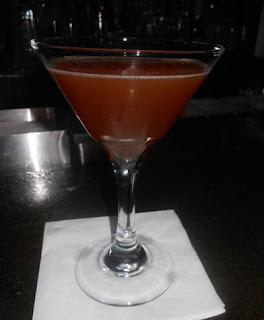
One of the Blender Bender after-parties on Sunday night was the Amor y Amargo pop-up event at Silvertone. Sother Teague and associates showed up with a menu of six drinks to represent their Manhattan establishment. While Fernet Branca was the sponsor, not all the drinks were menthol-bombs for the company also distributes Carpano Antica, Punt e Mes, Templeton Rye, and other products. For a drink, I requested the Pumpernickel which appeared like a Boulevardier riff; I did not get a chance to ask why it was called that, but it seemed true to many of their drinks on the regular menu. Once prepared, it offered a Bourbon and grape bouquet. Next, a caramel and grape sip led into a whiskey swallow with dark orange and Punt e Mes' bitter notes and a spice finish.

Monday, December 16, 2013

hit & run

2 oz Four Roses Bourbon
3/4 oz Maple Syrup
3/4 oz Lemon Juice
3 dash Regan's Orange Bitters

Shake with ice and strain into a rocks glass. Garnish with an orange twist.
After Brick & Mortar, I made my way down the Red Line to downtown to get dinner at Silvertone. Later that evening was a charity night for injured bartender Alex Homans who was hit while bicycling to work at Fairsted Kitchen. The featured cocktail was John Child's creation, the Hit & Run, to raise money for Alex's recovery and loss of wages. Once mixed, the Hit & Run proffered an orange oil nose that later became more maple driven. The maple paired up with the citrus notes on the sip, and the swallow showcased the whiskey with a citrus finish. Despite the different base spirits, the Hit & Run reminded me a bit of the Apple Jack Rabbit.

Thursday, November 21, 2013

bargellino

1 1/2 oz Old Overholt Rye
3/4 oz Dry Vermouth
1/2 oz Amaro Montenegro
1/4 oz Luxardo Maraschino Liqueur

Stir with ice and strain into a rocks glass. Garnish with an orange twist.

A few Tuesdays ago, I headed over to Silvertone to have dinner at the bar. For a cocktail, I asked bartender Josh Childs for the Bargellino that appeared on the OnTheBar app after I checked in for my visit. When I inquired about the name, Josh replied that it refers to a hotel in Italy; however, he explained that he found this recipe in his old notes and was not entirely sure if he was the one who created it. Regardless, the Bargellino reminded me of a Man About Town crossed with a Brooklyn and seemed like it would be an excellent tipple.
The twist's orange oils joined the aroma of the amaro's caramel and the whiskey's malt on the nose. The malt continued into the sip to mingle with the dry vermouth's wine flavors, and the swallow began with the rye and ended with an herbal finish that showcased the amaro's mandarine orange peel and the Maraschino's nutty cherry notes.

Friday, June 14, 2013

becca's blood & sand

3/4 oz Del Maguey Mezcal Vida
3/4 oz Carpano Antica Sweet Vermouth
3/4 oz Maurin Quina
3/4 oz Orange Juice

Shake with ice and strain into a cocktail glass.

After Eastern Standard, I made my way over to Silvertone where Josh Childs and Cedric Adams were tending bar. For a drink, I asked Josh for the Becca's Blood and Sand as the use of Maurin Quina as the cherry-flavored ingredient instead of Cherry Heering intrigued me. The call for mezcal instead of Scotch was one that I had seen before though, such as in Coppa's Riccardo, with good results.
silvertone boston
The Becca's Blood and Sand presented a smoky mezcal aroma along with a vague fruit note from either the sweet vermouth or Maurin Quina. This fruit note came through on the sip as a cherry and grape combination. Finally, the mezcal appeared on the swallow that finished with smoke and orange flavors.

Wednesday, May 22, 2013

home wrecker

1 1/2 oz Old Overholt Rye
1/2 oz Punt e Mes
1/2 oz St. Germain
1/2 oz Lemon Juice

Shake with ice and strain into a cocktail glass.

After having a drink at Stoddard's and chatting with bar manager Jamie Walsh for a bit, I headed over to Silvertone to attend the soirée held for Count Branca of Fernet Branca fame. The Count is a pleasing fellow that reminded people of Arthur with his carefree love of life (and all things Fernet Branca). One of the drinks I had was the Toronto and the Count was curious for he never had tried this gem first published in the 1940s; I was a bit surprised until he explained that in Italy, people drink it straight or in coffee, but he was game to drink one.
count branca event at silvertone cocktail by john nugent
Since the Branca product line contains other spirits including Punt e Mes, I also opted for an original created by bartender John Nugent called the Home Wrecker. John explained that Silvertone's John Childs asked for something summery, and for inspiration, John looked towards Misty Kalkofen's Maximilian Affair. Once shaken and strained, the Home Wrecker's nose was full of rye and floral notes. A malt and lemon sip led into a swallow that started with rye and ended with bitter floral flavors and a tart lemon finish.

Wednesday, December 26, 2012

cedric's chartreuse smash

2 oz Green Chartreuse
3/4 oz Lime Juice
1/2 oz Simple Syrup

Muddle a half dozen or so mint leaves with simple syrup. Add rest of ingredients and ice, shake, and double strain into a rocks glass filled with crushed ice. Garnish with fresh mint and add a straw.

For Andrea's drink at Silvertone, she requested from bartender Josh Childs a Chartreuse Smash. The recipe for this libation appears in Drink & Tell: A Boston Cocktail Book; however, it has yet to find its way on to the blog until now. The history I provided in the book is, "At Silvertone, if Cedric Adam's name is associated with a drink, there is a good chance it contains Green Chartreuse." Indeed, my first drink at Silvertone years ago was Cedric's Chartreuse Gimlet. As I mentioned in the summary of the History and Change of Downtown Boston Bar Culture talk, Cedric was one of the first bartenders in town pouring and prosthelytizing about the wonders of this herbal elixir, and he is often cited as the reason it became so popular here starting around 15 years ago. Silvertone was also one of the leaders in using fresh juice in Boston, so drinks like the Gimlets and Smashes would shine more than drinks made with Roses' and bottled juices back then.
chartreuse smash mint silvertone cedric adams
As for tasting notes, the mint contributed greatly to the Smash's aroma along with Chartreuse herbal notes poking through. A lime sip gave way to Chartreuse and fresh mint on the swallow. There are no great surprises here, but its simplicity of ingredients still provides a wealth of flavor as it does in another Boston Chartreuse legend, the Silent Order.

wood word

3/4 oz Citadel Gin
3/4 oz Green Chartreuse
3/4 oz Dimmi Liqueur
3/4 oz Lime Juice

Shake with ice and strain into a cocktail glass.

A few Thursdays ago, we had dinner at Silvertone. After dining, we noted a pair of seats at the bar and sat down for a drink. Bartender Josh Childs offered to make me a Wood Word, a Last Word variation that appears on the Trina's Starlite Lounge's menu. The recipe was created by Scott Woodworth, a bartender at Catalyst, and is a play on his name. His variation uses Dimmi instead of Maraschino; besides the herbal notes in Dimmi that would work well with the gin and Chartreuse, it possesses peach and apricot flower notes that perhaps function for the Maraschino's fruity side.
scott woodworth bartender catalyst trina's starlite lounge silvertone josh childs
The Wood Word showcased the Green Chartreuse aroma, but it was devoid of the nutty Maraschino notes present in a Last Word. The lime sip was followed by gin, Dimmi, and Chartreuse botanicals. Indeed, the Dimmi added a lot of herbal depth to the mix and helped to meld the gin and Chartreuse together. Moreover, somehow there was a ghost of Maraschino flavor on the swallow that could be attributed to the fruit blossoms in the Dimmi.

Wednesday, December 12, 2012

shirley temple black

2 oz Old Overholt Rye
1/2 oz Maurin Quina
1/2 oz Ginger Syrup
1 dash Lemon Juice

Shake in a pint glass with ice. Add 2 oz Barritt's Ginger Beer and gently stir. Top with ice, garnish with two cherries, and add a straw.

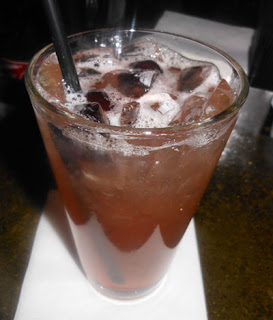
Two Thursdays ago after attending Stephanie Schorow's book launch party for Drinking Boston at Doyle's Cafe, I made my way back to Downtown Crossing. For a first stop, I visited Silvertone. As I scanned the menu, the Shirley Temple Black caught my attention, not for it being an adult version of a childhood drink, but for its use of Maurin Quina. The original Shirley Temple was created in the 1930s and named after the famous child actress; it contains ginger ale, grenadine for color, sometimes citrus juice, and a cherry garnish. My order for the drink was given a quizzical look; yes, I was ordering a slightly chick drink, but Maurin Quina is delicious enough to overlook such distinctions.
silvertone boston shirley temple black
The brandied cherry garnish contributed greatly to the Shirley Temple Black's aroma. A somewhat syrupy sip was mitigated by the carbonation mixing with the sharper notes of the ginger and lemon. Finally, the swallow presented the rye, ginger, and Maurin's cherry. Afterwards, I made the bartender smile with my order of a High Life for my next round.

Saturday, November 10, 2012

matteo's word

3/4 oz Luxardo Limoncello
3/4 oz Green Chartreuse
3/4 oz Luxardo Maraschino
3/4 oz Lime Juice

Shake with ice and strain into a cocktail glass.

Tuesday before the Fernet Barback Games, I stopped in to visit Josh Childs at Silvertone. Pardon me for going a little out of order here since this was not the first drink I had after getting back from Portland Cocktail Week; however, symbolically, it is the most important. The Matteo's Word, like many other drinks across town, are being put on menus in honor of Seattle's Murray Stenson who has recently fallen ill and requires heart surgery. Paul Clarke at The Cocktail Chronicles has done a good job summing up Murray as a person and a bartender. I have yet to make it out to Seattle and never had the honor of sitting at Murray's bar. But he did impress me when he was nominated at Tales of the Cocktail as bartender of the year, and he chose to stay behind the stick and keep serving his customers rather than receive his award and deserved media attention. Therefore, I know that Murray is in dire need if he is allowing this sort of fund raising and hoop-la to occur.
last word luxardo limoncello silvertone boston cocktails
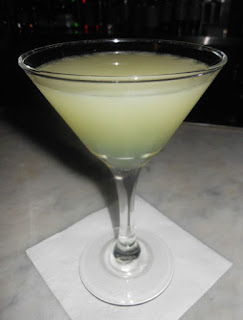
The drink Silvertone has put on the menu with proceeds going to Murray's medical expenses was created by Matteo Luxardo as a variation of a Last Word. While the Last Word pre-dates Murray's birth, he is known for popularizing the recipe in the modern age. The variation Matteo created swapped the original's gin for limoncello. Indeed, the limoncello's lemon added to the drink's aroma along with the lime juice and herbal notes from the Chartreuse. The lemon-lime sip was followed by a Green Chartreuse and Maraschino swallow. Finally, the limoncello returned on the finish with clean citrus notes.

Ways to help Murray:
1. Donate to MurrayAid.org via Paypal.
2. There is a benefit tomorrow, Sunday November 11th, at J.M. Curley's in Boston from 7-11pm. I have contributed a pair of tiki mug-Drink&Tell book combos to the raffle that will be happening that night. For more 4-1-1, go to the This One For Murray Facebook page.
3. There are benefit drinks around town besides the one at Silvertone. Hawthorne, Brick & Mortar, Citizen, and No. 9 Park have confirmed drinks on the menu, and Trina's Starlite Lounge is in the works. Please leave a comment if I missed a bar or restaurant.
4. Check Twitter #MurrayAid for bartenders working shifts to donate their tips and wages to Murray. So far John Nugent at Silvertone and Scott Holliday at Rendezvous have generously done so.

Monday, October 8, 2012

:: the history and change of downtown boston bar culture ::

After focusing on the Colonial to pre-Prohibition era drinking life in Boston with David Wondrich, I moved on to my next talk held at Silvertone's Chez Freddie Lounge. I was really excited for this talk given by John Gertsen, Ryan McGrale, Tom Mastricola, and Josh Childs, and they most certainly did not disappoint. The title was "The History and Change of the Downtown Bar Culture."

Josh Childs started the talk with a little history about the space we were in. Silvertone was built at the turn of the century; in the pre-Prohibition days, it was the Century Grill's tap room and was one of the 35 bars in the downtown Boston area. After Prohibition, the space was the Chez Freddie Lounge from the 1930s to 1970s. In the room we were in was a Chez Freddie sign from the 1950s that was discovered in the Parker House's basement; Josh could not resist removing from their inventory system for a mere $10.

Josh opened up Silvertone 15 years ago, and he spoke of what the norm was then. Roses Lime Cordial and sour mix instead of fresh juice, no stirring only shaking, and garnish trays that ought to have been tossed a shift or more ago. The revelation came when Josh and Tom Mastricola from No. 9 Park went to bar camp in Oregon. When Tom saw them fresh juicing citrus, he made it his goal to switch and to proselytize the practice. Josh went so far as to declare that Tom was the one single person who helped start the Boston craft cocktail movement.

It was time for the first drink, so John Gertsen took over and described Boston's cocktail, the Ward Eight, that had been created in the downtown bar of Locke-Ober in 1898. Back then in the end of the 19th century, color was beginning to enter into the cocktails so the grenadine was a big deal. Similar drinks to the War Eight were being made elsewhere, but the history of the drink helped to make the recipe survive. In the early 20th century, the drink was often adapted to show off with elaborate garnishes of citrus, berries, and mint sort of how foams were big in the mid-2000s. John's variation can be found here; he left out the orange juice because he finds that while it works well with Champagne and Amaretto, it does not mesh with whiskey. Therefore, he replaced the juice with orange peel curl and orange bitters garnishes. Indeed, of the three Ward Eights I had that day, John's was certainly the best probably for that reason.

With a drink in hand, we could now continue on properly. Tom Mastricola explained how Barbara Lynch was a long time friend of his from South Boston and how she wanted to open a fine dining establishment in Boston in a way that did not exist here yet. The bar traditionally would be used as a waiting area to get into the restaurant; No. 9 Park wanted to change that by making the bar not only another major revenue center for the restaurant but by making it a dining space as well.
The drink that started the No. 9 bar program in motion is still their No. 1 best selling drink, the Palmyra. The Palmyra is a reference to a big leaf meant to fan and cool you off. It still rings of freshness which was not something that was happening much at the time it was created; had it been created elsewhere, Roses would have most likely been used. It soon became part of the first of many cocktail flights; the other two in that flight trio were the No. 10 (see below) and the Pear Martini. With the cocktail flights with three 2 oz cocktails, the staff could introduce the drinkers to new flavors such as No. 10's Campari.
Palmyra
• 3 oz Rain Vodka
• 3/4 oz Mint Syrup
• 3/4 oz Lime Juice
Shake with ice and strain into a cocktail glass. Garnish with a lime wedge laid over a paired segment of mint leaves such that it looks like a winged bird on the edge of the glass.

No. 10
• 2 1/2 oz Tanqueray 10 Gin
• 1 oz Ruby Red Grapefruit Juice
• 3/4 oz Campari
Shake with ice and strain into a cocktail glass.
Garrett Harker, No. 9's general manager at the time, told Gertsen after Gertsen joined in 2002 to purchase and study books by Dale DeGroff, David Wondrich, and the classic 1916-17 Hugo Ensslin's Recipes for Mixed Drinks. These led to John to help create an Aviation flight that I recall trying in 2007.

Silvertone's history was intertwined with No. 9 for Silvertone for it was the end of the night place for many people at No. 9 and other establishments in the area and often the beginning of many bad mornings. It took on a living room-like vibe but with a higher-that-average drink intelligentsia for the time. People were drinking pastis and water, for example. Tom declared that Garrett, No. 9, and Silvertone were the reason that Fernet Branca took off in Boston in 1998. The match was sparked at No. 9, they told Silvertone to carry it and thus the kindling was lit, and the fire took off at Eastern Standard. Ryan McGrale's first job out of college was working at No. 9. He described how he learned the art of the bar at No. 9 Park, but he learned about family and camaraderie at Silvertone by hanging out to the wee hours of the night. When writer Warren Bobrow asked, "Is [Silvertone] the Cure of New Orleans?", Gertsen replied, "This is more the cause than the cure." Other post-shift establishments were cited such as the Franklin and the B-Side Lounge as places where people got together, talked, and tried interesting bottles and combinations of spirits.

For the fourth drink of the event, John served at Cognac Old Fashioned. He declared that removing the muddled fruit from the Old Fashioned equation was a very big paradigm shift in the cocktail scene akin to fresh fruit and stirring straight spirits drinks. Of course this cocktail was followed by a goodbye toast of a standard post-shift drink of a Miller High Life pony and a shot of Fernet Branca. Josh ended the event with describing how Cedric Adams was pouring the first Green Chartreuse around town at Silvertone and how he got the ball moving with that. And how there were not twenty great bartenders in town, but 250. "Bartenders are like mothers, there are a lot of great ones."

Friday, August 17, 2012

what you talkin' 'bout willis?

1 1/2 oz Bully Boy White Whiskey
3/4 oz Lillet Blanc
3/4 oz Aperol

Stir with ice and strain into a rocks glass. Garnish with an orange twist.

So while Scott Marshall was in no shape for me to say my proper goodbyes on Sunday before he left for Savannah, Georgia, he invited people in advance to meet up at Silvertone the next day. When I got to Silvertone, I approached the bar and spoke to Josh Childs about the new drinks on his menu. The one that called out to me was one he wrote on Boston.com in his article about visiting the Bully Boy Distillery here in Boston. When I inquired about the name, he explained that the distillery was founded by a pair of brothers, Dave and Will Willis, and he wondered why there had not been a drink named "What You Talkin' 'Bout Willis?" after the famous line from the Diff'rent Strokes television series. Therefore, he created this tribute to the brothers using their white whiskey. While I am not generally a big fan of white whiskey genre, I do have to say that I was impressed with their spirit's grain complexity from the wheat that they use and the smoothness from the distillation; apparently their aged spirits are coming along and should be on the market in the next year or two.
On the nose, the orange twist complemented the Aperol's aroma, and these two fruitier elements surrounded the whiskey's maltiness. On the tongue, the citrussy sip led into a bitter rhubarb swallow that had been dried out by the whiskey.

Tuesday, January 5, 2010

shaddock

3/4 oz Bols Genever
3/4 oz St. Germain Elderflower Liqueur
3/4 oz Aperol
3/4 oz Lemon Juice

Shake with ice and strain into a cocktail glass. The drink is often garnished with a long lemon twist. Photo below is not of the drink that I had; it is a photo Josh Childs sent me.
After our foray into Central Square, we walked toward home and took refuge from the cold winds at Trina's Starlite Lounge right outside of Inman Square. For my nightcap, I asked bartender Emma Hollander to make me the Shaddock off of their cocktail menu. The Shaddock, like my previous drink the Latest Word, was a four equal parts Genever recipe that mirrored the classic Last Word cocktail. In place of the Chartreuse, Maraschino, and lime juice were St. Germain, Aperol, and lemon juice, respectively. The drink was created by Josh Childs who also put the drink on the menu at Silvertone. The Shaddock started with a strong St. Germain nose. And like the Latest Word, the Genever's maltiness contributed a smoothness to the drink; however, the balance of this one was much sweeter. Most of the St. Germain and Aperol notes appeared in the middle of the sip with the St. Germain being the more dominant of the two. The lemon's crispness and the bitter botanical notes delightfully rounded off the Shaddock in the swallow.

Shaddock: a large yellow grapefruit-like citrus fruit allied to the orange and the lemon and presumed to be native to Malaysia and Polynesia. Named after Captain Shaddock, the 17th century English ship commander who introduced the citrus varietal to the West Indies.