Showing posts with label wine (white). Show all posts

Sunday, August 28, 2016

spice market

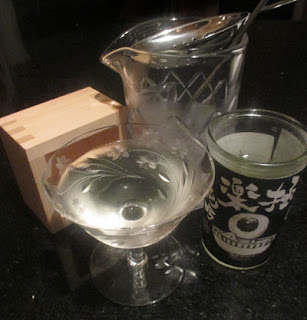
2 oz Masumi Arabashiri Sake (Oyaji Gokuraku)
1 oz Beefeater 24 Gin
1 bsp Velvet Falernum (1/4 oz)

Stir with ice and strain into a coupe glass. Garnish with a spritz of clove essence (omit).
Two Sunday nights ago, I made the other drink that I had spotted in the PDT Cocktail Book besides the Applejack Rabbit, namely Nate Dumas' 2009 Spice Market. This "ode to the East" combined the tea notes in Beefeater 24 with sake for a Inverse Martini of sorts. Once prepared, the Spice Market greeted the nose with rice wine since I omitted the clove tincture garnish. Next, a clean and grassy sip transitioned into gin, tea, citrus, sake, and clove flavors on the swallow.

Wednesday, September 4, 2013

a season of faith's perfection

1 1/2 oz Bols Genever
1/2 oz Benedictine
1/2 oz Bonal
1/2 oz La Grange Muscadet
2 dash Peychaud's Bitters
1 dash Jerry Thomas Decanter Bitters

Stir with ice and strain into a coupe glass. Twist a lemon peel over the top.

Two Thursdays ago, I stopped into Spoke after getting dinner and beer at Flatbread. For a first drink, I asked bartender Sam Karachi if he had any cocktail ideas. Sam suggested on that he described as sweet, bitter, and malty called A Season of Faith's Perfection.
Once mixed, the lemon oil greeted the nose and helped to brighten the sweet, malty, and wine-laden sip. Next, the Muscadet wine softened the transition to Genever notes on the swallow, and this was followed by grape, herbal, and bitter notes. Moreover, as the drink warmed up, the Bonal began to take a large role in the flavor profile.

Friday, May 11, 2012

a murder of crows

1 1/2 oz Christoffel Erben Ürziger Würzgarten Riesling Kabinett Wine
2 oz Bertagnolli Grappa di Amarone
1/4 oz Lebanese Arak
1 dash Angostura Orange Bitters

Stir with ice and strain into a rocks glass. Twist a lemon peel over the top and discard.

The other drink that bartender Ted Kilpatrick wanted to make for me was another of his wine explorations. This one was using a German Riesling from a special part of the Mosel region called the Spice Garden of Ürziger. The region's steep, red-soiled vineyards impart a spicy, tropical fruit, and earthy flavor to the wines. To complement these spice notes, Ted added Lebanese Arak; once mixed, the spirit's mild louching reminded him of a foggy night in London which might be how the drink got its ominous name.
The Murder of Crows offered a light lemon oil on top of a floral-pollen aroma with vegetal notes. The white grape flavors filled the sip, and the swallow showcased the return of the funky pollen note along with an anise finish.

Tuesday, September 20, 2011

celery bowl a l'amerique

Peel 3-4 celery roots (1/2 celery root) and cut into thin slices.
Cover thickly with powdered sugar (1 1/2 oz).
Infuse with half bottle of brandy, arrack, or rum (1 1/2 oz Batavia Arrack).
Cover for 12 hours (10 hours, chilling for the last hour, then strained into a mixing tin).
Add 4 bottles of Rhine Wine (12 oz Bear Flag White Wine Blend, chilled) and 1 bottle of Champagne (3 oz Cava, chilled).
My eight-fold scaled down recipe made two servings when poured into highball glasses. I garnished each with a celery stalk.

Earlier on Saturday, I finally bought some celeriac since I have wanted to make the Celery Bowl à l'Amérique from William Schmidt's The Flowing Bowl for quite some time. After peeling and slicing the celery root, I opted for Batavia Arrack to steep it in for I figured that its funky and earthy notes would complement the celery flavors better than brandy or rum. I waited until after we were finished with the Everyman Afterall cocktail before starting on the final preparations for the Celery Bowl.

The Celery Bowl's provided a white wine aroma that led into a crisp, bubbly wine sip. The intriguing part came in the swallow which presented a combination of the celery, cava, and Batavia Arrack notes along with a lingering celery finish. We had already discovered that celery and sparkling wine worked well together; indeed, we had tried that pairing at Tales of the Cocktail in 2009 when our hotel provided us with a complementary bottle of champagne and all we had on hand were the celery bitters that I was competing with later in the week. Moreover, our choice of Batavia Arrack did not disappoint here. Over all, the Celery Bowl à l'Amérique would probably make for a great breakfast or aperitif drink.

Monday, September 12, 2011

panamanian cooler

Juice 1/2 Orange (3/4 oz)
1 tsp Lime Juice (1/4 oz)
2 oz Dry White Wine (Bear Flag)
2 oz Sherry (Lustau Dry Amontillado)
1/2 pony Maraschino (1/2 oz Luxardo)
1 dash Angostura Bitters

Fill a big goblet a third full with cracked ice. Add ingredients and stir until cold. Top with soda (1 oz). Vary lime and Maraschino proportions as desired.
Two Saturdays ago, I was looking for a recipe that called for white wine and stumbled upon the Panamanian Cooler in Charles Baker's South American Gentleman's Companion. The drink was served to Baker in Santa Clara, Panama, and the wine was bolstered by sherry, citrus, Maraschino liqueur, and bitters. The Cooler began with a sip full of orange juice and grape notes. Next, the swallow contained the crispness from the carbonation and lime and the nuttiness from the sherry; moreover, the white wine appeared on the finish. After some of the ice melted, the Maraschino began to appear on the swallow as well.

Thursday, February 17, 2011

iced punch

4 oz Sugar
Peels of 1/2 Lemon
4 oz Water
Juice of 1 Lemon (2 oz)
6 oz Dry Light White Wine (or Champagne)
3 oz Batavia Arrack (or Santa Cruz Rum)
1 barspoon Maraschino Liqueur (1/8 oz)

Using a vegetable peeler, peel half of a lemon. Create an oleo saccharum by muddling lemon peels in sugar. Let sit for an hour with intermittent muddling and stirring to extract the citrus oils. Add water and juice and stir to dissolve the sugar. Strain into a bowl to remove pulp and peels. Add wine, Batavia Arrack, and Maraschino, mix, and stick in freezer for a few hours. Whisk to break up ice and pour into punch cups, champagne flutes, or other vessels. Recipe makes 2-4 servings depending on cup size.

Last Saturday, I wanted to try a wine-based mixed drink so I turned to my reprint of The Flowing Bowl. The one that seemed like a good starting point was the Iced Punch that called for a Rhine wine which is often interpreted as any dry, light white. I adapted the recipe in the book a few ways to make it more amenable. First, I cut the recipe back four fold since there would only be two of us partaking. Second, it called for the lemon rinds to be rubbed off on lump sugar; since our sugar is in granule form, I opted to extract the lemon oils through muddling the peels in the sugar. Lastly, the recipe called for an ""ice-cream freezer" to freeze the nonboozy ingredients and to mix in the rest of the ingredients as it turned. Instead, I took a chance that there was enough sugar and alcohol to prevent the punch from freezing solid if I just stuck the mix in the freezer, and I was correct -- while ice crystals did form, it was a manageable amount.
The concept of white wine and Batavia Arrack was not new to us for we had tried the White Wine Punch last year. For a wine this time, I went with Bear Flag's Soft White which I have had on its own a few times before. When the punch was served at freezer temperature, it had a delightful aroma of lemons and a light hogo-like note from the Batavia Arrack. The sip had an interesting textural component from the ice slurry and contained a semi-sweet lemon flavor. On the swallow, the flavors of the Batavia Arrack dominated and helped to dry out the drink on the finish; moreover, the white wine and a faint Maraschino note were also present on the swallow as well as the aftertaste. While substituting Champagne for white wine would produce a similar effect, using a Santa Cruz rum (a Virgin Island rum like Cruzan) would have produced a lot less distinctive of a result. Andrea commented that the punch reminded her of a hogo-laden Margarita or other Daisy. I replied that I could see why one would want to serve this punch as cold as possible for the Batavia Arrack went from really smooth to rather plasticky smelling as it warmed up.
Monday, April 5, 2010

white wine punch

2 oz White Wine (Cantarutti Ribolla Gialla)
1 oz Arrack (Batavia Arrack van Oosten)
1 tsp Lemon Juice
1 tsp Simple Syrup

Shake with ice and strain into a highball glass filled with ice cubes. Fill with soda water, and decorate with a slice of pineapple an a slice of orange (orange slices and a Luxardo Maraschino cherry). Serve with straws.

On Friday night, Andrea had opened a bottle of wine to go with dinner. Later, to use the remainder of the bottle, I found a recipe in our 1947 edition of Trader Vic for White Wine Punch which seemed alluring due to its inclusion of Batavia Arrack. Being frugal with the glassware, I used the wine glasses already on the table instead of fetching the proper highball glasses. The result ended up being a little stronger than the recipe intended.
White wine flavors were on the front of the sip with lemon and arrack on the swallow. The drink was rather crisp from the lemon coupled with the soda water, and it had a pleasant degree of sharp funkiness from the Batavia Arrack. Overall, it was a refreshing drink that would have been more refreshing had I made a tall drink out of it. However, the recipe seemed like it was missing something. The drink would definitely benefit from a barspoon or two of liqueur; perhaps some Maraschino, Cointreau, or St. Germain might elevate this punch to something rather elegant and noteworthy. Although I could see this recipe sans liqueur working quite well in much warmer weather.

Tuesday, July 14, 2009

mosel cocktail

1 1/2 oz Martin Miller Gin
1 1/2 oz Mosel Spatlese Riesling
2 dash Cherry Bitters
2 dash Peach Bitters

Stir with ice and strain into a chilled coupe glass. Garnish with a lemon twist.

After dinner at Bennachins, Andrea and I went to the blogger meet-up cocktail hour sponsored by Martin Miller at the rather posh M.S. Rau Antiques. One of the drinks was a wine-based one created by Thad Volger called the Mosel Cocktail. The photo shows Martin Miller's brand ambassador Jon Santer mixing up this drink for me inside a beautiful antique wood bar. I did not try the punch in the left of the image which was served from a $20,000 punch bowl (it was for sale along with other cocktail oddities such as the 1920's German Art Deco sterling silver airplane which disassembled into a multi-piece bar set). The Mosel Cocktail tasted like a blanco-vermouth Martini through the two housemade bitters and perhaps some of the botanicals in the gin transforming the wine into something very vermouth-like in flavor. Both the lemon oil from the twist and the gentle peach aroma from the bitters paired nicely with the wine.