Showing posts with label #the gallows. Show all posts

Wednesday, February 23, 2011

the healer

1 oz Old Overholt Rye
1 oz Mead
1/2 oz Honey Syrup
1/2 oz Lemon Juice
1 dash Fee's Aromatic Bitters

Stir with ice and strain into a rocks glass. Garnish with an orange twist.

Last Wednesday, Andrea and I went down to The Gallows in the South End for cocktails. One of the drinks that bartender April Wachtel made me that night was the Healer that struck my curiosity for it paired honey with mead. What, I wondered, would mead bring to the table that honey did not? Balancing those ingredients were rye whiskey, lemon juice, and bitters in a Sour-like format.
The nose of the Healer helped to answer the question for the orange oils were paired with a honey funkiness from the mead. The sip contained lemon and the honey's sweetness, and the swallow possessed more honey flavors along with the rye's barrel notes and heat. The mead was also present in the swallow where it contributed a sour note akin to a Flemish Ale which helped to dry out the balance at the end. Lastly, as the drink warmed up, cinnamon from the bitters appeared on the swallow and worked rather well with the honey notes.

Monday, December 13, 2010

angels' share

a) 6 Cranberries
1 Sugar Cube
1 splash Water

b) 2 oz Red Wine (Underwood Cellars Pinot Noir)
3/4 oz Lemon Juice
3/4 oz Simple Syrup
1/4 oz Maraschino Liqueur
1/4 oz Campari

Muddle ingredients in (a). Add ingredients in (b) and ice, shake, and double strain into a cocktail glass. Garnish with 3 cranberries.

For my second drink at the Gallows two Sundays ago, I asked bartender Carl Donheiser for the Angels' Share. When I first visited the Gallows, the drink was on the menu with a more seasonal fruit, Concord grapes; the switching to cranberries tempted me into ordering this drink for I wanted to see how they paired with Campari. Moreover, I was curious to taste a modern wine-based cocktail, for most that I have tasted have been late 19th or early 20th century recipes or variations thereof. For a wine, the bar varies the selection, but it is always something low on tannins, and this drink was made with a Pinot Noir from Oregon's Underwood Cellars.
The wine in the Angels' Share came across strongly in the drink's aroma. A tart cranberry sip matched the red wine and citrus flavors. Surprisingly, the Campari was rather subtle in the drink and acted more as an accent to support the cranberry. Personally, I would have preferred a bit more of a Campari signature. When I mentioned this to Carl, he commented that when the drink was created with Concord grapes, the Campari rang out more, and that they did not readjust the proportions to compensate for the seasonal change in the fruit's identity. While some people might find this drink too tart, I quite enjoyed its refreshing balance.

Friday, December 10, 2010

old trousers

1 oz Old Monk Rum
1/2 oz Honey Syrup
1 dash Fee's Old Fashion Bitters
6-8 oz Guinness Stout

Build in a small (10 oz) snifter glass. Top with stout and garnish with a healthy pinch of grated cinnamon.

On Sunday, we spent the day up in Kittery, Maine, to do some clothing shopping. I am not sure whether I enjoy the outlet stores there more or our tradition of eating at the Portsmouth Brewery on the way home followed by a trip to the southbound I-95 New Hampshire State Liquor Store. There we were able to contain our purchases to 3 bottles: the return of Bulleit Bourbon to our shelves, a backup bottle of Benedictine, and a bottle of Root! We had tasted this root tea liqueur at Tales of the Cocktail this past year, but this was the first time we had seen it for sale! On the way home, we decided to overshoot our exit and continue on to the South End and visit the Gallows to have a drink or two to celebrate Repeal Day.
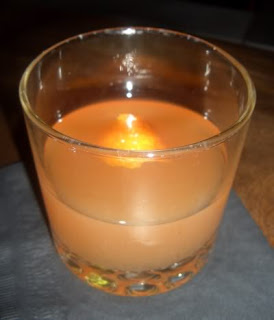
For my first drink, I was tempted by the Old Trousers, a beer cocktail that seemed very colonial in theme. In fact, the name, according to Gavin Nathan's Historic Taverns of Boston: 370 Years of Tavern History in One Definitive Guide, was one of the original beer cocktails on old tavern menus. It was rather affordable for it "contained all the partially consumed beers left at the bar, mixed together and re-served." For such a honorarium to a hideous drink, this Old Trousers was actually a delight to drink. Perhaps it had to do with the fresh Guinness coming from a tap instead of the lost sailors from around the bar. Guinness' maltiness and cinnamon were on the sip while the rum popped up on the swallow along with more of the cinnamon and the beer's hops. Indeed, the dark, rich Guinness Stout was complemented by the Old Monk Rum; however, it was the honey and the cinnamon which really tied the drink together. The honey donated a delightful smoothness to the drink and the cinnamon supplemented the rum's vanilla, beer's hops, and the aromatic bitters to make for a finely seasoned drink.
Sunday, September 26, 2010

elisabeth aplegate

1 1/2 Plymouth Gin
3/4 oz Cucumber Purée with Herbsaint and Hyssop-Anise Syrup
1/2 oz Lemon Juice

Shake with ice and strain into a rocks glass filled with fresh ice cubes. Garnish with a cucumber slice and straws.

For my last drink at The Gallows, I asked bartender April Wachtel to make me the Elisabeth Aplegate off of the menu. The drink was named after an example of the brutal punishment and harrassment that women suffered during Puritan times; Elisabeth Aplegate in 1636 was declared guilty of swearing and reveling and was forced to stand in public with her tongue inserted into a cleft (split-ended) stick. For such a dark sounding story, the drink was rather light with a bounty of herbal notes.
The drink's aroma was mainly cucumber and anise, and these notes carried over into the sip. The flavor was supplemented by the mint-like hyssop in the syrup and balanced by the crispness of the lemon juice. While the Elisabeth Aplegate was different from the Fin du Saison I had at Craigie on Main, the pairing of cucumber with farm-fresh herbs had a very similar effect.

Friday, September 24, 2010

roxbury russet

1 oz Cognac
1/2 oz Laird's Applejack
1/2 oz Lemon Juice
1/2 oz Honey Syrup
4 dash Fee's Aromatic Bitters
3-4 slice Apple (~1/6 medium apple)
4 Cloves

Muddle cloves. Add apple slices and muddle again. Add rest of ingredients and ice, shake, and strain into a cocktail glass. Garnish with an additional apple slice.

For my second cocktail at The Gallows on Sunday night, I asked bartender Carl Donheiser about another drink on the menu, but after talking with him, he steered me toward the Roxbury Russet. The Roxbury Russet was Carl's creation and the least darkly named drink of the three I had. Not named after a blood sucking beast or a sinning Puritan who was severely punished, the drink refers to an apple varietal believed to be the oldest apple cultivar grown in this country. The varietal was started about a mile or two away from the bar in Roxbury (now a suburb of Boston) in the seventeenth century.
The Roxbury Russet cocktail started with an autumnal aroma of clove and apples. The clove continued on in the sip to spice a sweet apple, lemon, and honey flavor. The cloves along with the cinnamon and other botanicals in the bitters appeared in the swallow and helped to dry out the sip. Indeed, Carl had described this drink as elegant and light, and that was pretty accurate. The cloves were the breakthrough ingredient for him in this recipe and their effect was rather stunning. Shortly before he served this drink to me, he made a hot toddy variation of it to someone else at the bar; while I did not try it this way, my neighbor seemed rather pleased by the result.

chupacabra

1 oz Lunazul Reposado Tequila
1 oz St. Germain
1/2 oz Punt e Mes
1/2 oz Lime Juice
1 barspoon Mezcal

Shake with ice and strain into a cocktail glass. Garnish with a lime wheel.

On Sunday evening, I decided to travel to Washington Street in the South End and finally visit The Gallows. I arrived just as a seat at the bar opened up, and when I sat down I was greeted by head bartender April Wachtel who I had briefly met at Tales of the Cocktail in July. Upon perusing the menu, the Chupacabra -- both for its ingredients and its name -- stood out as a good starting point. I mean, a tequila drink named after one of the wonders of modern cryptozoology?
The Chupacabra started with a mezcal and lime aroma, and part way through the drink, the Punt e Mes grape and St. Germain floral notes became apparent on the nose. On the sip, the tequila and St. Germain paired up rather well, and both were complemented by the lime. The St. Germain aided in making the drink pretty mellow especially for a tequila and mezcal cocktail. Similarly, the Punt e Mes functioned to make the St. Germain less distinguishable in the mix despite being a major constituent of the recipe. Overall, the drink was pretty balanced, and the added complexity of the bitter Punt e Mes vermouth and smoky mezcal gave the Chupacabra some intrigue over a standard Tequila Daisy.