Showing posts with label *seminar. Show all posts

Tuesday, October 8, 2024

:: engaging with challenging guests ::

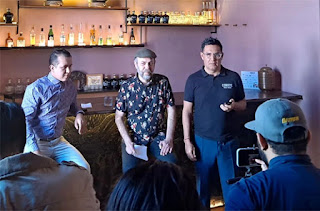
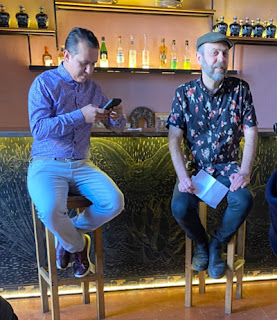
Yesterday, USBG Boston hosted all four of its Education Week 2024 events that included a comparative tasting of tequila production techniques with John Mayer Spressert of Burke Distributing, a class on ice carving history and technique with Iruma Shibuya, and a roundtable on cocktail competitions with a trio of veterans. The one that I took the most notes for was a roundtable entitled "Engaging with Challenging Guests" that discussed how to best handle situations that involve drinking, drug use, and entitled behavior especially when it becomes disruptive if not before that point. The panel moderated by USBG Boston president Justin Silmon consisted of Keith Bennett – the head of security at the Middle East restaurant and rock club, Corrie Masison – AGM of MIDA in East Boston, Nestore Polce – GM of Branchline, and Geoffrey Thompson – currently working on the South Shore but spoke a lot of his time managing the Sinclair rock club, Foundry on Elm gastropub, high volume Riverbar, and other venues around town.

For folks working in the service industry, we have all experienced dilemmas of how to deal with guests who have consumed too much, who are acting in inappropriate ways towards staff or other patrons, or who are beginning to get belligerent or threatening. The roundtable speakers considered these issues from their experiences working at rock venues on one end to fine dining on the other as well as all sorts of establishments in between. Keith, after telling a wild story of his younger days as a bouncer, started off sharing what he learned over time. His advice was de-escalation that included not taking the bait as the person in question calls you every name in the book or wants to fight, and not taking it personally for it is only work. With that also came leaving life's problems at home, and he described how a boring night at security is a sign of a job well done. Nestore reiterated the leaving your day's troubles at the door and continued on with a focus on staying calm as the guest tries to make you upset. Nestore explained that our job is to make the business move forward while keeping an eye on the safety and comfort of the other guests.
Corrie learned a lot from watching her friends who have become moms and dads, and she extracted gentle parenting techniques on how to guide people in the desired direction. In a later part of the session, she expounded by declaring that course correction is crucial before things become a problem, and this needs to be direct with the boundary setting. Geoffrey had two major points in this round which were that we have to take care of our guests as we "poison" their systems with alcohol. The second part was that this begins with teaching the hosts, bartenders, and servers how to make the night go smoothly; he continued on with the importance of getting to know your local beat cops who can help to de-escalate situations faster than calling 911. Later, the discussion honed into the public perception of the police. Keith best summed it up by saying that regardless of what you think of the police and the issues in the news, this is what police are really good at which is making the problem dissipate before violence erupts.

Keith later added to his previous points by stressing to make sure that you are not alone in any confrontation. His thought process as a bouncer is not how can you hurt someone but how can you diffuse the situation without getting hurt yourself. In fact, if there is violence of any sort, he feels a great sense of failure, and he alluded to the financial risks of lawsuits as well. Geoffrey also spoke of legal issues but more regarding the finances involving liquor licenses that are rather expensive investments in this state. If something happens to a guest, a manager may have to bring in a lawyer to face city officials include councilmen and police and fire chiefs, and this turns into a pricy affair in the defense alone. Geoffrey condensed this topic with the point that you have to make decisions throughout the night to protect your establishment's livelihood.
Keith as part of the security team worked at being welcoming, helpful, and invisible. With the first two, the tone can be set at the door. With the last point, he did not want to be the catalyst for problems to happen; however, he and his staff communicated on who to keep eyes on, so invisible was expanded into observe, report, and invisible until it was time to act. Nestore in the restaurant environment took a more direct style of approaching potential issue tables with an introduction and perhaps a question of what they were celebrating or other to make it known that they were being watched and perhaps acting a step away from the usual demeanor. He makes sure his staff is trained to notice if someone is making others uncomfortable and to alert a manager. Moreover, he focuses on checking in with the guests around the issue and communicating that they are seen, heard, and protected. Finally, Geoffrey brought up the point that guests are always watching and will take notice of what the management and other staff allow to happen and thus what directly or indirectly is deemed acceptable. If those guests see you doing nothing, that is only going to hurt your business even more in the long run.

Wednesday, January 25, 2023

:: as a beginner bartender, how can i be less nervous? ::

When Dr. Jorge Vera of Convite Mezcal asked the audience if there were any questions following my talk, one person spoke up and asked, “I am just a beginner in the world of bartending, so how can I control the nervousness?” To which I replied the following:

There are many ways. One is to learn to own the space – this is your bar. When you are a server, the guests rent the table in a way, and you are approaching their domain. If they choose to sit at the bar, it’s your bar. You own this bar, and you take pride in it. When there is a problem in a restaurant, servers will often run away, and bartenders often will not. I can act fifty pounds heavier and confront the problem.

Other things you can do are go out and experience a bar – another bar – and see how every interaction makes you feel. Like when the lights are too bright, the music is too soft or too loud, the bartender doesn’t give you water, the bartender doesn’t get you a drink fast and instead talks to their friends. How does that make you feel because that is the way your guests may feel. Now you know. You’re going to make a lot of mistakes, but seeing other people make mistakes and learning from it will aid you.

It’s not about being perfect but being aware, being mindful of what you’re not doing right. And asking a mentor, an older bartender “What do I do?” I remember I had one coworker who was a great mentor. When you say that you have a problem or a bad shift, some bartenders will just say, “That sucks.” Instead, this bartender explained what I ought to do in those situations and these are things that have worked for them.
When I first started bartending, all of the guests knew I was new, I was vulnerable, I was fresh meat in the water for the sharks. Some made it a game of making fun of you, and being mean, and eventually you learn tricks. You’ll learn your own tricks. One is to have more energy than them – be animated, have a smile, seem like you want to be there, that you care about them, and very few people will give you a hard time for they do not want to lose that energy. Also being able to conjure that angry parent voice… You control the candy. They will be like, “I don’t want to hear that voice from him again.” Learn to conjure it and then bring it back to normal to see how they react. If they continue pushing you, then just say, “No más!”

There are other ways if a person is giving you a hard time or you just don’t like that type of person. Sometimes you are working with another bartender who can deal with people that make you uncomfortable or angry and they will handle it, and there are people where I love that challenge and I’ll switch with them to the other side of the bar and I’ll make their life easier.

This is a career and you’ll get better if you want to get better. Find books, find podcasts, find teachers – they’re here. They will teach you. You either have to come to them or observe [them working]. When you see bartenders doing something right, steal from them. I remember I used to say “Hey guys, welcome to my bar” and ‘guys’ has a gender. And then I had guests that were transitioning and I became self-conscious about how that phrasing seemed very disrespectful. They’re not coming here to be judged or have any linguistic slight. So I stole from a bartender named Sother Teague. When you sit at his bar at Amor y Amargo in New York City, he says “Welcome friends!” So, “Amigos!” — well that has gender… oh crap! Amigxs with an ‘x’? Perhaps “Mi gente” since it doesn’t have a masculine or feminine aspect. So I stole that from – borrowed it, stole it without shame since I attribute that to him.
Know when you are lacking something, seek out the answer whether you ask or observe, you will find ways. Not all of the ways will work for you. And some will work better depending where you are working, who you are working with, and who is the guest. It will vary if you are working at a dive bar, a fancy cocktail bar, a casual restaurant, or a fine dining restaurant. You will acquire different tools, and the more diversified the tool kit, the better.

To reiterate, you’re going to spend hundreds of hours behind your bar, sometimes thousands. I actually did the math of how many hours I worked at different places. It’s your spot. You get there before the guests, you can wage a war of attrition and you’ll be there at the end. Take pride. Take ownership. And realize what you’re doing wrong. You don’t have to be perfect now. You only have to get better. Wonder what went wrong that night. I always beat myself up over it and get overthoughtful about what I did wrong.

You may be a bartender for a couple more months, and you may be a bartender for decades. Even if it’s not long term, getting better at the craft is applicable elsewhere. Once you become a good bartender, you become a good businessperson. You can then move on. The skill set is how to deal with people. True, you make drinks – it’s arts & crafts and it’s fun. Does it matter? Yes and no. I make great drinks – I hope, but people come back to me because I try to make them feel good, try to make them feel special, try to give them what I think they want. There are two concepts, the Golden Rule and the Platinum Rule. The former is “Do unto others as you would want to be done to yourself,” and the latter is “Do unto others as you think they would want to be treated.” What you want is not necessarily their need, but if you can figure out what their need is, you can do better for them.

Monday, January 23, 2023

:: mindful bartending, my master class at casa convite:

Below is the master class that I gave at Casa Convite for bartenders in Oaxaca on January 12th. It was on "Mindful Bartending" and bartender Jorge Vallejo from Chicago followed with "Mindful Menu Design" (and he translated my words and thoughts into Spanish).


Greetings, I am Fred Yarm and I was last at a bar called Drink in Boston where I was the general manager, bar manager, and bartender, and our bar was rather unique in that we were a cocktail bar without a drink menu. This required a lot of connection with the guest – we needed to start a conversation to get them the best drink possible, and I often made use of a concept called mindful bartending.

My interest in mindful bartending came from reading Gary Regan’s thoughts on the matter in his 2011 Annual Manual for Bartenders, which led me to attend his Cocktails in the Country retreat in 2015. Many of these thoughts either stemmed from his teachings or from what I learned through experience or through other resources afterwards.

In This Must be the Place: Memoirs of Jimmie the Barman, Jimmie who worked in the Mountparnasse section of Paris in the 1920s said, “Almost anyone can learn to mix drinks accurately and fast. That is the least of it. I have always believed success behind the bar comes from an ability to understand the man or woman I am serving, to enter into his joys or woes, make him feel the need of me as a person rather than a servant.”

Mindfulness is often associated with Buddhism, but one need not be a Buddhist to practice mindfulness. And it’s not a one size fits all, but is a way that is tailored to the individual and establishment and can change over time.

In a bartending sense, mindfulness means that you are aware of everything that is going on around you and focusing on all of your guests’ needs. It is not something that needs to be 100% perfect but it is worth striving for that.

Mindfulness of a bartender begins by leaving one’s personal problems at the door so that they can focus on the guests and set their intentions to be of service to them. Once that happens, it’s easier to be aware of what the guests want, what else is going on with their coworkers and what is happening in the whole restaurant.

Part of that preparation for the shift can come from some sort of meditation. Silence, loud music, or actual meditation can separate one from thoughts of life’s troubles. I have never personally taken it as far as proper meditation, but it was something Gary did. Lately, for me it was listening to podcasts while walking to the bar. Whatever can block out the conversations in your mind will work.

Intuition is an essential tool for the bartender that takes a lot of practice to hone in on. A bartender can sense when guests need something, when a guest should not be served any more, or when there is tension between two guests. Tricks to accomplish this include scanning the entire bar on a regular basis if not the entire restaurant. Observe the body language and vibes of the guests. Try to figure out why the guests are there, how much they want to be interrupted and by whom. An example of this was when I was first bartending at night, a senior bartender asked what I observed at the corner of the bar. I replied “An older man with a middle-aged woman.” He countered, “What else? … Look at their hands.” I then noticed, “He has a [wedding] ring and she does not.” My mentor explained, “Exactly. That is everything you need to know. They do not have names, do not want to be spoken to, and will be paying in cash (as opposed to a credit card that could be traceable).” He was right. Indeed, everything can be a clue.

Nobody goes to a bar for a drink. You can drink at home, but people go out to celebrate, meet other people, find romance, conduct business, or read. People will go out for a drink if they hear that the place has quality cocktails, but they will not return if that is all they get. The most important goal of a bartender's job is to make sure that every guest leaves the bar happier than when they walked in. Something Maya Angelou once said that has a lot of applicability to bartending, “I've learned that people will forget what you said, people will forget what you did, but people will never forget how you made them feel.” 

Communication is also important, and listening is just as important as talking. Listen intently and make sure that the person who is talking is aware that they are heard. Guests respond very well when they realize that the bartender is focusing all of their attention on them. Communication with coworkers is also important because if you are mindful of their needs, they often gladly reciprocate when you are falling behind.
Communication is also important in terms of phrasing. Telling people that they ought to think about doing something often works better than telling them what they should do. People will be more receptive if the phrasing of the request is mindful. This even worked in a supervisory role where I brought to their attention an issue and asked that they consider changing certain behaviors instead of making demands. Moreover, asking for help also works well especially in getting one of their friends to correct a behavior.

Communication without anger is key. Take a moment, breath, observe, and practice mindfulness to proceed without reactivity. Figure out what is making you angry. Same with the guests and figure out what is driving them. Anger is based in fear and embarrassment. Reducing any fear such as confusion of what the guest ought to do in a situation works well if applied early. (At our menu-less bar, teaching the other bartenders on how to anticipate fear and embarrassment in the ordering process led to happier guests and fewer bad reviews online). Being pre-emptive in addressing these issues pays dividends.

Gary Regan declared that fear and love are key, and every other emotion is based on these two. Anger is based on being afraid; if you take away fear, you can take away the anger in a situation. You can count to ten and in that time figure out what you are afraid of. And when you get angry, it is really only affecting one person – you. Finally, mindfulness can change your reality. For example, if you pretend to like the people you really do not, those people will change the way they interact with you.

Another point is that it is important to stay humble.

Regardless of any accolades and accomplishments of a bartender, each guest is a new challenge that you need to prove yourself to them. True, prior experiences offer confidence, knowledge, and a depth of tools to make the next guest’s experience better and to make that moment matter. In my mind, it is the only moment that matters. No guest will be consoled that their mediocre (or worse) night out was handled by someone who on paper should have been above average.

During the beginning of the Pandemic, one of my quarantine reads was The Book of Ichigo Ichie: The Art of Making the Most of Every Moment, the Japanese Way. Ichigo ichie is a tenet of Zen Buddhism, and it is often used as a greeting or a goodbye. It conveys that the moment is unique, special, and once in a lifetime. In martial arts usage, it means that there is no “try again” in life-or-death moments, but in casual usage, it is a means to focus on the moment at hand for it will never happen again. That guest sitting at your bar will never have a first greeting, first cocktail, or first night sitting at your bar ever again. They will be celebrating that birthday, anniversary, or promotion only once. They may return, but that special moment has fled. The book quotes the Greek philosopher Heraclitus who declared, “No man ever steps into the same river twice, for it’s not the same river and he’s not the same man.” Ichigo ichie will lead to greater satisfaction if one is not weighted down by the past or anxious about the future; if one can live fully in the present, the journey can be a unique and once-in-a-lifetime experience.

Subtle self-promotion does have its value especially in gaining the confidence in the guest, but this needs to be backed up with action eventually if not first. I am not without an ego for sure, but I try to put it on a back burner for most of my bar shifts unless the guest begins to inquire. Self-aggrandizing perhaps has its place to some extent in reassuring a guest as to why that moment is unique. Many have a curiosity as to why this interaction feels different and special, and they desire an explanation. Without prompting, that same story reveal is unnecessary and pretentious, and it could across as insecurity and seem like a way to make up for shortcomings by resting on laurels or worse – acts of fiction and delusion. Micah Solomon in The Heart of Hospitality: Great Hotel and Restaurant Leaders Share Their Secrets wrote, “The heart of hospitality, for me, is the ability to focus completely and totally on one person, even if only for a matter of seconds, yet long enough that you’ve got a clear connection, a channel between the two of you.” Working towards that connection is the goal with many ways of getting there.

In thinking about other bar mentors in the industry, I wondered what would legendary NYC barman Sasha Petraske say about all this [since he was a bit of an iconoclast]. In his Regarding Cocktails book, he instructed, “Do things not for applause or personal gain, but simply because it is the right way to do things.” Indeed, Sasha promoted the idea of hospitality over self-needs to choose the best path possible for the guest.

In returning to Gary Regan, he stressed to not underestimate your ability as a bartender or server to change the world one customer at a time. If you make one guest happy and they pass that on to other, and if you consider how many guests you see in a work shift, in a week, and in a year, it can make the world better.

Tuesday, December 28, 2021

:: from jerez to jalisco -- expressions of sherry ::

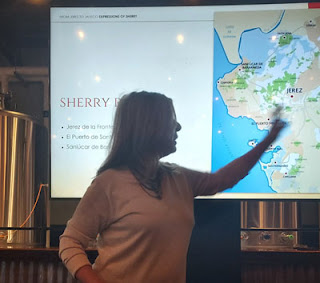
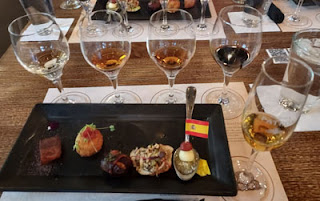
Two Tuesdays ago, I attended a class on sherry at Faces Brewing Co. in Malden hosted by Patrón to showcase their new añejo tequila aged in sherry casks (more on that in the next post along with a cocktail recipe). Patrón's East coast ambassador Steph Teslar introduced certified sherry educator May Matta-Aliah; May is a New York-based wine educator, president of In the Grape, and sherry whisperer with 18 years experience talking about that fortified wine. In the past, I have covered sherry before such as in seminars like Derek Brown's at Thirst Boston and when posting recipes from Talia Baiocchi's Sherry book, but I felt it was a good time for a refresher of sherry basics.
So what is sherry? Sherry is a fortified wine of place with that location being the southern part of Spain. Jerez de la Frontera, El Puerto de Santa María, and Sanlúcar de Barrameda make up the "sherry triangle" which is where the maturation occurs, and the vineyards are located throughout that southwestern portion of Spain as long as the soil and growing conditions are correct. The fortification started as a pragmatic reason for casks were not hygienic and storage conditions were not temperature controlled; with these cities being along the coastline, preparing wines to be stable to make it through ocean voyages was essential. Over time, they learned that an elevated alcohol content of 15-17% ABV makes wines more stable against spoilage bacteria. Sherry was perhaps the oldest wine produced to be exported. The Moorish denomination in Spain were knowledgeable about distillation, but as Muslims, they did not use this technology for drinking. The Moors were driven out of this region during the reconquest of 1264, but the technology for distillation remained. The 1800s were a great time for sherry for viticulture was booming in the area with well-established shipping routes such that production jumped from 7,000 to 70,000 casks. Aging Scotch in sherry casks became common for pragmatic reasons since bottles were not as common and there was no system to return the shipping casks.

The most cherished growing regions have albariza soils for they make the best wines for sherry; the high concentration of calcium carbonate gives the soil not only a white color but an amazing ability to retain loads of water. The next best is arenas which is more sandy; Moscatel grapes are grown on this soil, and this soil lines the insides of bull fighting rings and sherry bodegas (wineries). The last is barros or clay soil which is not coveted much for grape production. On these soils, there used to be 40 grape varietals grown, but now there are only 3 main ones, namely Palomino, Pedro Ximenez, and Moscatel. Palomino is rather neutral and not very exciting on its own with low levels of acid and aromaticity; however, the wines are rather heat tolerant and aging friendly. Pedro Ximenez is a white grape varietal that is utilized both for dessert-style sherries as a single varietal or as a sweetener for certain sherry styles (as described below). And lastly, Moscatel is an aromatic grape that is found all around the Mediterranean; none of the sherries we tasted contained this grape though.

The sherry bodegas where the wine is produced are often called cathedrals due to their architecture. They are built with an orientation to allow the ocean winds to provide ventilation. An interesting fact is that the sherry casks are painted matte black for a particular reason – if a leak occurs, the wetted area becomes rather shiny. These barrels stay in the solera system for decades and are repaired in house, and they are not the same as the shipping barrels (600 liters for aging and 500 liters for shipping; aging need to have an air space (see below) and thus are slightly bigger). The solera is an aging system of fractional blending. It imprints a very special dynamic on the aging process and influences the nature of the wine in a singular ways – by eliminating the variation that occurs between vintages to ensure continuity. The newest barrels are often at the top and called the 2nd criadera, and they feed the 1st criadera. The 1st criadera feeds the oldest barrels referred to as the solera. None of the barrels are emptied all the way, and this fractional blending gives a new food source to the older barrels. Food source? Yes, there is a layer of yeast called flor growing on top of the sherry in the barrel, and this yeast not only protects the wine from oxidation but breaks down the wine such as the sugar and glycerine content and returns flavor components and acidity to the mix. This living colony requires humidity and an air source (meaning the barrels cannot be completely filled). Choices are made with each barrel as to what sort of sherry it will become labeled as whether by nature or wine maker's intervention. Fortification of 15% and less promotes this biological aging, whereas as raising it over 17% ABV will kill off the flor and take the sherry on a path of oxidative aging.
The various styles:
Fino: Made from Palomino grapes completely under biological aging in Jerez de la Frontera and El Puerto de Santa María. Both Fino and Manzanilla have been aging in the solera system for at least 2 years and in Jerez often 3 years or more. These wines like Manzanilla are dry, high acid, and bright. Tasting notes include dough, yeast, brine, lemon zest and pith, green almond.
Manzanilla: This is a Fino style that is aged in Sanlúcar de Barrameda which is surrounded by ocean, an estuary, and a river which add a sea brine aspect to the wines. Often lighter in style with more flor influence than Fino. The name translates to chamomile which can be one of the tasting notes.
Oloroso: Here, the wine made from Palomino grapes is fortified above 17% to kill off the yeast before it can become a protective flor. This leads to not only a darker color and nutty notes from oxidation, but the wine will have more weight since the flor did not breakdown all the glycerine and other components. Both Oloroso and Amontillado will be dry, medium in acid, and nutty.
Amontillado: Like Oloroso, this is another oxidative aging, but here, the wine starts its life aging underneath a layer of flor (often 3-4 years) followed by a time when it ages oxidatively due to the flor dying or being killed off. The end result has the nose of an Oloroso but the finish of a Fino.
Palo Cortado: This is a unicorn category that sits somewhere between Amontillado and Oloroso. The wine starts as a fino and within 6 months (as opposed to 3-4 years), the ABV is raised to cut its flor growth.
Pedro Ximenez: Both Pedro Ximenez and Moscatel are raisinated by being placed on straw mats for a few weeks to concentrate the juice. The result is a rather sweet dessert wine that possesses raisin, molasses, figgy, stewed, and carob notes with a syrupy and rich feel. These wines can also be used for blending (see next category).
Cream: These are blends of dry and sweet sherry wines. Pale cream is a Fino or Manzanilla sweetened with concentrated grape must such that it is off dry. Medium falls in between Pale and full Cream in sweetness and often is an Amontillado sweetened by Moscatel or Pedro Ximenez. And finally, sherries labeled as Cream are generally Oloroso sweetened with Pedro Ximenez with a higher sugar content than Medium.

Saturday, December 25, 2021

:: boston baijiu bar ::

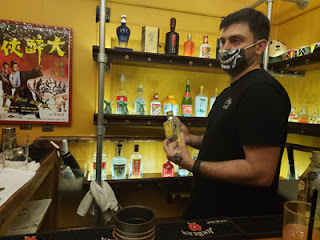
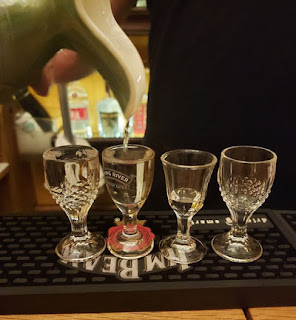
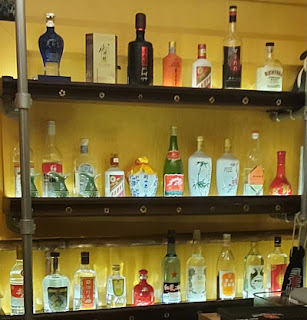
Back in October, I met bartender Nick Lappen at a tequila event in town. I soon realized that he was someone I had conversed with on Reddit and that he was the one running the Boston Baijiu Bar at Backbar that I had read about. The Boston Baijiu Bar is a ticketed event held on Thursday nights since September in Backbar's side bar that previously hosted the Olde Mouldy historic spirits bar, and it is an educational experience about China's most popular spirit. I was curious about attending for I could not wrap my head about this liquor as I described in this Liquor.com article on baijiu, and I wanted to be properly guided (spoiler: I was previously drinking it in an American style instead of one that works with the spirit). Between my work schedule and other life events, I expressed that it was not possible to attend this on Thursday nights, and Nick then offered up that he could do a Sunday night for bar industry folks to align better with our schedules. That industry Sunday finally came about two weeks ago, and I took my wife to experience some educational drinking.
The Boston Baijiu Bar comfortably sits six guests per each of the three seatings in a night (costing $35 + gratuity for the experience that includes a cocktail, sample pours, and snack pairings). As we sat down, we were greeted by a Chinese hiphop soundtrack, a glass of water, and a menu of six cocktail options (see tomorrow's post for the two we selected). Once all of the attendee's arrived and the drinks were made, Nick started the formal part of the class. At some point, Nick explained how he got interested in baijiu, and it was a whole story within itself. He mentioned that it began with a decision made with a friend after a bit of Jameson Irish Whiskey to teach in China for 6 months; he later described how it was not stateside as I imagined but in a bar in Jerusalem – a city where he had a short term job as a teacher. After a 6 month stint in China, he returned home to the United States only to find the allure of China calling him back for both bartending and teaching opportunities. Nick lived in China for 5 years before returning home for a short visit; unfortunately, the Pandemic set in, the borders closed, and he got stuck here away from his girlfriend and child. During those 5 years, Nick's bartending jobs there exposed him to baijiu and the drinking culture, and he explored and got into the various styles. Previous to his joining the Backbar team in Summer 2021, he worked at Drink where the various staff there claimed to hate the spirit, and he wanted to prove them wrong by developing this class and exposing them to more quality baijiu than the cheaper common brands like Red Star that come across like nail polish remover. Unfortunately, Drink closed for four and a half months to fix the leaky foundation, and he never got a chance. Luckily, his next bar home embraced the idea.

But what is baijiu besides the world's most popular spirit where total production is greater than that of vodka plus whiskey combined? It is a Chinese grain spirit of sorghum and sometimes rice and other grains in the mash bills, and it is produced from a wild ferment of airborne microbes that gives the spirit terroir or a very region-specific feel. The name itself means bai="white" + jiu="spirit," and it is one of the oldest distilled liquors known to man. Its precursor was shaojiu or "burnt water," and this spread to Korea and Japan as soju and shochu, respectively. Alcohol production dates back around 9000 years in China, and this pre-dates the cultivation of wild rice; it is possible that rice crops came about as a way to produce more alcohol. Baijiu is often fermented in lined pits in the ground, and the oldest provable distillery was set up in 1573 and is still producing today (baijiu production started earlier than this date by a few centuries though). Unlike most traditional spirits, the fermentation work is done by a combination of yeast, mold, and bacteria in a single step (unlike sake which is fermented in two steps with mold followed by yeast). A starter called qū of microbes growing on wheat or steamed rice is used to start the fermentation. One study found more than fifty types of mold in the mix, so lots of variations in microbes and thus flavor is possible. The stills are short, squat, and alembic-like but unique in design, and the stills also function as grain steamers. Finally, blending is a major part of the art to target the desired flavor profile.
Originally, baijius were classified by where they were produced for they corresponded to the stereotypical flavor profiles of the region. Later, as different regions started producing other styles, baijius became classified by aroma (not flavor) with four major styles and several minor ones including ones infused with medicinal herbs and aromatic flowers. Those four major styles are rice aroma, light aroma, strong aroma, and sauce aroma, and for each of them, Nick offered up a pour paired with a snack food. The food pairings were a necessary part of the class for baijiu is most often drank at meals especially with friends and family. Moreover, it is traditionally served in small glasses (1/3 to 4/10 oz or around 10-12 mL) in multiple rounds each with a toast. The classic toast is "Ganbei!" which means "dry (your) cup," and it is practice to clink glasses a little lower to show respect; this can be taken to an extreme with the toast being done close to the floor as each tries to undercut the other.
Style 1: Rice Aroma: This is the most mild and subtle of the styles which originated in rice-rich Southeastern China, and its starter is fermented rice flour made into a ball and pitched into fresh steamed rice. With this style, Nick paired the baijiu with dried shiitake mushrooms with salt, and the umami notes helped cut the slightly sweet aspect of the rice baijiu. My tasting notes of the baijiu were "nutty, rice note, close to rice soju, approachable – no crazy flavors."
Style 2: Light Aroma: Unlike the former category, the light aroma baijiu are made from sorgum, and the style originated more to the north. Nick paired this sample with latiao which are gluten pieces soaked in chili oil and coated with chili dust and MSG. My tasting notes for the spirit were "waxy texture, earthy, grain, savory, soy aroma; funky grain, fruit, and soy taste."
Style 3: Strong Aroma: This style originated in Sichuan in the Southwest of China, and it is made with multiple grains yielding complex flavors and aromas. Nick served this sample with Lay's Mala Barbecue potato chips to capture the numbing and spicy food style that would be traditionally paired with this class of baijiu. Indeed, this spirit could match the intense food for my notes were "overripe tropical fruit, durian, pineapple, guava in front; barnyard funk, fermented hay, Brettanomyces-influenced natural wine on end." The oldest distillery is Luzhou Laojiao meaning "old hole in the ground" and makes Ming River brand; check out Camper English's photos and tour on Alcademics. Many of these pits are over 50-100 years old, and they are never fully emptied; perhaps to keep consistency for sour mash and perhaps to generate additional flavors akin to Jamaican rum.
Style 4: Sauce Aroma: This one is Nick's favorite, and it originated in the landlocked province of Guizhou/Kweichow to the Southwest; this has historically been one of the poorest provinces in China that has suffered from a series of famines. Moreover, it is where Nick was living. Frequently, it is made from a combination of sorghum and wheat. Here, the spirit was matched with pickled mustard greens. Sauce aroma style lives up to its name for it is replete with umami and is rather soy sauce like. My tasting notes were "shiitake, cocoa powder, soy sauce, toasted sesame."

While baijiu lives up to the name of "white spirit," some of the stronger flavored and aromatic ones are aged in neutral clay or porcelain vessels to induce oxygenation and concentration. Rice aroma have short fermentation times of around a week, light and strong aroma spend 2 weeks to over a month, and sauce aroma can be over 9 months. Again, there are other styles including medicine aroma where herbs are added in the fermentation such as mugwort, licorice root, and star anise. And the most unusual sounding was phoenix style aged in wicker baskets sealed in bee's wax and pig's blood (no one opted for this one, but if I weren't a vegetarian, I would have requested it. And perhaps curiosity would have gotten the better of me if it was placed in front of me). The additional baijiu that I requested to taste off the shelf was Mei Kuei Lu Chiew which had rose petals in a gin vapor basket-like contraption, and this was delicious and floral. Chu Yeh Ching Chiew was a sweet yet medicinal one from a bamboo leaf infusion that I passed up to try the rose one.
As I mentioned earlier in my quote in that article, Western bartenders often do not get the spirit for they try to work it like vodka, gin, or whiskey, and also they frequently do not think about food pairings. Many baijiu styles share more with rhum agricole, cachaça, and high ester Jamaican rum than other standard spirits. Therefore, baijiu works incredibly well in tiki and tropical drinks with fruity and bold flavors with pineapple being an easy and obvious example. Baijiu also works great with very bitter ingredients such as Cynar, Suze, and Bitter Bianco. And finally, autumnal baking spice vibes mesh well such as allspice dram liqueur.

Over the last almost 4 months, Nick has taken up to 18 guests a night via three sittings of 5pm, 7pm, and 9pm around 3-4 Thurdays a month. 10% of the ticket price and all the proceeds from the sale of mugs (a donation from Ming River Baijiu) become a donation to the Boston Chinatown Neighborhood Center. Nick picked this charity for it funds the local community that includes 80% Chinese immigrants. The charity does a lot of work with children with kindergarten and pre-K classes, and after school tutoring, mentoring, and snacks for the older students such that their parents can work. For adults, they sponsor English language courses and job training opportunities.

To learn more about the Boston Baijiu Bar, follow it on @bostonbaijiubar on Instagram or bostonbaijiubar-at-gmail.com on email. Use the app's messaging function or the email address to make reservations.

Thursday, May 30, 2019

:: jim meehan - reserve works tour ::

Yesterday I attended the Reserve Works Tour hosted by the USBG and Diageo where Jim Meehan spoke about topics in his Meehan's Bartenders Manual, constrasted it to his efforts producing the The PDT Cocktail Book, and hinted at his third book deal in the works. I will not try to cover topics that are better accomplished by reading his second book, but instead I will give interesting quotes and insights that we gleaned from this 4 hour session.
Jim described bartenders as simply custodians that sometimes make drinks. We basically clean; we cannot be too proud to clean because it reflects poorly on our establishment, our concepts of food safety, and our desire to retain guests who might not want to stay at a messy bar or at the mess in front of them. Cleaning builds integrity, and Jim compared it to the Karate Kid wax on/wax off scene (which he included in the beginning of his manual). Jim also declared that in the end, most of us will stop bartending for the physical, emotional, and psychological demands get harder as we get older. He described how the young bartender is like the duck where water droplets roll off its back, and how the older bartender is like a leaky roof. He concluded that part of his introduction by praising how bartending is one of the greatest humanity jobs of all time.
"My juicer is not meant to squeeze lemons, it is meant to start conversations." -- designer Philippe Starck
In terms of bar design, Jim pointed out how many of us work in bars where beauty was key and functionality was not considered; often these establishments were designed by an architect and not a bartender. Part of making people want to use a thing or come back to a place is aesthetics, but the functionality is very important.
"You cannot understand good design if you do not understand people; design is made for people." -- designer Dieter Rams
Jim praised the design of Drink in Boston. He described it as a bare knuckle fight in that there were no gloves of a menu or bottles on the back bar. Moreover, he commented how it was the greatest humanity experiment -- all the interactions were based on the bartenders, servers, and the guests themselves, and they did not rely on menus or on televisions to smooth the way. There is nothing else to amuse people besides the drinks and other humans save for "the weird bug display in back" (click here for a photo).

In terms of how we dress as bartenders, the uniform should give purpose and pride to the worker and not instill rage and shame. Furthermore, a bartender should dress themselves to make the range of guests feel more comfortable. This will include the businessman in a suit who will not feel the need to loosen his tie as well as the guest wearing a t-shirt to not feel under-dressed. People go out to watch the bartenders work, and there is a joy in watching humans make drinks fast and efficiently. Before Jim jumped into the techniques section, he mentioned that we need to make money for the business, and the desire to make boundary pushing cocktails will often be at odds with the bottom line. The choice of style and profitability is what you feel most comfortable with in the end.

Jim started the technique section by describing wine service and demonstrating how to pour a glass to guests to the left and right of him. Besides using an open hand technique to show the label, Jim switched hands to open up his body to that guest. If he cross-poured, it would show the guest his shoulder and seem more guarded; when he switched, he was able to provide more intimate or open service. Even in dive bars, a bartender can use this technique to pour Jagermeister shots. While Jim did not spend much time on describing the perfect mise en place, he did focus on that fancy French term for having everything in its place and prepared in advance. Definitely the more organized and prepared the bartender is, the easier it will be to get the drinks out. Jim also brought up the concept of prioritization where a good bartender will have a list of what needs to be done at the moment, 5 minutes ago, and 5 minutes in the future; and a better bartender will be able to project their needs 10 or more minutes in the future. Just like life, things come at a bartender hard and fast, and the bartender needs to adapt, rearrange priorities, and then be able to return to where they were. In addition, great bartenders are excellent problem solvers who do not view it as a burden; they look like they are having a great time being in it and having a million things to do. A good bartender will fall into the zone and own it. Overall, Jim suggested that there is no such thing as perfect technique: technique is improvisational; at its highest level, it is a window into the soul of the bartender. A bartender should find ways to make drinks to tell people what you are as a person.
"Every cocktail was invented by someone, so you have to imagine what it was that the creator wanted to achieve -- what he wanted, what he was looking for -- by creating this cocktail. Find out where and when the cocktail was created, and think about how much of your own personality you can blend into that." -- Kazuo Uyeda in Cocktail Technique
Jim pointed out that recipes are templates that can change over time and through improvisation. The Aviation was a good example as most people were making it without crème de violet since it was published in 1930 The Savoy Cocktail Book that way and crème de violet was absent from most bars. When David Wondrich found the original Aviation recipe in Hugo Ensslin's 1916 Recipes for Mixed Drinks, people latched onto the concept and wanted the liqueur to be made available again. However, many people soon learned to despise the drink made this way since the floral element makes the cocktail taste like soap. So perhaps the ingredient was lost over time since gin, Maraschino, and lemon was a more desired combination. Thus, change can come from adding or subtracting ingredients. A good example of adding was in Morgenthaler's inclusion of high proof Bourbon in his Amaretto Sour.
Jim exclaimed that a cocktail menu is a business plan by another name, Without a menu, servers and bartenders have to do everything, and a cocktail menu is like a script or instructions for guests to use the bar more readily and efficiently. Jim divides menus into three pillars that come out to 12-18 drinks total; opening a place with 10-12 drinks is a smart idea for it is easy to add drinks but awkward to shrink lists. However, with more drinks on the menu, the mise en place expands with the need for more cheater bottles, bitters, and garnish jars. The first of these pillars is the signature drink which has nothing market seasonal and is perfect all year round. They are the most popular drinks at the bar, and the guests will chose them and not the owners or bartenders. Ego cannot get in the way when figuring out this section. It will be the drinks that the guests like drinking, the bartenders like making, and the accountants like keeping for the financial aspects. The second is the cold and warm seasonal drinks that consist of hot toddies and stronger, richer drinks for the former and spritzes, Collins, and refreshing, hydrating lower ABV drinks for the latter. These are not the cost driving leaders; the bar can afford to make them but they are not drinks that can be done throughout the year. The final pillar is the limited edition. This is for the guest who asks "what's new?", for the cocktail geeks to see something unusual, for media attention by using new products (to get on list articles), and for depleting limited ingredients such as samples or small allocations of product. This last cluster will help the bar stay relevant to the press and to the cocktail nerds but will not be the money makers. Thus, the list will be a consideration of pour cost (the business aspect), the execution time, and the originality aspect. The list should not be viewed only as a recipe-driven combination but it should pay attention to other aspects of life. This where Jim brought us the concept of zeitgeist -- the spirit of the times, and creativity can come from cultural zeitgeist too. When considering menu items, bringing on too many local or terroir-driven ingredients makes it difficult to travel with or to replicate elsewhere (for example, PDT's Benton Old Fashioned made with an infusion from a single producer's bacon). Also, the drinks that stand the test of time often have fewer ingredients; the big ones like the Martini, the Manhattan, and the Margarita all have 3 ingredients in the recipe.

In the next section, Jim spoke about service and hospitality. In Danny Meyers' Setting the Table, Jim found that the book did not teach hospitality as much as it motivated the server to do better. Jim wondered about how to bring the concept to life? Hospitality is not something that you can train; it is something that your mom, coach, or other inspirational figure taught you. The concept is hard to track for it is how somebody made you feel. Hospitality is making someone feel seen and feel that they belong. Furthermore, hospitality is not trying to make everyone feel equal but trying to make them feel like they are the only people who matter. Service has a connotation with formality and with someplace trying to be fancy; service though is something that can be taught. The good practice of service leads to hospitality. Hospitality can include dressing properly, getting proper haircuts, not having visible piercing or tattoos that would discomfort the guests, and more. Overall, its the little things. Good karma such that good habits beget good habits, and personal connection such as through eye contact at key moments can also help. In addition, ritualistic things that suggest a fresh start are important to signify that we are taking care of you such as a warm towel to wash your hands at the beginning of a meal.

Jim focused that steps of service are not linear but they are a cycle that includes checking in and table maintenance. Jim differentiated that we do not serve drinks to people, we serve people with drinks. In mixology bars, the bartenders spend so much time washing tools and resetting that it is akin to a cat cleaning itself in full display and not caring. What we should be doing is cleaning the outside of the bar first before the tools: maintain the table first and then the station. The table is the commerce station of the guest, and the guest might want to leave if they have to sit in front of their filth too long. Also, do not stop table maintenance after the presenting the check; keep the water refills coming and be aware if they want to continue their experience by reopening a tab. As an aside, Jim mentioned that the guests might not want to talk to you: get over yourself. Finally, there are four places to say thank you: when the check is dropped, when you accept payment, when the slips or change are returned, and when the guests get up to leave.

In the question and answer section, Jim spoke of management. He described that when a manager is younger, they want to respected, and when they are older, they want to be liked. Instead, learn to build relationships so when there is a need to be gruff, there is humanity behind it. Also in terms of progression, when a manager is younger, they try to do leadership by example, and when they are older, they realize that they cannot do it all due to life and time constraints and they learn to be motivational and to delegate.

For more of Jim's words of wisdom, just go buy and read his Meehan's Bartenders Manual, and keep a look out for his third book!

Sunday, May 12, 2019

:: beyond the 50/50 ::

One of the talks that I attended on Sunday at Thirst Boston was entitled "Beyond the 50/50" by Jake Parrott of Haus Alpenz importers and Jared Sadoian of The Hawthorne bar here in Boston. The concept of the session was "weird thoughts about pairing the right aromatized wine for your gin" that was demonstrated with four gins and aromatized wine pairings. The idea was that if you found the right pairing of botanical distillate and aromatized wine, it would make for easy porch drinking requiring only approximations of measurements. Jake pointed out there were there were so many combinations, and while many of them were right, some were extraordinary. As the room was being set up and before the session even began, Jake entertained us with a porrón filled with Miro dry vermouth and tonic water. During the talk, the rule was that the porrón had to keep moving (even if you did not want to drink, you still had to pass it) which made for an entertaining sideshow as the talk progressed.
The four combinations were: Hayman's London Dry Gin paired with Miro Extra Seco Vermouth, Haymans Royal Dock (Navy Strength) Gin with Dolin Rouge Vermouth, Bully Boy Estate Gin with Cocchi Americano Rosa, and Berkshire Mountain Distillers Barrel-Aged Ethereal Gin (Batch #3) with L.N. Mattei Cap Corse Rouge Quinquina.
Instead of describing the details of each pairing, let us get at the heart of why these pairings work. Every intense botanical has a critical characteristic that stimulates a part of the tongue more than others. Every part of the tongue can only be stimulated so much in a sip. Indeed, one way to balance simple drinks is to balance the stimulation across the tongue. A mixture that maps well across the tongue has a great sense of seamlessness to it. If the drink does not map well, it will need to be either very sweet or very dilute. But if it does map well, it can handle dilution whether through soda water or vodka as a spirit base and still maintain interest. Jared pointed out that at the Hawthorne, when testing out new drinks, they split the shaken or stirred drinks into two with half going into a cocktail glass and half going on the rocks. After many minutes, they return to the drink to see whether a more dilute but cold drink is more pleasurable than a warmer one, and with this information, they select the serving style and glassware.
Here are some random interesting quotes:
• "Blanc vermouth is the great texturizer and the great entry drug [for drinking vermouth]."
• On the Vesper Martini: "Why would you drink an 8:1 drink? Ian Flemming wanted to portray James Bond as a drunk." (my thoughts on the Vesper share other confusions about the recipe)
• On the strawberry, "The bitterness of the seeds is why you eat a second strawberry. And this bitterness is why strawberries are great in cocktails."
• "Grapefruit reduces the perception of bitterness."
• On how oak tannin is effected by temperature of the drink: "Manhattans should be served at cellar temperature and close to that of red wine." And Jake explained that a good Manhattan can be made with cold vermouth, cold water, and no ice.
• "People love watching people stir drinks. It's one of the reasons people go out to [cocktail] bars."
• "In the 1850s, quinquina was the CBD of the era -- it [was believed to] fix anything."
• "Caramel is what makes sweet vermouth red but it [or the amount of it] is a lifestyle choice." For example, Dolin Rouge is light on the caramel opposed to many Italian vermouths that can be rather heavy handed with it.

Saturday, May 11, 2019

:: tiki through a polynesian lens ::

The first talk that I attended at Thirst Boston was entitled "Tiki Through a Polynesian Lens" and sponsored by Patron Tequila. The seminar was delivered by West Coast bartender Sam Jimenez who has worked at Prizefighter, Interval at Long Now, and Striped Pig and is about to open Here's How in Oakland. Sam's heritage is half Samoan and half Mexican that he described as Akafasi meaning "half of one" (or half Samoan/Polynesian). He began with the premise that Tiki bars utilized symbols that he was familiar with, but they executed them differently that he was used to being brought up in the culture.

Sam ran through the history of Tiki to set up the genre. The timeline is better read elsewhere including in Beachbum Berry's books than I can do right now, so here are more of the salient aspects. Tiki began in California right after Prohibition. During this time, Hollywood blossomed and offered escapism and exoticism especially escapism from the harsh times during the Great Depression. People were willing to spend their money on escape but could only do so locally instead of through travel. Sam put up a quote from Sigmund Freud that read:
Life as we find it is too hard for us; it entails too much pain, too many disappointments, impossible tasks. We cannot do without palliative remedies. We cannot dispense with auxiliary constructions, as Theodor Fontane said. There are perhaps three of these means: powerful diversions of interest, which lead us to care little about our misery; substitutive gratification, which lessen it; and intoxicating substances, which make us insensitive to it.
Sam continued that escapism is not inherently bad. These Polynesian restaurants became places of status especially with the amount of money sunk into decorating them. Many people could not afford to travel across the ocean during the Depression; moreover, people had a lot of interest in the area due to the media's influence whether through music or through Hollywood that set many movies in the late 1920s and early 1930s in the South Pacific. World War II added to the interest for soldiers coming back from the Pacific front wanted to return to innocence by experiencing familiar aspects without the cloud of combat lurking overhead.
With this exoticism came a focus on colorful and unusual traits considered characteristic of these foreign lands. When these traits were exaggerated, it became racist. Sam brought up the idea of "othering" which engenders marginality and persistent inequality based on group identity; here, self is anything that you identifiy as similar to yourself and everything else is other. Othering does not have to lead to racism just as exoticism does not have to lead to negativity, but these do occur through exaggeration and inaccuracy. Finally, Sam brought up that you cannot unlearn things such as when something is wrong. In terms of Tiki, most people doing the style have little experience in Polynesian culture, so the ideas do not trigger things internal to their development and culture.

Sam described that Oceania is a series of islands united by the sea that could be broken down into three regions: Polynesia, Micronesia, and Melanesia. Polynesia is the most familiar for it has the most United States military outposts and has a lot of lighter skinned people. These great seafaring people migrated from Taiwan throughout the South Pacific, and there is evidence that they made contact with South America and procured the sweet potato from there. In worshipping gods of the sea and nature, they carved statues of these gods out of wood; these sculptures would later become known as "Tiki." The American Tiki culture born in California in the 1930s was built more on Polynesian culture with some borrowing from Micronesian and Melanesian ones as well.

The history of Oceania cannot be discussed without mentioning the effects of colonialism. This falls under three aspects: economic exploitation, exploitation of defense, and colonization of education. For the first, agriculture such as sugar production in Hawaii was a major draw for continental countries to seek out the islands as a means of profit. For the second, many countries including France and the United States wanted to use the Pacific for military presence. For some, it was a first line of defense as well as an area to test out nuclear bombs to the detriment of those displaced or too close. For the third, when islanders learn American or European culture instead of their own, they lose sense of themselves and begin to view the island culture as "other." Children there are not taught about their own history or things that make them valuable.
A lot of the imagery of Tiki culture can be seen in Trader Vic and other restaurants' menus with the oversexualization of women, infantilism, savage behavior, and servitude to white people. This view can be traced back to the early 1700s when Captain James Cook's voyage brought them to the islands. They wrote about Hula as rather sexually liberating and promiscuous despite it not being so to the islanders. With Tiki mugs, there is othering of Hawaiian gods and people as well as the Chinese such as with the Fu Manchu mug. For some reason, we do not expect workers in Tiki bars to know what words and symbols mean; by contrast, Sam pointed out that we would expect a worker in a Spanish restaurant to understand the menu and be able to explain it.

Tiki is built on the back of Polynesian imagery, but the food and drink is from elsewhere. The food is a bastardization of American Chinese food, and the drink is rather Caribbean. In fact, Polynesia does not have a drinking culture, so creating a bar based on that would be a significant misrepresentation. For flavors, there is some overlap with coconut and banana, but those two elements are throughout the area. Furthermore, Tiki was created in a time when this behavior was accepted, but now we should ask if we can do better. Some bars do it well like Lost Lake that approach it as tropical instead of Tiki. They do not use mugs with exaggerated features, and there is no word or symbol appropriation. Sam continued that Tiki is more than escapism as it is build on false representation of real cultures. It can indeed be done without the cultural aspects; otherwise, Tiki comes across as a lazy means to a quick buck. Finally, creativity and design factors can lead to escapism without treading on others' cultures.

Tuesday, April 30, 2019

:: mis en place your career ::

Another great talk at the USBG Northeast Regional Conference held in New Haven two weeks ago was one by Campari America's Anne Louis Marquis entitled "Mis en Place Your Career." She began by explaining that there was more opportunity for bartenders than before whether through managing or working for brands. However, people are not necessarily ready for these jobs and are jumping too fast. And sometimes they are lured in by a job title that sounds great but it does not reflect the realities of the position. Deciding a move and choosing a path are both rather scary, but they can take you in interesting places, so it is not a waste of time to explore the options.

Anne Louise had us write down two top 5 lists: one was the things that bring us joy and the other the things that give us meaning. It is important to be clear about what gives you joy and meaning and to be sure that those do not fall to the wayside in accepting any job. Make an effort to defend and protect these aspects for often jobs can take over your life. Anne Louise supported that by pointing out that her job is 80% travel, and she finds it a challenge to keep her house plants alive. As much as you work for your job, the job should work for you. Try to gauge what you would be getting out of it versus what you would be giving up.

She compared the job search to dating advice: do not go out looking for a very specific criteria, but make a list of what is most important that is not purely physical. Overall, do not look at the containers but the contents. Or in job terms, it is not the title but the job itself that needs to be assessed. For example, some brand ambassador jobs are sales jobs in reality, and a lot of jobs are difficult to figure out what they will be most like. Therefore, try to connect with people in the job that you think you want. After talking to them about the reality, it might not be the job you actually want. For example, a brand ambassador is not all about glamor and travel, but it is a lot of receipt savings, Excel spreadsheets, expense reports, and the like. People are often intimidated about reaching out, but do so and ask questions. Speak to the ones that come to your bars whether they are suppliers, distributors, or brand ambassadors. Other jobs are more difficult to find such as those involving innovation.

At this point Anne Louise turned to Robin Nance who is an ambassador for Beam Suntory. Robin recommended to not take a job because of a title, for you should know that you can often write your own title. Communicate your passion. Anne Louise replied by bring up Instagram and other social media: what does it say that you are passionate about? And what does it share with the world? Create a space where that gets the passion fulfilled and showcased such as a blog or website. Carve out your personal identity and make it easy for people to find you; people cannot share or talk about you if they cannot find you. Indeed, it is key to do the work before you have the job. Do not work for free, but do things out of passion that set you up to transfer over to a paying job. Event planning at bars, for example, could prepare you for doing it for a brand as well as get brands to notice you.

"Your network is your currency" was a poignant quote. This network is your value, and it travels with you from job to job.

Next, participate. The world is run by people who show up. Seek advancement through competitions, going on trips, attending events, and running programs. Winning the competition is not as important as showing that you got up and tried. Advancement should also be through continuing your education; you do not need a college degree to fill in your gaps. In terms of mentors, find people who you have a real relationship with. Think about building a board of advisors: 5 to 10 people who are not necessarily very close to you but certainly care about you.

There are definitely a lot of jobs out there. But consider things like what do you want your day to look like, where do you want to wake up, who do you want to see in the day, and how do you want them to see you. Moreover, think about your retirement: what are 3 things you want people to say about you? What award might you get? Feel free to fantasize and to alter these concepts over time.

Finally, you do not need to stop bartending. Stay bartending as long as you can -- brand ambassadors and sales rep need people like you to reach out to. There are other ways of branching out while still being a bartender including writing books, giving talks, staying curious, and sharing. In addition, in any job, you cannot teach a culture fit for the personalities might not jive. And you cannot teach someone to be a good coworker that is great to be around or to have a passion.

Sunday, April 28, 2019

:: life gives you limes ::

From April 14th to the 17th, I attended the USBG Northeast Regional Conference held in New Haven. One of the talks that I rather enjoyed and felt that I could convey well as a summary was "Life Gives You Limes" by Donny Clutterbuck who is an officer of the Rochester chapter as well as a bartender at Cure in that city and a founder of the Pour Cost app.

The four citrus fruits that Donny covered were the major ones at the bar: lemon, lime, orange, and grapefruit. The classics that we make with them respectively are: the Whiskey Sour, Daiquiri, Screwdriver, and Blinker. Donny wondered if there was a particular rule to how these fruit juices were being utilized. As a starting point, he looked at acid to sugar balances. At one part acid to 10 parts of sugar by weight, the average person cannot perceive one more than the other. He defined brix as percent sugar by weight such that a 13 brix solution is 13% sugar or 13 grams sugar to 87 grams water. Therefore, a balanced acid-sugar mix would look like 1 gram citric acid, 10 grams sugar, and 89 grams water.

In cocktails, orange juice was represented by the Screwdriver which is booze + juice. Most orange juice is 1:8 or 1.5% acid (citric + ascorbic) to 12 brix sugar content. This is rather close to 1:10 so it comes across as close to balanced. Grapefruit was showcased by the Blinker which is booze + sugar + juice. The structure is guided by the fact that grapefruit juice is a 1:5 or 2% acid to 10 brix. This extra acid over the balance point is why grapefruit goes really well with greasy food.

The Whiskey Sour to represent lemon is structured as booze + sugar + juice. Lemon is 1:1.8 on average with 5% acid to 9 brix. Equal parts of lemon juice and simple syrup balance the mix to make the drink work. The Daiquiri for demonstrating lime juice was rather similar with booze + sugar + juice. Lime weighs in at 1:1.7 with 6% acid to 10 brix. With the Daiquiri, it needs 6% acid and 60 brix to balance but lime juice alone rings in 50 brix shy at 10 brix; luckily, 1:1 simple syrup is 50 brix so combining the two in equal parts adds up to the perfect balance of 1:10. This works best when there is no extra acid or sugar in the rum itself.

Other spirits can work well swapped into the place, but not all combinations taste great. For example, white spirits seem to favor lime while darker spirits shine more with lemon. Donny explained this by acids and their effects on the palate. Both lemon and lime have citric acid which hits the senses early and fades; lime contains malic and other other acids that are sensed later. Similarly, while both white and dark spirits have alcohol which hit the senses early and fade, aged spirits have polyphenols from the barrel that are sensed later. Therefore, malic acid and polyphenol perception clash. Thus, a Whiskey Sour with citric and polyphenols ends up a whiskey drink, but a Daiquiri with alcohol and malic acid is a lime drink by what flavors are lingering. Donny added the saying "Silver and lime works every time; lemon and brown, send it on down!"

The point of this all is not geek out about citrus but to make people happy and to do this consistently so every time they come in, their drink is the same. This requires methodical recipe execution. Donny recommended taller, thinner jiggers since the difference in height above or below the lines (assuming internal markings or when filling to the top) is less than when it is wide (compare a tall Japanese to a wide Leopold jigger, for example, especially at the smaller measures). The next aspect was consistent ingredients; since we do not make the booze, we ought to focus on the juice. Donny offered up a lot of his time course data. One of his least favorite was orange juice which fell apart rather quickly. With this, he declared "Craft isn't craft if the store-bought is better!" Grapefruit was the least volatile (it tends to ferment before it oxidizes), whereas lemon and lime both got weird around day 4 (but best around 3 hours). Vacuum sealing or utilizing a Vacu-vin can help delay the process. And as a bonus pointer, he recommended Cafiza espresso cleaner tablets to get the stuck on citrus reside off the inside of the bottles.

For sustainability, lemon and lime juice can be clarified after 2.5 days. Then use it to make a 1:1 syrup; this cordial is sugar stabilized and can be utilized to make stirred Sours. And for cold press purchased juices, they are often brix adjusted and come across differently from freshly pressed ones in house recipes, so some ratio tweaking is needed. Overall, you can get 3-4 days out of a bottle before it goes off. Regardless of the process chosen for ingredients, it is crucial to make everyone's favorite drink the same way every time and good jigger and juicing practices play a major role.

Tuesday, July 3, 2018

:: hospitality in tiki ::

"I am a bartender and I'm full of shit, but that doesn't make me wrong," began Mike Neff at his "Hospitality in Tiki / The Business of Tiki" talk at Tiki by the Sea. Despite the title, it had nothing specific to do with Tiki but more to do with role of the bartender in hospitality and in making a living. In addition, he questioned the role of the drink making craft in the scheme of things.

Mike explained that the bottom line in bars is a bit boring but very important. All of the spreadsheets amount to the concept of "don't spend too much money but also not too little." The top line is more difficult for if there is a problem, we the bartenders are the problem. But we are also the solution. Taking a moment from this train of thought, Mike requested a piece of paper to demonstrate his paper airplane folding skills. He stopped speaking and began folding while making a few comments about how great of a paper plane maker he was. After he was finished, he launched the plane across the room. What was the point? We spend too much time looking down doing the craft of making good drinks that we forget why people were there. While he made a good plane, he stopped speaking to the audience as they got lost in his focus. Also, someone in the audience yelled out that he and his friends would like 10 of those. Mike continued on that "the [drink making] craft is part of what we sell but is not just what we sell. We sell escapism." Moreover, Mike paraphrased a quote as, "the drinks are free; the hospitality is what the guests pay for."

As for the finances in the transaction, there is a fee built into the price of the drink for the bartender to make it for the guest. The hospitality is where everything additional comes in. Mike explained that hospitality has been corrupted by Starbucks and their use of that fake "service voice." There is another step beyond that, and that is where there is a lot of money to be made. That layer is hard to name, but Mike stated that the closest is "humanity." He continued that he was not in this business to make friends but to make money, and figuring out how is key. For example, does the guest have to bring his own fun? Mike asked, when a single guys goes into a bar alone and orders a beer, what happens? Does he get entertained? Does he get a goodbye at the end?

Mike set up a scenario where a boss tells a bartender that a particular night of the week is slow and that they can have that night on a trial basis. The bartender has 6 weeks to work and make it busier, otherwise, they will give the night to someone else. It is nothing personal against that bartender, but it is just business. The answer is that the bartender needs "to be so goddamn awesome that people come back." Mike proffered that we have bred out the ability in the job. There are three good components to being a successful bartender: being really good looking, really funny, and really fast. You need at least two; if you have all three, you can work anywhere.

Harkening back to the paper aircraft moment, Mike described how we have made an entire generation of weenies. We taught them that everything important was in books. We taught them there was a purpose. And we made people famous, and they started forcing their staff to do it their way and thus created orthodoxies. Being a bartender is more than this for it is one of the most important jobs for humanity. A bartender can touch millions of people over their career, make tourists think fondly of their trip, and be part of a profession that is responsible for more pregnancies than any other one besides OB/GYN. Bartenders need to show humanity, and this is something that bartenders do not know until they have been at an establishment for years, served the same guests for long stretches of times, and integrated into the guests' lives. This is why Mike rarely looks at resume with less than a year at each establishment. Our guests "need to drink giggle juice, do it with [other] people, and do it with rhythm." A bartender's demeanor has the ability to screw up their guests' life from making their rare night out go poorly to ruining their romantic chances with their date.

Mike brought up the tale of a Jack Daniels rep whose drink of choice was said whiskey on the rocks with a side of a soda -- an order that can be acquired pretty much anywhere that stocks that nearly ubiquitous spirit. The question is why a guest like that should return to your bar? It all matters about what happens at that bar. Is the place one of those serving "paper planes" that can be tied down and taken out of the game with a large order? We train our guests to expect a greater amount of time on each drink build, on better ice and garnish, etc. to the point where the bartender cannot provide hospitality. And this also affects the degree to which the bartender can make money. Next, Mike enjoyed telling the story of how a few of his bartender-guests saw him free pouring instead of jiggering and told him that he is not making drinks right. Again and again, these same bartenders came to his bar and chastised his technique. Mike finally replied, "The difference is that you guys keep coming back to my bar and I don't come to yours."

Mike next defended the concept of tipping. What the boss gets per order is fixed, but we get to negotiate with the guest and figure out what they want. The good bartender will set the rhythm, and they need to get everyone to look at them. This level of respect avoids the frequency of calling guests out for their behavior. He also noted that if one of the guests realizes that they outnumber the bartender, we as bartenders are in trouble, so that level of control is crucial. It is also important to have your guests see you as a human being. Our tipping structure, as flawed as it is, is worth keeping. The hourly a bartender receives is merely so they turn on the lights and not steal from the boss. With tips, the bartender can have a side deal with the guests. Bartending is a job of both sales and production, and it is one of the few professions where workers craft their own stuff and sell it as well.

Making a cocktail is a gift -- it is something that the bartender constructed with their hands and that the guest is going to put into their mouth. That is intimate. So the first thing that you should say after presenting the drink should not be about money. It could be a few of the ingredients or it could be exclaiming "Shazzam!"; regardless, make them realize the value of it. Even when making bespoken drinks, other than asking the regular questions like stirred or shaken, ask something like "Superman or Wonder Woman?" Why? Because now you know the guest better than before, and that guest will be more likely to return. They will feel that the drink is more attuned to them. Mike asserted, "I cannot make a transformative cocktail unless I love you."

Mike pleaded that bartenders not be dicks. "If you're going to be a dick, be a big dick... [be] the Dick." People do seek out that experience of an abusive staff known for their antics, but anything less than that is unfortunate. Whatever you do, you need to be a real person. Mike disclosed that the game is knowing the guest's name. And secondly, what profession and other things that they do in the world. "We have an ability that is close to magic. We have the ability to flip switches in their minds to change the way [the guest] thinks." While it is important what is in the drink itself, it is merely a vehicle for what we do. In the end, it all about the people.

In terms of knowledge, no manager hears, "I have read all these books and know how to use a jigger" and replies, "Cool... you get to work Saturday nights!" Overall, knowing about movies is more important than knowing about piscos. Mike finished up with the fact that bartenders "are micro-dosing love -- it's a powerful thing. This generation is born with supercomputers in their pockets... and they can always drink at home." Getting them to leave their home and return to your bar is the goal of every shift.

Monday, July 2, 2018

:: balance in the bartending industry ::

The morning after the Herbs & Rye pop-up at Tiki by the Sea, bartenders Giuseppe Gonzalez and Nectaly Mendoza spoke to us during breakfast about how to live a healthier life as a bartender. Giuseppe began by asking Nectaly, "I've been bartending for 22 years, and you?" Nectaly replied with "3, that I remember." Both of these industry legends have given up drinking with Nectaly at 3 years sobriety and Giuseppe at 4. Each reached a breaking point as the partying was affecting their health. Both were overweight; Giuseppe had come down with Type I Diabetes and was on a kidney transplant list, and Nectaly faced his own health issues due to the drinking and drug abuse. Giuseppe also mentioned that he is a third generation bartender and how the job killed his father at age 38 from heroin and alcohol addiction.

Giuseppe continued on by explaining that the hard part was in learning to change his habits. He feared that he would lose all his friends in the process, and he wondered what it would be like to go to Tales of the Cocktail without that crutch. At Tales, when you walk into a seminar, you are handed a drink. It becomes part of your habit to drink, but there are ways of making it work. All of his best relationships have come from events like Tales, so there is value in going. And others like Jim Meehan and Julie Reiner have found ways of making it work.
Nectaly offered up that he does not preach sobriety. He commented how we see people both in their highest as well as their darkest moments, and the industry often does not provide guidance especially since we are not guiding ourselves. He suggested that each bartender ought to find out his or her true meaning and why they act a certain way. Bartenders these days are trying to be superstars on social media; trying to be people who they are not is not self-sustaining in the long run. Nectaly explained, "I chase myself in life" and how he stopped chasing awards. When he was chasing it, it felt like something fake; when he stopped, the awards givers and success began chasing him. In addition, "You've got to seek the happiness in yourself," and while drugs and alcohol got him into certain crowds, in the end it was just him.

Nectaly went sober when his career was on fire, and his establishment was winning awards. Yet, at Tales of the Cocktail that summer, it came to a close when he felt that he almost died due to the excess. On top of that, he quit because he was not happy. While Nectaly did not regret doing all the drugs and alcohol, he regretted how he felt.  He feels that the best version of himself is at 100% and that is a sober self. Nectaly later followed up by asking us what we were focusing on in life. Are we an artist (with talent) or a clown (the performer)? When Nectaly gets on the stage to work, he now tries to use his natural voice and reach his purist form without the need for juggling and makeup façades.

Guiseppe continued, "If you can't be happy without drinking, think about that," and he found that not drinking did not hurt his career. When you are behind the bar, you are the host and the M.C. You are making the party happen, and things can go awry if you are not vigilant which is made worse through drinking at work. As you drink, the night becomes more about you and less about your guests. Bartending is a job measured in small victories where the praise is about doing it well every day.

Giuseppe warned that "If you are looking at bartending for happiness, it is not going to happen. If you are looking for happiness, it is in connection." Nectaly supported this concept. While he blames the pressures in the industry for everything he did wrong, the industry was also the biggest support when he stepped back. People will fall in your life, and the goal is not to pick them up but to be there when they stand up. Make yourself accessible to help out, and rock bottom is the perfect foundation for that person to build themselves back up. Finally, Giuseppe wrapped things up by stating that if someone is in trouble and shoots you a text, call them. Do not text them if they are in trouble, but reach out and speak to them.

Sunday, July 1, 2018

:: the art of blending frozen drinks ::

One of the valuable technique talks at Tiki by the Sea was entitled "The Art of Blending Frozen Drinks" by Jon Arroyo, the beverage director at the Farmers Restaurant Group. The talk's subtitle was "A little bit of Science, a little bit of Technique, and a little bit of B.S." The topics ranged from styles of blended drinks to equipment and ice type needs to ice ratios; moreover, he wrapped things up with a discussion of frozen drink machines. The first thing Jon did was to divide up the drink styles into 3 classes:
1. All Juice: only spirit, juice, modifier, and sweetener. No herbs or fruit chunks.
2. Fruit, Herb, and Vegetable: Add in botanical chunks or leaves that need to be processed in the blender to group 1.
3. Cream and Dairy: This is group 1 plus dairy, coconut cream, nut cream, etc. Basically, any ingredient that adds a fat component to the mix.
Jon also divided the genre up into two concepts. The first was the flash blend where cocktails require little ice and minimal blending time; this is where the goal is to get the drink cold with minimum dilution such as with a Daiquiri. The utility blend required greater ice as well as included more difficult ingredients that perhaps need to be rendered.

In terms of ice, he rated things as follows:
• Kold Draft or Hoshizaki: Will kill your blender!
• Crescent or Half Cube "Hotel Ice": Not bad, not good.
• Flake or Pebble Ice: The go-to choice!
Jon also broke blender speeds into three categories:
1. Flash Blending: blending or pulsing at high speed for 13 seconds or less.
2. Utility Blending: Ramping up to high speed for 20-25 seconds.
3. Ramp Blending (or "Smoothie Blending"): works in three steps with the first being to render the ingredients, next to integrate the ice, and lastly to freeze the drink. A programmable blender will allow you to set this; works over the course of 30 seconds or more to get the appropriate texture.
The enemy of the frozen drink is water, for if there is too much, it will separate into frozen clumps of ice. Certain ingredients can hold things together as a binder such as sweeteners. The general ratio for a blender drink is listed below. To get the drink correct, make the drink the normal way, reduce the sweetener by half, add ice, and blend.
2.5 oz - 3 oz Spirit
1.5 - 2 oz Juice
1 oz Sweetener
2 cup Pebble Ice
Considerations here include the texture such as how you want the cocktail to feel on the palate; this can include slushie, frothy, smoothie, etc. Next, do you want the spirit to shine through or not? For the juice, it really depends on what type you are using such as lemon, lime, grapefruit, or pineapple; some things like pineapple can have or lack a lot of acid or can vary greatly in sweetness and need to be assessed each time. For fruits and vegetables, the water content in some such as cucumber can greatly effect things in ways that herbs, roots, and many fruits will not. Frozen fruits can be utilized to replace some of the ice needs in the equation. To reduce water content, concentrated sweeteners such as 2:1 syrups are preferred. In addition, do not neglect the value of salt which can also act as a binder and will help to intensify flavor in the otherwise cold-deadening mix. And for ice, weight is the best measure; however, weighing is not appropriate for service conditions so marking a line on a measuring cup is preferable. Lastly, blender drinks do separate as they sit out, so serving them in opaque Tiki mugs can help hide this occurrence from guests.

During the question and answer session, the topic of frozen drink machines was brought up. Jon explained that most models were designed to get rather cold to accommodate very sweet mixtures. To determine the proper water amount, weigh the drink before and after blending with ice to get it to right consistency. Moreover, add your batch in cold (i.e.: refrigerate overnight) to help things along. If possible, design your bar around the machine since they do take up space and require good ventilation and shade. Refractometers are key for determining the sugar content of the final mix which should be 13-15° Brix.

Adding in things I learned at a recent "Frozen Drinks 101" class held by Daren Swisher here in Boston, besides hitting 12-15° Brix (his preferred range), he also shoots for 12-15% ABV. Too low on either of those, and the drink will be icy with large crystals due to the fast freezing. Heavy syrups or pectin rich jams and jellies will help to alleviate these texture problems. Daren also suggested substituting ice for water (by weight) and whisking it in to chill the mix for use.

Monday, February 26, 2018

:: active bystander - making bars safe ::

Last Tuesday, I attended a talk entitled, “Active Bystander: Making Bars Safe” at Brick & Mortar given by Eliza of the Boston Area Rape Crisis Center and Alex of the Safe Bar Collective and hosted by Naomi Levi and Bols Genever. The topic was not just about how to make our bars and restaurants safe for our guests but to make them comfortable for our coworkers and ourselves. We started by defining the issues we face in bars and restaurants and later discussed five strategies for dealing with situations and intervening.

We first covered the reasons both to speak out or act and to not. In terms of the “don’ts”, the ideas ranged from personal to financial. For personal, it included not enjoying conflict, diffused responsibility, fear of making a scene (or making things worse), and safety concerns in breaking up a fight. In addition, sometimes we are only hearing snippets of the conversation, and we may not fully grasp the relationships and their context. And for professional, there is a financial balance such that we depend on tips to make a living and speaking up can compromise that (as can not speaking up by affecting other people’s comfort and quality of service); furthermore, when the issue is between employees, there is a fear of retribution from management ranging from losing shifts, demotion, and being told to toughen up. I have even witnessed situations where management told the victim that they were the problem for complaining.

For the “do’s”, while some people have an innate hero complex and feel an unspoken responsibility, some positions like managers have a perceived power to intervene as well as act as a last line of defense. Strangely, many feel more at ease in speaking up for others than sticking up for themselves. In relating to bartending, it is our responsibility to provide safe alcohol service and to get people home unscathed. Often there are signs that we should act whether it is a direct verbal plea or “help me” look, seeing someone appearing creepy or predatory approach a group, and determining people’s willingness to receive a free drink or take part in a round of shots.

The presenters laid out a spectrum of behaviors that we witness. On one end was healthy, age-appropriate, mutually respectful, and safe behaviors and on the other end was sexually abusive and violent behaviors. In the middle were three other demarcations on the spectrum: mutually flirtatious and playful, age-inappropriate or non-mutual, and harassment. Age has a lot to do with how we react to people such as being more submissive to an elder as well as questioning the propriety and power dynamics in our guests’ interactions. Moreover, we are more likely to aid an elderly person than a middle aged one. As an activity, everyone wrote down two things that we witnessed this week at work on sticky notes, and we were instructed to place them on the spectrum. While none fell in the sexually abusive or violent end, there was a good smattering from healthy to harassment.

Further discussion focused on direct interactions with guests. It was pointed out that there is a tie in with bartenders and servers (especially female ones) with sex workers for it is our job to separate the guests from their dollars. With that comes the issue of how do you put on your show on stage and still get people to respect your boundaries; it is a tough game to play because flirty and sassy staff can earn more money. Like the behavior spectrum, there is also a variety of difficult guest types, for there is a big difference between a cranky and demanding one and a sexually harassing one. Instead of a linear axis, it is more of a Punnett Square of nice versus mean crossed with appropriate and inappropriate, and with two of those four outcomes, there is indeed a difference between a polite person who behaves in a creepy way and a rude person who is not inappropriate.

For safe alcohol service, it is possible for us to confirm with others if they want a drink purchased for them whether at a table or across the bar. Even a table or a group of seats, it is possible to scan all the guests to look for confirmation or waving out when the topic of a round of shots comes up. Moreover, what night of the week and what the mood, setting, and vibe of the establishment can change what is acceptable behavior. Clubs have a different level of decorum than restaurants, and similarly, clubs have bouncers for when people step over that line.

Intervening is often the right thing to do for it can prevent situations from escalating and can have guests feeling more safe and willing to return to our establishments. We then covered the 5 Ds of bystander intervention: direct, delegate, delay, distract, and document:

1. Direct: Intervention with the victim can be as simple as asking if they are okay or asking if they need help. It can also involve getting them into a cab safely and physically getting between two parties. To the aggressor, it can be informing them that their behavior is not acceptable, that they are making others uncomfortable, and the like.
2. Distraction: This is a non-confrontational way to divert attention from the aggressive situation whether that is to pull others into it or pull people away. To the victim, it can be interrupting and telling them that their friends are looking for them or approaching the coworker victim and asking for their assistance in another part of the establishment. There are similar ways to distract the aggressor such as coming up ask them about their tab or beginning conversation about other matters. Even making more theatrical behaviors to distract the situation qualify here including dropping and spilling things.
3. Delegate: Here, you can determine if there is someone better equipped to deal with the situation and get them to handle it. To aid the victim, it can be getting their friends to check in on them, and if it is a guest or yourself, it can be to get a manager involved. To the aggressor, it can range from getting their friends to step in to change the behavior or getting security to escort them out.
4. Delay: Sometimes it is uncertain what the proper action is and whether you are over-reacting to the situation, so checking in to get a sense of what action should be taken is appropriate. Also, inquiring to the victim if they are okay or what you can do to help, and telling the aggressor that you saw what they did and that it was unacceptable both qualify here.
5. Document: Record the details through writing down the details or even filming it, letting the manager know, and filling out an incident report.

Our job forces us regularly to be a bystander to a wide range of behaviors, and it is in the best interest of ourselves, our establishments, and our guests to respond appropriately and timely to make for a safer third space and work environment. By remembering the 5 Ds, we have a better arsenal to push us from the don’t get involved mindset to the do effect change one.