Showing posts with label sugar. Show all posts

Friday, April 3, 2026

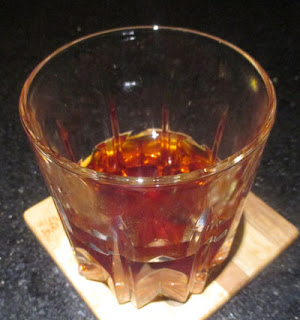
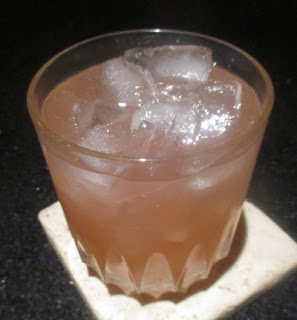
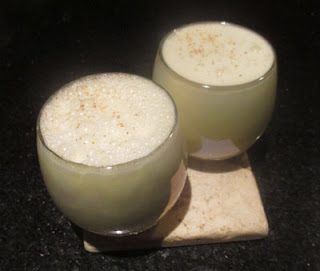
little easy

1 1/2 oz Famous or Black Grouse (2 oz Famous Grouse)
1/2 oz Averna (2/3 oz)
1 Sugar Cube (1/3 oz Simple Syrup)
2 dash Peychaud's Bitters
2 dash Bitter Truth Orange Bitters (Angostura Orange)

Muddle the sugar cube soaked with bitters (I used simple syrup and skipped the muddling), add Scotch and Averna, and stir with ice. Strain into an old fashioned glass rinsed with absinthe (Pastis d'Autreois) and garnish with an orange twist.
Two Fridays ago, I was looking through the Kindred Cocktails database and landed upon the Little Easy by Brian Quinn in a 2012 Food Republic article as a riff on the New Orleans classic, the Sazerac. Scotch and Averna have paired well before in the Philadelphia Story, Black Mass, and other drinks, so I was game to give this one a whirl. In the glass, the Little Easy proffered an orange, anise, and licorice bouquet to the nose. Next, caramel and malt notes on the sip opened up into Scotch, herbal, anise, and hint of cherry flavors on the swallow.

Friday, February 13, 2026

fox river cocktail

1 glass Bourbon (2 oz Evan Williams Bonded)
1 lump Sugar (1/4 oz Simple Syrup)
Peach Bitters to saturate the Sugar (3 dash Fee's)
1 tsp Creme de Cacao (1/4 oz Bols)

Build in a glass, stir with ice, and garnish with a lemon twist.

When I made the River Styx, I read how bartender David Kinsey was influenced by the Fox River that I made in 2008 before I started writing for the blog. So I decided to remake it two days later, but not off the Fee's bitter bottle label's recipe like last time but from Harry of Ciro's ABC of Mixing Cocktails from 1923. The recipe off of the Fee's Peach Bitters bottle with notes from my LiveJournal entry reads as such:
Fox River
• 2 oz Whiskey (I used Knob Creek Bourbon)
• 1/2 oz Crème de Cacao (I most likely used Marie Brizard)
• 1 tsp Peach Bitters
Stir with ice, strain into a cocktail glass, and garnish with a lemon peel.
My research led me to a 2024 Punch article that pointed out that Harry McElhone had adapted the Fox River Toddy that appeared in Charles Mahoney's Hoffman House Bartender's Guide from 1905. From the book scan on the EUVS library:
Fox River Toddy
• 1 wineglass Whiskey
• 3 dash Crème de Cacao
• 2 dash German Bitters
• 1 piece Lemon
• 1 loaf Sugar
• 1 lump Ice
Stir will and serve in a Toddy glass.
It is unclear what those bitters were since there were several German Bitters around that time including Humboldt's, Dr. Hoofland's, Selner's, Lippman's, Kryder's, Knecht's, and Petzold's German Bitters. During my bitters making days, I made a batch of German Bitters in 2008 from a historic database, and that recipe included chamomile, calamus, orris root, coriander seed, centaury, and orange peel. Perhaps 18 years later when Harry updated the recipe on the other side of the Atlantic, those sort of medicinal bitters were less available, and he opted for peach instead. Peach and chocolate are an interesting combination that I have enjoyed in the reverse combination in the King's Peach that utilized crème de peche and mole bitters.
Enough of the history and on to the drink that began with a lemon, chocolate, and hint of peach aroma. Next, a semi-sweet sip revealed Bourbon, chocolate, and peach flavors on the swallow.

Wednesday, January 21, 2026

tide-breaker

1 oz Aged Dark Rum (3/4 oz Coruba + 1/4 oz Planteray OFTD)
1/2 oz Rittenhouse Rye
1/2 oz Old Overholt (86°)
1 cube Raw Sugar (>1/2 oz Raw Sugar Syrup)
2 dash Orange Bitters (Angostura Orange)

Stir with ice, strain into a rocks glass rinsed with absinthe (Kübler), and garnish with a lemon twist.
Two Wednesdays ago, I opened up my copy of The Madrusan Cocktail Companion and landed on the Tide-Breaker by Eric Alperin at Los Angeles' The Varnish in the Sazerac section of the book. I later realized that Eric called the Jamaican rum, single rye, and brown sugar version of this combination Colonial Ties in his Unvarnished book. In the glass, the Tide-Breaker sent forth a lemon and anise bouquet to the nose. Next, caramel notes on the sip from the dark rums ripened into rye whiskey, funky rum, orange, and anise flavors on the swallow. Overall, I was surprised at how much the orange bitters sang through in the mix.

Saturday, March 8, 2025

polynesian paradise

1 1/2 oz Gold Rum (Planteray Isle of Fiji)
1 tsp Brown Sugar
3/4 oz Lime Juice
1/2 oz Sweet Vermouth (Giacomo Sperone)
1/4 oz Triple Sec (Cointreau)

Stir brown sugar and lime juice to dissolve. Add the rest of the ingredients, shake with ice, and strain into a cocktail glass.
Two Saturdays ago, I reached for my copy of Stan Jones' 1977 Jones' Complete Barguide and spotted the Polynesian Paradise. The recipe reminded me of a Floridita in style: rum, lime, vermouth, and two sweeteners that I mirrored in the Devil Walking Next to Me and Creolita, and a Daiquiri riff sounded like a perfect way to end the evening. Once shaken and strained, the Polynesian Paradise welcomed the senses with a rum funk, lime, and brown sugar aroma. Next, lime, molasses, and grape notes on the sip sailed away towards rum, brown sugar, orange, and herbal flavors on the swallow.

Tuesday, October 1, 2024

mardi gras

2 oz Rye Whiskey (Templeton)
2 dash Peychaud's Bitters
2 dash Angostura Bitters
3 dash Absinthe (18 drop St. George)
1 White Sugar Cube (1/3 oz Simple Syrup)
1 bsp Soda Water (omit)

Add everything but the rye, muddle the sugar cube, and add rye (combine using simple syrup and no muddling). Add ice, stir, and garnish with a lemon twist.
Two Tuesdays prior, I opened up the A Spot at the Bar book by Michael and Zara Madrusan and found the Mardi Gras in a side note in the Old Fashioned section. Essentially, this New Orleans-themed Old Fashioned had the Peychaud's and Angostura of the Vieux Carré combined with the Peychaud's and absinthe of the Cocktail à la Louisiane and Sazerac as accents. Here, the Mardi Gras marched to the nose with lemon, rye, and anise aromas. Next, a hint of caramel on the sip continued on into rye, cherry, clove, allspice, and anise flavors on the swallow.

Monday, October 31, 2022

little easy

1 1/2 oz Famous Grouse Blended Scotch
1/2 oz Averna
2 dash Peychaud's Bitters
2 dash Orange Bitters (Angostura Orange)
1 cube Sugar (a small Demerara cube)

Muddle the sugar cube with the bitters (I added 1/4 oz water). Add the rest of the ingredients, stir with ice, strain into a double old fashioned glass pre-rinsed with abinsthe (Kübler), and garnish with orange oils from a twist.
Two Mondays ago, I decided to make a Sazerac variation that I had spotted a few days before on Kindred Cocktails. That recipe was the Little Easy attributed to Brian Quinn in his 2012 Food Republic article (no longer online for me to confirm). Scotch and Averna have paired well through various recipes so I was game to give this one a try. Here, it proffered an orange, caramel, and anise aroma that preceded the Averna's caramel notes on the sip. Next, the swallow came through with Scotch, herbal, and cherry-anise flavors.

Saturday, February 26, 2022

casa samba

1/2 Lime in Wedges (3 wedges)
1 cube Sugar
2 oz Cachaça (Novo Fogo at work, Cuca Fresca at home)
1/2 oz Benedictine
1 dash Peychaud's Bitters
1 dash Absinthe (8 drop Kübler at work, 12 drop Copper & King at home)
2 drop Saline

Muddle the lime wedges with the sugar cube. Add the rest of the ingredients, shake with ice, double strain into a double old fashioned glass, and fill with cracked ice.

Two Saturdays ago at Drink, a guest asked for a Caipirinha riff, and I decided to take it on a New Orleans adventure. The original impetus was how well cachaça and rhum agricoles work with Benedictine such as the cachaça Petition and the agricole Homere Punch, and then I rounded off things with Peychaud's and absinthe. Since their next order was doubling up on this creation, I decided to make it once I got home that night.
For a name, I dubbed this one later the Casa Samba after the Brazilian Carnival held in New Orleans every year. Once prepared, the Casa Samba met the nose with grassy funk and anise aromas. Next, crisp lime on the sip flowed into grassy, herbal, and anise flavors on the swallow.

Monday, December 27, 2021

egg nog (adapted from morgenthaler)

2 oz Bourbon (Old Forester 100°)
2 oz Rum (Smith & Cross)
6 oz Whole Milk (Oat Milk)
4 oz Heavy Cream
3 oz Sugar (2 oz)
2 Large Eggs

Blend eggs, add sugar, and blend further. Add the rest of the ingredients and blend until combined. Chill and serve in wine glasses or coupes (punch cups) with freshly grated nutmeg as a garnish.
Two weekends ago while I was bartending, Andrea was in the mood for Egg Nog and made a batch of Jeffrey Morgenthaler's Clyde Common's Egg Nog. She found a spirits combination in the comments section that spoke to her more than the original's añejo tequila and Amontillado sherry (2 oz and 2 1/2 oz, repectively), and she also dropped the sweetness level down a touch. Unfortunately, it was way too late to treat myself to a glass when I got home from work on Saturday night, so I dove on in on Monday. After garnishing, this version of Egg Nog welcomed the nose with a nutmeg and rum aroma. Next, a creamy and caramel sip transversed into Bourbon and rum flavors on the swallow with a rum funk finish.

Saturday, November 20, 2021

dr. rieux

1 oz Calvados (Morin Selection)
1 oz Light Rum (Bacardi 4 Year)
3/4 oz Lemon Juice
3/4 oz Swedish Punsch (Kronan)
1/2 oz Curaçao (Pierre Ferrand Dry)
1/4 oz Demerara Syrup

Shake with ice, strain into a cocktail coupe rimmed with demerara sugar, and garnish with a lemon twist.

Two Saturdays ago, I had spotted an interesting drink on a friend's Instagram account called the Dr. Rieux, and I tracked down the recipe on Difford's Guide. There, it was an adapted recipe from Vaucluse in Manhattan that was named after the doctor in Albert Camus' The Plague. Overall, the combination reminded me of Between the Sheets plus Swedish punsch with apple instead of grape brandy (or a Deauville plus Swedish punsch with rum instead of the Cognac).
The Dr. Rieux conjured up lemon, orange, and apple aromas. Next, lemon and caramel notes on the sip flowed into apple, rum, orange, tea, and spice flavors on the swallow.

Saturday, June 12, 2021

prelude to a broken arm

1 oz Cognac (Pierre Ferrand Ambre)
1/2 oz Rhum Agricole Blanc (Clement)
1/2 oz Curaçao (Pierre Ferrand Dry)
1/2 oz Cynar
1/2 oz Lemon Juice

Shake with ice, strain into a sugar-rimmed coupe, and garnish with a lemon twist.

Two Saturdays ago, my recent writing about the Undertaker reminded me of the curaçao-Cynar combination, and that got me thinking of the Hugo Ball from 2009 that perhaps introduced me to the combination. For a direction, I opted for a Sidecar styling with some rhum agricole to keep things French and a little bit weird. Since Hugo Ball was a member of the Dada art scene, I made this a tribute to a Marcel Duchamp piece that is merely a snow shovel signed and dated by the artist; it was part of his "ready-made" series of manufactured goods that were "elevated to the dignity of a work of art by the mere choice of an artist."
The Prelude to a Broken Arm met the senses with a lemon, orange, Cognac, and caramel bouquet. Next, lemon and caramel on the sip flowed into Cognac, grassy rhum, and funky orange flavors on the swallow.

Thursday, November 12, 2020

colonial ties

1 oz Rye Whiskey (Rittenhouse Bonded)
1 oz Jamaican Rum (1/2 oz Smith & Cross + 1/2 oz Plantation Xaymaca)
1 Brown Sugar Cube (Demerara)
2 dash Orange Bitters (Angostura Orange)
1 bsp Soda Water (1/2 oz Still Water)

Soak the sugar cube with bitters, add the soda water, and muddle into a paste. Add the spirits and ice, stir, strain into an absinthe-rinsed (St. George) whiskey glass, and garnish with a lemon twist on the edge of the glass.
Two Thursdays ago, I decided to make a Sazerac-like drink created by Eric Alperin at Los Angeles' Varnish bar that he published in the recipe section of Unvarnished. With the spirit split between rye and Jamaican rum, it reminded me of the more common Sazerac crossed with the D Day Sazerac (with different bitters), so it seemed like a winner. Once prepared, the Colonial Ties proffered a lemon, anise, and pineapple-tropical fruit bouquet to the nose. Next, a caramel sip led into a rye, funky rum, and orange swallow with a hint of anise on the finish.

Wednesday, September 23, 2020

fancy free

1 jigger Fine Arts Whiskey (2 oz Angel's Envy Bourbon)
2 dash Maraschino Liqueur (1/4 oz Luxardo)
1 dash Angostura Bitters
1 dash Orange Bitters (Angostura Orange)

Stir with ice and strain into a cocktail glass pre-rimmed with sugar.

A few weeks ago, I had answered a request if I could provide a photo of the original Fancy Free recipe that appeared in Crosby Gaige's 1941 Cocktail Guide and Ladies' Companion, and I soon realized that I had never written up the drink before. Perhaps the last time I had the Fancy was at the infamous Cambridge cocktail Mecca, the B-Side, around 2007 which was my first drink there after I got into mixology. Technically, my first order there was in late 1998 or early 1999 only a few months after they had opened. My friend was dating a girl that lived around the corner on Windsor Street, and one night we made it over there as a group. We did not even have a menu in hand before the waitress asked what we would be drinking. My friend's girlfriend requested a Lemon Drop, and in a panic, I replied "Me too." I mentioned that story in my curious past with that 1970s classic in my Lemon Drop Crusta riff. The Fancy Free that I got at the B-Side was served in a rocks glass although I cannot remember if it was served down or on the rocks. The 1941 recipe surprised me for it was closer to a Crusta in presentation save for how Crustas traditionally have citrus in the mix in both juice and twist garnish. Lastly, the Fancy Free was my inspiration for the Gallivanting in Golden Gai which was a mashup with the Japanese Cocktail.
The Fancy Free met the nose with a Bourbon and nutty cherry aroma. Next, a malt-driven sip led into Bourbon, cherry, and allspice flavors. When Andrea tasted the Fancy Free again, her comment was how there was "a lot of nostalgia here."

Monday, September 7, 2020

right handed planter

2 oz Aged or Dark Jamaican Rum (Plantation Xaymaca)
3/4 oz Sweet Vermouth (Cocchi)
3/4 oz Campari
1 1/2 oz Black Tea, a strong steep, cooled (Lychee Black Tea)
1 oz Lime Juice
1/2 oz Sugar
3 dash Mole Bitters (Bittermens)

Dissolve the sugar in the lime juice and cooled tea. Shake with ice, strain into a rocks or Collins glass with fresh ice (cracked ice), and garnish with a mint sprig and freshly grated nutmeg.

Two Mondays ago, I was pondering Lemon Hart Rum's Colonel A.R. Woolley's Improved Planter's Punch presented by Jeff Berry in his Potions of the Caribbean book where the traditional drink was augmented by cooled tea as the weak element. My mind drifted to figure out a good riff on that, and I landed on a mashup of the Rum Negroni-like Right Hand as the second recipe point. Merging together the two concepts and including my choice of mint and nutmeg garnishes that I opted for in the Improved Planter's Punch, the Right Handed Planter was born.
The Right Handed Planter reached the nose with a woody spice and mint bouquet. Next, lime and grape mingled on the sip, and the swallow launched into dark rum with a hint of funk, tea, bitter orange, and chocolate flavors on the swallow with a tea tannin-tinged finish.

Monday, August 17, 2020

harlem no. 2

3/4 jigger Gin (1 1/2 oz Beefeater)
1 dash Lemon Juice (1/2 oz)
1 spoon Orange Juice (1/2 oz)
1/2 lump Sugar (1/2 oz Simple Syrup)
4 leaf Mint

Crush mint with sugar (omit the muddling -- use the shake with ice to bruise the mint leaves). Add the rest of the ingredients, shake with ice, strain into a cocktail glass, and garnish with 1 dash absinthe (8 drop St. George and mint leaves).
Two Mondays ago, I was perusing William Boothby's 1934 World Drinks & How to Mix Them when I spotted the Harlem No. 2. The recipe came across like a South Side gussied up with the addition of orange juice in the mix and a dash of absinthe as the garnish. Once constructed, the Harlem No. 2 shared an anise, mint, and pine bouquet to the nose. Next, orange and lemon combined on the sip, and the swallow showcased the medley of gin and mint that was later joined by anise and other light absinthe notes from the garnish.

Sunday, August 9, 2020

st. regis mint julep

1 jigger Rye (1 1/2 oz Sazerac)
1/2 pony Rum (1/4 oz Smith & Cross + 1/4 oz Appleton Signature)
12 leaf Mint
1 dash Grenadine (1/4 oz)
1 tsp Sugar (1/4 oz Simple Syrup)
1 tsp Water (omit)

Muddle the mint leaves in the bottom of a julep cup or double old fashioned glass. Dissolve the sugar in water (use simple syrup instead) and add the rest of the ingredients (I also removed the muddled mint leaves). Fill with crushed ice and garnish with mint sprigs.

Two Sundays ago, I saw a mention of the St. Regis Mint Julep from Stanley Clisby Arthur's 1937 book Famous New Orleans Drinks & How to Mix'Em and was in the mood for a Julep. I, therefore, hunted out my reprint which provided the history that it was created by John Swago at the St. Regis Restaurant bar, and the split base reminded me of the American House and Prescription Juleps except here it was rye and rum instead of rye and brandy. The rye aspect instead of the more traditional Bourbon always makes me think of the quote from Richard Harwell's The Mint Julep book where Kentucky humorist Irvin S. Cobb declared, "Any guy who'd put rye in a mint julep and crush the leaves would put scorpions in a baby's bed."
The St. Regis Mint Julep began with an elegant mint bouquet presented to the nose followed by malt, caramel, and berry on the sip. Next, rye, rum funk, and mint on the swallow ended with a pomegranate and mint finish. Indeed, the inclusion of grenadine as part of the sweetener was delightful with its fruit notes akin to the peach element in the Georgia Julep.

Saturday, August 8, 2020

planter's punch (improved)

2 oz Dark Jamaican Rum (Plantation Xaymaca)
1 1/2 oz Black Tea chilled (English Breakfast)
1 oz Lime Juice
1/2 oz Sugar

Dissolve sugar in the lime juice and tea. Add the rum and crushed ice, swizzle to mix and chill, and garnish as you see fit (mint sprig and freshly grated nutmeg).
Two Saturdays ago, I read a reference for an improved Planter's Punch recipe that included tea in the mix. I soon found the recipe in Jeff Berry's Potions of the Caribbean with the history that it was Colonel A.R. Woolley of Lemon Hart's 1957 revision of Fred Myer's 1920 recipe that swapped in tea for the water in the "parts of weak" aspect. Once prepared, this Planter's Punch welcomed the nose with mint and woody spice aromas. Next, a semi-dry lime and caramel sip glided into rich rum dried out by elegant black tea notes.

Monday, August 3, 2020

golden glove

2 oz Jamaican Gold Rum (Plantation Xaymaca)
1/2 oz Lime Juice
1 tsp Cointreau
1 tsp Sugar

Dissolve the sugar in the lime juice, add the rest of the ingredients, and blend with 12 oz crushed ice (5 oz). Pour into a chilled cocktail glass (rocks glass) and garnish with an orange twist.
Two Mondays ago to beat the heatwave, I searched for a blender drink to enjoy on our deck. The one that I selected was the Golden Glove from the 1935 Bar La Florida booklet via Beachbum Berry's Potions of the Caribbean book. This Cuban drink was Constatino Ribalaigua Vert's boxing tribute riff of the La Florida Daiquiri No. 2, and I opted for Plantation's Jamaican rum as the base as a middle point between Appleton and my higher ester offerings. Once blended with a reduced amount of ice, the Golden Glove squared off with an orange and caramel aroma. Next, tangerine and lime notes on the sip jabbed into a slightly funky rum melding into orange peel flavors on the swallow.

Saturday, July 18, 2020

quoit club punch

Peels of 12 Lemon (of 3/4 Lemon)
16 oz Sugar (1 oz)
16 oz Lemon Juice (1 oz)
750 mL Jamaican Rum (1 1/4 oz Plantation Xaymaca + 1/4 oz Smith & Cross)
750 mL Cognac (1 1/2 oz Courvoisier VS)
750 mL Madeira (1 1/2 oz Blandy's 5 Year Verdelho)

Make an oleosaccharum with the lemon peels and sugar (2+ hr). Dissolve the sugar in the lemon juice, add the rest of the ingredients, strain to remove the peels, and chill with ice.

On the morning of the Fourth, I read David Wondrich's treatise on the Quiet Fourth of July in the DailyBeast about how he usually throws a big party replete with a punch bowl and other traditions; however, this year, the festivities would be scaled back greatly due to his regard for his guests' and his safety. While we have never thrown an Independence Day party before, I have been tasked with producing a punch for them, and if I was not working that day, I was among friends. This year, it would just be Andrea and myself, and we planned a dinner out on our second floor deck. For a final drink of the night, I plotted out a scaled down number from Wondrich's Punch Book. The Quoit Club Punch created perhaps two centuries ago in Richmond, Virginia, seemed rather delightful with Jamaican rum, brandy, and Madeira, so I prepared the oleosaccharum before I began cooking. Wondrich worked off of an old description of the ingredients and estimated rather well what the recipe could have been.
The Quoit Club rejoiced the senses with rum funk and bright lemon bouquet. Next, lemon, grape, and caramel notes raised a toast on the sip, and the swallow continued on with the funky rum, lemon peel, and grape complexity from the Cognac and Madeira. Overall, it reminded me of a more Colonial and less exotic West Indies Punch.

Monday, May 25, 2020

mac special

3/4 jigger Brandy (1 1/2 oz Courvoisier VS Congac)
1/4 jigger Rum (1/2 oz Plantation Xaymaca)
2 dash Cointreau (1/2 oz)
1 dash Grenadine (1/4 oz)
1 dash Lemon Juice (3/4 oz)

Add a touch of sugar (omit), shake with ice, and strain into a whiskey glass (cocktail coupe); I added a lemon twist.
On Monday night, I selected Ted Saucier's Bottoms Up where I spotted the Mac Special that seemed like a good follow up to the Soother Punch last night. Like the Soother Punch, it had a split spirits base, orange liqueur, sugar, and lemon, but here there were just two liquors (leaving out the Soother's apple brandy) and the addition of grenadine. The Mac Special was the creation of Bill McDermott of Chateau Frontenac in Quebec, and once mixed up, it donated a lemon, orange, and Cognac aroma to the nose. Next, lemon and caramel on the sip led into brandy, rum, berry, and orange flavors on the swallow; overall, the rum and grenadine gave this Sidecar a bit of depth.

Sunday, May 24, 2020

soother punch

25% Brandy (3/4 oz Camus VS Cognac)
25% Jamaican Rum (3/8 oz Smith & Cross + 3/8 oz Plantation Xaymaca)
25% Applejack (3/4 oz Laird's Bonded)
25% Curaçao (3/4 oz Pierre Ferrand)
1 tsp Sugar (1/4 oz Simple Syrup)
Juice 1/2 Lemon (3/4 oz)

Shake with ice, strain int a goblet with fine ice, and dress with fruit (lemon wheel).
For a cocktail two Sunday nights ago, I returned to my 1933 reprint of Jack's Manual and spotted the Soother Punch. The three spirits, lemon juice, orange liqueur, and sugar structure reminded me of the better known Fedora from Harry Johnson's 1882 New and Improved Bartender's Manual. Later, I would be able to trace the Soother Punch back to Jacques Straub's 1914 book Drinks. Here, the split spirits Sidecar called for Jamaican rum and applejack besides the brandy, and this varied from the Fedora which had Bourbon instead of applejack in addition to slightly different ratios. Once prepared, the Soother Punch greeted the senses with an orange, lemon, brandy, and rum funk bouquet. Next, a lemon sip made its way into a Cognac, funky rum, and orange swallow.