Showing posts with label dubonnet. Show all posts

Tuesday, March 14, 2023

crutch cocktail

3/4 oz Pierre Ferrand 1840 Cognac (*)
3/4 oz St. Germain
3/4 oz Dubonnet Rouge
3/4 oz Lemon Juice

Shake with ice and strain into a cocktail coupe.
(*) The book has Picou Spirits Brandy Sainte Louise, but this was changed to mirror the event sponsors.
For my second cocktail off of the eight drink menu for the book launch party for Neal Bodenheimer's Cure: New Orleans Drinks and How to Mix 'Em at Chickadee, I selected the Crutch Cocktail. The book attributed the recipe to Ricky Gomez at Cure and compared it to an absinthe-free Corpse Reviver #2. I could tell from the name and ingredients that it was a modern update of the Crux that replaced St. Germain for Cointreau akin to how Sam Ross' Sunflower did a similar flowery swap for the Lillet in the Corpse Reviver #2. Here, the Crutch met the nose with grape and lemon aromas. Next, lemon and grapefruit notes on the sip hobbled into grape and Cognac flavors on the swallow.

Thursday, December 1, 2022

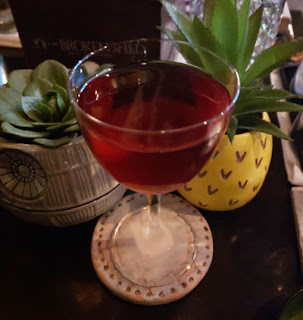
copley plaza

1 1/2 oz Park VS Cognac
3/4 oz Dubonnet Rouge
3/4 oz Pierre Ferrand Dry Curaçao

Stir with ice and strain into a cocktail coupe.
After the Death & Co. takeover at Deadshot and the Bourbon Disco event at Hey Love! hosted by Bardstown Bourbon two Thursdays ago at Portland Cocktail Week, I headed back towards the hotel on the other side of the Willamette River. Not wanting my Portland experience to end so soon, I stopped into Teardrop Lounge for a nightcap and for a second visit that week. I was greeted by bartender Amy who remembered my name, and I asked her for the curiously dubbed Copley Plaza subtitled "subtly austere; a refined, thoughtful jaunt." I was unable to find a reference to an older drink called this, so perhaps it was the bar's tribute to the 110 year old Long Oak Bar at the Fairmont Copley Plaza Hotel here in Boston. Once prepared, the Copley Plaza began with an orange and Cognac aroma. Next, the Dubonnet's grape notes filled the sip, and the swallow rounded things off with brandy, caramel, and orange flavors.

Wednesday, February 23, 2022

surface pressure

1 oz Santa Teresa Rum
1 oz Los Vecinos Mezcal
1 oz Dubonnet Rouge
1/2 oz St. Germain

Stir with ice and strain into a Nick & Nora glass.
For my second drink from Backbar's Encanto Week menu, I opted for the Surface Pressure created by Sam Treadway. It was caption on the list as "What's Luisa hiding under the surface?", and it reminded me a little of Jamie Boudreau's La Bicyclette for some reason. On the nose, the Surface Pressure approached with a smoke aroma. Next, caramel, grape, plum, and grapefruit notes on the sip challenged the smoke, floral, and herbal flavors on the swallow.

Sunday, November 14, 2021

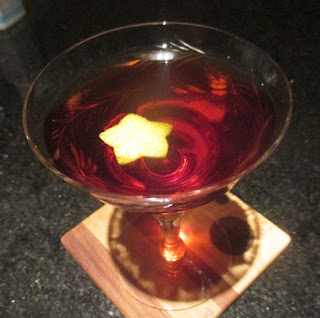
grand & central

1 1/4 oz Rye Whiskey (Sazerac)
3/4 oz Applejack (Laird's Bonded)
1/2 oz Cocchi Americano
1/2 oz Dubonnet Rouge
2 dash Orange Bitters (Angostura Orange)

Stir with ice, strain into a cocktail coupe, and garnish with an orange twist.

Two Sundays ago, I was perusing Kindred Cocktails and started a search for Dubonnet recipes. There, I spied the Grand & Central crafted by Greg Best at Holeman & Finch Public House in Atlanta that was sourced from a 2012 Wall Street Journal article on Manhattan riffs. The combination of rye and applejack has been a popular one in modern drinks like the Fallback and American Trilogy and older ones like the Bronco Buster and Diamond Back, and I uncovered an early Dubonnet and Lillet/Cocchi Americano recipe in the 1937 Café Royal Cocktail Book with the Pool.
The Grand & Central proffered orange, apple, and plum aromas to the nose. Next, grape and pear notes on the sip transferred to rye, apple, plum, and herbal flavors on the swallow.

Monday, October 18, 2021

van lee cocktail

50% Dry Gin (1 1/2 oz Bombay Dry)
40% Dubonnet (1 1/4 oz)
10% Scotch (1/4 oz Laphroaig 10 Year)

Stir with ice and strain into a cocktail glass.
Two Mondays ago, I began leafing through my 1933 reprint of Jack's Manual when I came across the Van Lee Cocktail. The combination made me think of Audrey Saunders' Dreamy Dorini Smoking Martini that I was reminded about in a recent article, except this was the smoky version of a Zaza. The Van Lee once prepared showcased a smoke and plum bouquet to the nose. Next, grape and plum notes mingled on the sip, and the swallow proffered gin, peat smoke, and herbal-fruity flavors.

Wednesday, September 22, 2021

dutch charlie's cocktail

40% Rye Whiskey (1 1/2 oz Rittenhouse)
40% Dubonnet (1 1/2 oz)
20% Regular Vermouth (3/4 oz Noilly Prat Sweet)
2 dash Angostura Bitters

Stir with ice and strain into a cocktail glass.

Two Wednesdays ago, I selected the 1933 reprint of Jack's Manual and spotted the curiously named Dutch Charlie's Cocktail. The name reminded me of a Dutch Schultz drink, and it was not obvious which Dutch Charlie in history that it referred to. I became intrigued by the name for it reminded me of the nicknames of Andrea's dad's drinking buddies out in Indiana. My favorite historical one was the late 1870s gang member out in the West who ran with Big Nose George Parrott's crew; that Dutch Charlie got caught after a robbery, and, according to the True West site, "while he was being transported from Laramie to Rawlins, the train stopped to take on water [and] an angry mob stormed the railcar, took Charlie and strung him up from a telegraph pole. The lynch party figured Dutch Charlie didn't deserve to be buried in their cemetery so they carted his carcass some distance away and left him in an unmarked grave." Not very likely that author Jacob Grohusko knew about him and it was probably a drink served to a regular, but anything is possible.
There was little confusion about how this drink would turn out though for it read like a slightly inverse Manhattan with two parts Dubonnet to one part sweet vermouth. In the glass, the Dutch Charlie's Cocktail proffered rye, plum, and cherry aromas. Next, grape and plum on the sip slid into rye, dried red fruit, clove, and allspice flavors on the swallow.

Tuesday, August 31, 2021

dot-roy

1 part Gin (1 oz Bombay Dry)
1 part Medium Sherry (1 oz Lustau East India Solera)
1 part Dubonnet (1 oz)

Stir with ice, strain into a cocktail glass, and garnish with a lemon twist.
Two Tuesdays ago, I ventured back into my 1962 edition of Ted Saucier's 1954 Bottoms Up book and spied the Dot-Roy as a curious equal parts drink. The recipe was created at the Robert Treat Hotel in Newark, New Jersey; the hotel was named after the founder of the city from back in 1666, and the building opened for business in 1916 just in time for the arrival and stay of President Woodrow Wilson and his wife Edith to celebrate the city's 250th anniversary. There was no indication in the book of who or what the cocktail was named after, but perhaps it was Broadway performer Dorothy Roy albeit a slightly obscure one. A drier sherry form of the drink appeared as the Chase in Jere Sullivan's 1930 The Drinks of Yesteryear: A Mixology with the comment that it was often "plagiarized by New York hotels" (Newark being not too far from New York). Once prepared, the Dot-Roy sang out with a lemon, plum, and berry bouquet. Next, grape and cherry notes on the sip danced towards gin, nutty, and plum flavors on the swallow.

Wednesday, January 20, 2021

solstice

1 1/2 oz Rittenhouse Bonded Rye
1/2 oz Laird's Bonded Apple Brandy
1/2 oz Amaro Nonino
1/2 oz Dubonnet Rouge
1/4 oz Grenadine

Stir with ice and strain into a cocktail coupe.
Two Wednesdays, I wanted to crack open my new addition to my shelves of Amaro Nonino, and I started with the Solstice from the PDT Cocktail Book. The recipe was crafted by John Deragon in the summer of 2007 for the other solstice -- the winter one which is the shortest and darkest day of the year. The Solstice donated an apple and red fruit aroma to the nose. Next, berry, cherry, and grape notes on the sip faded into rye, apple, and orange flavors on the swallow.

Thursday, December 24, 2020

beverly pickup

1 oz Cognac (Pierre Ferrand Ambre)
1 oz Dubonnet
1 oz Dry Sherry (La Garrocha Amontillado)

Stir with ice, strain into a cocktail glass, and garnish with a lemon twist.

Two Thursday ago, I selected Ted Saucier's Bottoms Up for the evening's libation. There, I spotted the Beverly Pickup attributed to the Beverly Country Club in New Orleans. I was curious about the club, and the first article that I found had the title, "Remembering The Beverly, a mob-run playground in Jefferson Parish," so immediately I was intrigued. This illegal yet elegant casino ran from 1945 through 1962 when it became a dinner theater until it burned down in 1983. Mobsters drinking sherry and Dubonnet? Epic if true, but not so far fetched if owner Phil Kastel lived up to his nickname of "Dandy."
The Beverly Pickup welcomed the senses with a lemon, Cognac, and plum aroma. Next, grape and red fruit notes on the sip gave way to Cognac, nutty, and light herbal flavors on the swallow.

Saturday, December 19, 2020

la belle femme

1 3/4 oz Cognac or Armagnac (Larressingle VSOP Armagnac)
3/4 oz Dubonnet Rouge
1/2 oz Aperol
1/4 oz Absinthe (Butterfly)

Stir with ice, strain into a cocktail glass, and garnish with an orange twist.

Two Saturdays after having luck with my 2010 A Taste for Absinthe book, I decided to dust off the other absinthe recipe book from that year, namely Kate Simon's Absinthe Cocktails. There, I spotted Chris Hannah's La Belle Femme crafted at Arnaud's French 75 in New Orleans that he named for the beautiful women of the French Quarter. I then found the recipe on Food & Wine and merged the two keeping the Kate Simon's orange twist (opposed to a lemon one) but opting for the site's increased Dubonnet and Aperol measurements (up from 1/2 oz and 1/3 oz, respectively). Dubonnet and Aperol was one that I have seem Chris utilize before in the Decolletage, and it also appeared in PDT's Foreign Legion.
La Belle Femme greeted the nose with an orange, grape, and licorice aroma. Next, grape, berry, and orange notes on the sip rounded the corner to brandy, fruity, and licorice-herbal flavors on the swallow.

Friday, September 11, 2020

narragansett

2/3 Scotch (1 1/2 oz Cutty Sark Prohibition)
2 dash Sweet Vermouth (1/2 oz Cocchi)
1 dash Dubonnet (1/2 oz)
1 dash Sherry (1/2 oz Lustau Amontillado)
1 dash Orange Bitters (Angostura Orange)

Stir with ice and strain into a cocktail glass; I added a lemon twist.

Two Fridays ago, I returned to Pioneers of Mixing at Elite Bars: 1903-1933 and decided to make the Narragansett. While this Scotch drink shared the namesake of the Rhode Island brewery that was founded in 1890 and was once a major sponsor of the Red Sox for the first half of the twentieth century, the name goes much further back. It is an Algonquian Indian language, and the word means "(People) of the Small Point" (the point being on the Salt Pond in Rhode Island). Overall, the Narragansett reminded me of the Chancellor where the whisky was supported by aromatized and fortified wines as well as orange bitters.
Once prepared, the Narragansett donated a lemon, peat smoke, and cherry-like grape aroma. Next, malt and plum notes on the sip slid into Scotch, nutty, and cherry fruit flavors on the swallow.

Friday, June 12, 2020

elephant's ear

1/2 oz Gin (1 oz Cascade Mountain)
1/2 oz French Vermouth (1 oz Noilly Prat Dry)
1/2 oz Dubonnet (1 oz)

Stir with ice and strain into a cocktail glass; I added an orange twist.
Two Fridays ago, I ventured into my 1948 edition of Trader Vic's 1947 Bartender's Guide and spotted the Elephant's Ear Cocktail. The curious name along with the delightful trio of gin, dry vermouth, and Dubonnet Quinquina lured me in, and I was distracted from the fact that I had this same recipe as the better known Salome from the Savoy Cocktail Book shortly after I purchased the new formulation of Dubonnet. Once prepared, the Elephant's Ear met the nose with an orange, pine, and cherry aroma. Next, a plum-like sip led into a juniper, cherry, and herbal swallow.

Sunday, April 5, 2020

diabola cocktail

2/3 Dubonnet (1 3/4 oz)
1/3 Gin (1 oz Tamworth)
2 dash Orgeat (1/4 oz)

Stir with ice and strain into a cocktail glass; I added an orange twist.
Two Sundays ago, I reached for my copy of the 1930 Savoy Cocktail Book and spotted the Diabola that came across like a Zaza meeting a Martinez (since both Maraschino and orgeat are a bit nutty). I did choose a more flavorful gin for this, but I left out the bitters suggestion in Erik Ellestad's blog post on the drink that declared, "This is a fine and enjoyable cocktail, significantly improved by the addition of a dash of Angostura Bitters. If you choose to make it yourself, I would advise picking a more aggressively flavored gin, given the ratio of Dubonnet to spirit." In the glass, the Diabola Cocktail donated an orange, grape, and earthy-nutty aroma. Next, the grape-driven sip stepped aside to a cherry, pine, and nutty swallow. Definitely a dash of bitters would have given some depth here and dried things out, but it was quite pleasing on its own.

Friday, December 13, 2019

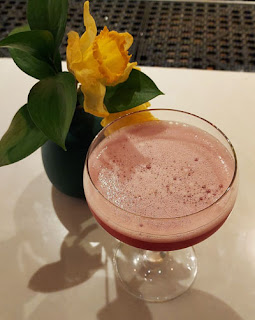
cross-eyed and painless

3/4 oz Tequila (Lunazul Blanco)
3/4 oz Sloe Gin (Atxa Pataxaran)
3/4 oz Dry Curaçao (Pierre Ferrand)
3/4 oz Lillet Rouge (Dubonnet)
1 dash Angostura Bitters

Stir with ice, strain into a cocktail coupe pre-rinsed with Herbsaint, and garnish with a lemon twist.

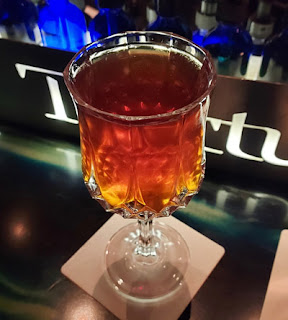
Two Fridays ago, I reached for Sarah Baird's New Orleans Cocktails book, and there I spotted the Cross-Eyed and Painless. The recipe was crafted at the Ace Hotel in New Orleans and was named after a Talking Heads song. The combination of tequila and sloe gin made me think of Phil Ward's Lipspin, and agave and sloe gin have also worked well together in the Gail Collins, Ticket to Paradise, and a few other drinks.
Once prepared, the Cross-Eyed and Painless met the nose with lemon, tequila, anise, and sloe plum aromas. Next, berry, plum, and cherry notes mingled on the sip, and the swallow shared tequila, orange, coffee, and allspice flavors. I most likely skipped over this recipe before since it reads as though it has a high sugar content; when someone on Instagram asked if it was sweet, I replied, "Surprisingly drinkable although definitely a touch on the sweeter side."
Sunday, September 29, 2019

mary garden (merry widow)

1 1/2 oz Dubonnet or Byrrh Quinquina (Dubonnet Rouge)
1 1/2 oz Noilly Prat Dry Vermouth
1/4 oz Luxardo Maraschino or Grand Marnier (Luxardo Maraschino)
1 dash Regan's Orange Bitters

Stir with ice, strain into a cocktail glass, and garnish with a cherry.

Two Sundays ago, I ventured into Frank Caiafa's The Waldorf Astoria Bar Book where I spotted a doubly named aperitif. The recipe was both the Mary Garden after a turn of the century opera singer and the Merry Widow after a 19th century operetta. Caiafa pointed out that Hugo Ensslin had a Merry Widow that was a fifty-fifty Dry Martini with New Orleans-style accents of Benedictine, absinthe, and Peychaud's Bitters that was quite delightful, and this is why I posted this recipe as the Mary Garden to help differentiate it (although Caiafa listed it as the Merry Widow).
The Mary Garden when made with Dubonnet and Maraschino curtsied to the nose with a grape and cherry and almost licorice aroma. Next, red grape and cherry on the sip bowed into darker cherry flavor on the swallow with a nutty finish.

Wednesday, September 11, 2019

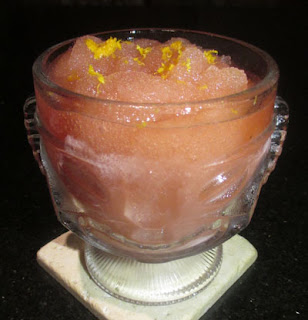
dubonnet frappe

1 1/2 oz Dubonnet Rouge
3/4 oz Jamaican Overproof White Rum (Wray & Nephew)
1/2 oz Grenadine
1/4 oz Banana Liqueur (Giffard)
1 tsp Sugar
1 1/2 cup Crushed Ice (12 oz) (*)

Blend until smooth, pour into a coupe glass (16 oz glass), and garnish with freshly grated orange peel.
(*) Not sure how a 16 oz build fits in a coupe (my largest coupe is around 7 oz). A 1/2 cup ice would fit in there but it would not be smooth, and splitting the whole build into two glasses would just be too little alcohol for a bar to serve.

Two Wednesdays ago, I was in the mood for a blender drink, and I remembered one in the PunchDrinks' Dubonnet-sponsored article. That libation was the Dubonnet Frappé crafted by Julia McKinley of Lost Lake in Chicago. Lost Lake has been publishing a variety of frappé recipes including Daiquiri and Harvey Wallbanger ones, and a frappé itself is a drink that is either blended in the Cuban tradition, poured over shaved ice which Trader Vic was fond of, or shaken and served with crushed ice. The Dubonnet Frappé here was McKinley's riff on the Ron Habañero Dubonnet Helado from the Cafe Plaza in Maracaibo, Venezuela, that Charles H. Baker Jr. published in his 1951 The South American Gentleman's Companion. For her riff, she subbed Jamaican rum and banana liqueur for the original's Cuban rum and Maraschino.
The Dubonnet Frappé pleased the nose with orange and fruity aromas. Next, lime and cherry from the Dubonnet and perhaps the grenadine played in the frosty sip, and the swallow gave forth funky rum and banana flavors.

Friday, June 21, 2019

weep no more

1 jigger Cognac (1 1/2 oz Camus VS)
1 jigger Dubonnet (1 1/4 oz)
Juice 1/2 Lime (1/2 oz)
1 dash Maraschino Liqueur (1/4 oz Luxardo)

Shake with ice and strain into a cocktail glass; I added an orange twist.
While perusing my LifeJournal earlier in the week, I had marked down a few recipes that were worth revisiting. Two Fridays ago, I decided to remake the Weep No More that I had made in 2008, and I credited the now defunct CocktailDB site as the source. Since that site included only a handful of books, I confirmed that the recipe back then was most likely sourced from Stan Jones' 1977 Complete Barguide. I was able to sleuth down the original Weep No More to W.C. Whitfield's 1939 Just Cocktails, and that recipe was a lot lighter on the Maraschino than the Stan Jones' one. Once prepared, the Weep No More greeted the senses with an orange, grape, and nutty cherry bouquet. Next, a semi-dry lime and grape sip led into a Cognac, nutty, and cherry swallow.

Monday, June 17, 2019

chase

1/3 Dry Gin (1 oz Beefeater)
1/3 Dubonnet (1 oz)
1/3 Dry Sherry (1 oz Lustau Amontillado)

Stir with ice and strain into a cocktail glass; I added a lemon twist.
Two Mondays ago, I returned to Jere Sullivan's 1930 The Drinks of Yesteryear: A Mixology to one of the recipes that I had bookmarked called the Chase. The drink was subtitled, "Authorized by a New Haven merchant -- plagiarized by New York Hotels." In the introduction, the author mentioned that he had bartended in New Haven for a while as well as in Boston before Prohibition, so perhaps he was the creator of this Submarine Cocktail-like number. When I asked Andrea whether she wanted this with Fino, Amontillado, or Oloroso, she selected Amontillado to perhaps split the difference. In the glass, the Chase proffered lemon, cherry, raisin, and grape notes to the nose. Next, a plum-like sip led into gin, nutty sherry, blackberry, cherry, and black tea flavors on the swallow.

Thursday, June 13, 2019

crazy crossing

1/2 Plymouth Gin (1 1/2 oz Tanqueray)
1/4 Noilly Prat Vermouth (3/4 oz NP Dry)
1/4 Dubonnet (3/4 oz)
1 dash Maraschino (1/8 oz Luxardo)
1 dash Van der Hum (1/8 oz) (*)

Stir with ice and strain into a cocktail glass; I added an orange twist.
(*) Since this aged brandy-based South African tangerine and spice liqueur is hard to source (I got mine at Julio's Liquors around a decade ago), substitute Amaro Montenegro, Mandarin Napoleon, or perhaps Pierre Ferrand Dry Curaçao.
Two Thursdays ago, I returned to the 1937 Café Royal Cocktail Book to see if there were any glossed over gems. There, I spotted the Crazy Crossing by F.G. Hunt that appeared like Ensslin's Submarine with Maraschino and Van der Hum as dashed modifiers (plus, this one was gin forward opposed to the Submarine being Dubonnet forward). In the glass, the Crazy Crossing provided an orange, cherry, and grape bouquet to the nose. Next, the grape sip gave way to gin, nutty cherry, chocolate, and tangerine flavors on the swallow.

Sunday, June 2, 2019

powhatan

1 drink Dubonnet (2 oz)
2 dash Benedictine (1/2 oz)
2 slice Orange

Shake with ice and strain into a cocktail glass; I added an orange twist.

Two Sundays ago, I began flipping through a digital copy of Jere Sullivan's 1930 The Drinks of Yesteryear: A Mixology that was a retrospective of drinks made before Prohibition. The book came up when I was searching for Dubonnet and Crème Yvette recipes when developing the Zaza d'la Whore recipe earlier in the week. Instead of the Lee Cocktail of equal parts gin, Dubonnet, and Crème Yvette in those pages, I was lured in by the Powhatan that had Dubonnet shaken with Benedictine and orange slices. Shaking with orange slices is something that has surfaced recently in drinks like Sam Ross' Too Soon?, but it also appeared a century before in recipes like Ensslin's Before the Bell. The Powhatan recipe was attributed as "A Virginia Congressman's creation," and Powhatan was the Indian chief that met the English settlers at Jamestown in 1607 and was the father of Pocahontas.
The Powhatan welcomed the nose with bright orange aromas over berry notes. Next, grape and cherry on the sip led into cherry, chocolate, orange, and minty herbal flavors on the swallow with an orange peel bitterness on the finish.