Tuesday, December 13, 2011

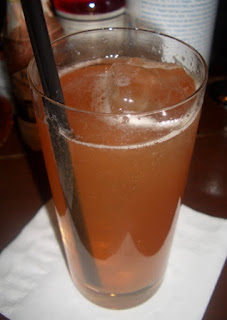
fino swizzle

(a) 1/2 oz Pierre Ferrand 1840 Cognac
1/2 oz Graham's Six Grapes Ruby Port
3/4 oz Syrup from Luxardo Cherry Jar (*)
1/4 oz Lemon Juice
(b) 2 oz Gutierrez Colosia Fino Elcano Sherry
5 dash Fee's Whiskey Barrel Bitters

Add ingredients in (a) with crushed ice in a Collins glass (do not fill with ice). Swizzle until the glass is frosted. Top with ice, float sherry, and garnish with bitters. Add a straw.
(*) Perhaps if you do not have enough syrup from the jar, using Cherry Heering or other sweet cherry liqueur might work well to supplement the syrup.

Two Sundays ago, Andrea and I finally made it over to Hawthorne, Jackson Cannon's newest establishment to round out the trilogy with Eastern Standard and Island Creek Oyster Bar. Manning the main bar that night were bartenders Scott Marshall (ex-Drink) and Katie Emmerson (ex-Death & Co.), and Ryan Lotz (ex-Lineage) was apparently at the side bar in the other room. Off of the ever changing short menu of around ten drinks, the Fino Swizzle called out to me. Therefore, I asked Scott for the "$5 milkshake" and he understood the movie reference and that I wanted the $16 drink that was pricier than the other selections. Perhaps one reason that the drink that Nicole Lebedevitch created was a step above was that it contained a half jigger's worth of syrup from Luxardo Maraschino cherry jars. Nicole explained that in a waste-not want-not mindset, she reserved the precious syrup from the big cans of Luxardo cherries that the bar orders and utilized them in this drink. Or perhaps it was a step above since I have never had a bartender in a swanky suit make me a swizzle before.
The Fino Swizzle's bitters donated a delightful cinnamon note to the swizzle and their flavor would not appear until the later part of the drink. The sip was a cherry note from the syrup along with the port's grape and a little crispness from the lemon. The cherry continued on the swallow where it mingled with the Cognac notes. Later, the sip got quite a bit drier from the fino sherry, and the bitter's cinnamon entered in on the swallow. Moreover, the fino and the bitters paired rather well together along with the residual flavors from the bottom part of the drink.

Monday, December 12, 2011

firecracker cocktail

1 1/2 oz Pisco Torontel (Macchu Pisco)
1/2 oz Del Maguey Crema de Mezcal (Mezcal Vida)
1/2 oz Agave Nectar
1/2 oz Lime Juice
1 oz Pineapple Juice
1/2 oz St. Elizabeth Allspice Dram

Stir agave nectar with ingredients until dissolved. Add ice and shake. Strain into a glass rimmed with cinnamon sugar.

Two Fridays ago, I decided to search through Gregory Dicum's The Pisco Book for a recipe, and we decided upon the Firecracker Cocktail. The drink was created by Dushan Zaric at Manhattan's Employees Only and has appeared on menu at the Macao Trading Company where Dushan also works. On the Macao menu, it lists the ingredients as "Barsol Pisco Italia combined with homemade Créma de Mezcal, Lime & Pineapple Juices Finished with Macao’s 5 Spice Bitters." Since I did not have Créma de Mezcal, I used Mezcal Vida and assumed that the agave nectar in the recipe would be sufficient for sweetness; it appears that Macao makes their own sweetened mezcal. Moreover, I am not sure if they dropped the cinnamon-sugared rim in favor of garnishing with bitters. But as we discovered, the cinnamon rim was worth the efforts.
Indeed, the cinnamon on the rim helped to fill the aroma along with the pisco and mezcal notes; as the drink warmed up, the allspice from the liqueur joined with the cinnamon in a pumpkin pie spice sort of way. The lime juice dominated the sip and worked well with the pineapple, pisco, and mezcal on the swallow. Next, the Firecracker Cocktail finished with a lingering smoke and allspice flavor that increased with successive sips. Given the name, I expected this drink to be much more intense; instead, it was quite pleasant. Definitely, the addition of mezcal and Allspice Dram to a Pisco Punch took the drink in interesting directions.

julep en fuego

2 oz Booker's Bourbon
3/4 oz Smith & Cross Rum
1/2 oz Mint Simple Syrup
1/4 oz Angostura Bitters
1 dash Cholula Hot Sauce

Muddle 10-12 mint leaves in a Julep cup. Add rest of ingredients and crushed ice. Stir until the cup is frosted over, and then top with crushed ice. Garnish with mint sprigs and hot pepper rings, and add straws.

For my second drink at No. 9 Park, bartender Ted Kilpatrick bounced a few ideas and the one that appealed to me was a spicy and flavorful Julep that he had made for Noel, one of the regulars. When he made this drink previously, he had included orgeat in the ingredients; however, this time, he decided to leave it out in favor of more overproof spirit. Ted was unsure of the name and mentioned that Julep Agresivo and Julep Peligroso were in the running to warn people of its potency and spice, but he later liked my suggestion of Julep en Fuego.
The Julep's aroma was a combination of the herbal mint and the sweet, vegetal red pepper slices that were garnishing the drink. The Bourbon flavors were strangely constrained to the sip for me, while the Smith & Cross Rum and Angostura Bitters filled the swallow. Lastly, the Cholula came across as a lingering light level of heat, and I was quite pleased that it did not inflict the suffering that the phrase "...and a dropper of hot sauce" can sometimes accompany. I had to agree with one of Ted's observations; Ted found it interesting how the Cholula interacted with the Angostura Bitters: while the pepper made the mouth water, the bitters countered it by drying the palate.

Friday, December 9, 2011

fever tea

1 oz Laird's 7 1/2 Year Apple Brandy
1 oz Linden-infused Old Overholt Rye (*)
1/2 oz Cider Syrup (1:1 cider to sugar, cold process)
1/2 oz Lemon Juice
1 dash Fee's Whiskey Barrel Aged Bitters

Shake with ice and strain into a Highball glass filled with ice. Top with 2 oz prosecco and add a straw.
(*) Ted was vague with his description of the infusion. Use the time and tea concentration in the Earl Grey Marteani post as a guide (and scale down accordingly to your needs).

Two Thursdays ago, I decided to brave the crowds and go shopping at the Boston Shaker's midnight madness sale. Afterward, I was rather close to the Red Line, so I hopped on the subway to visit the bar at No. 9 Park. One drink that bartender Ted Kilpatrick wanted to showcase for me was his new creation he called Fever Tea. With linden flower-infused rye and apple notes, this Highball sounded quite delicious.
The Fever Tea began with floral notes from the linden-infused rye and apple ones from the brandy and cider syrup; the combination of the two came across as an almost honey aroma. There were no honey notes in the sip though, for it contained crisp carbonation, lemon, and apple flavors instead. The rye appeared on the swallow along with the linden tea's tannins, and it finished with a lingering floral flavor. Furthermore, as the ice melted, cinnamon notes from the bitters began to spice the swallow. I was quite intrigued how the Fever Tea started tart but ended dry, and I was impressed at how the Fever Tea proved to be a refreshing late Autumnal tall drink.

the angelus

1 dash Gum Syrup (1/8 oz Jaggery)
1 dash Absinthe (1/8 oz Kübler)
A little Vermouth (1/2 oz Vya Sweet)
1 pony Old Tom Gin (1 oz Ransom)
2 dash Orange Bitters (2 dash Regan's)
2 dash Curaçao (1/4 oz Senior Curaçao)

Stir with ice and strain into a cocktail glass.

After having the Sunshine, I decided that we needed to try something a bit more old school and found the Angelus in William Schmidt's The Flowing Bowl. With Old Tom Gin and sweet vermouth, the drink reminded me of the Martinez Cocktail with a few alterations. For a gin, I opted for the more flavorful Ransom Old Tom but later remade it with Hayman's.
The Angelus when made with the Ransom presented an orange aroma from the Curaçao and bitters, a mint- and thyme-like aroma from the gin, and perhaps a hint of anise from the absinthe. The sip was rather simple with orange and grape notes, while the swallow showcased the spiciness of the gin. As the drink warmed up, the absinthe notes began to appear on the swallow as well. We could not believe how delicious this drink was, and I believed it was the Ransom Old Tom Gin tying the drink together. Therefore, I remade the drink with Hayman's. The drink lacked a lot of the savory herb notes in the nose and spice on the swallow; moreover, the drink was much more absinthe and orange forward. While the drink was decent with the Hayman's, it was nothing magical; with Ransom, it was worthy of the Angelus name.

Thursday, December 8, 2011

sunshine

1 oz Light Rum (El Dorado 3 Year)
1 oz Dry Vermouth (Noilly Prat)
1/2 oz Crème de Cassis (G.E. Massenez)
1/2 oz Lemon Juice

Shake with ice and strain into a cocktail glass. Garnish with a lemon twist.

Two Wednesdays ago, I took out Cocktail: The Drinks Bible for the 21st Century book to read what Paul Harrington had to say about the Floridita. Afterward, I turned the pages and spotted the Sunshine which reminded me of a rum and vermouth version of the gin-based Mississippi (or Missouri) Mule. That Mule is unrelated to the ginger beer and lime juice Moscow Mule family but falls in the Daisy one with crème de cassis as the sweetener. Wondrich discussed the Sunshine in Esquire and provided a wide variety of recipe combinations using that name. He attributes the name to people's imagination of Florida and its tan-inducing beaches.
The Sunshine began with the aroma of lemon oil and cassis' currant notes. The sip was fruity with lemon and an almost pomegranate flavor, and the swallow was a combination of the rum and cassis that dried out in the end with the French vermouth's notes. Indeed, the Sunshine was reminiscent of the El Presidente given the rum and dry vermouth base albeit with different fruit flavors.

williams

2/3 Scotch (2 oz Famous Grouse + 1 barspoon Laphroaig 10)
2 dash Yellow Chartreuse (1/2 oz)
2 dash Dry Vermouth (1/2 oz Noilly Prat)
1 dash Orange Bitters (Angostura Orange)

Stir with ice and strain into a cocktail glass.

Tuesday last week, I skimmed my copy of Pioneers of Mixing at Elite Bars: 1903-1933 looking for that evening's nightcap. When I spotted the Williams, it appeared like a 3-2-1 with Scotch in place of the rye. I interpreted the book's vague proportions to mean two thirds Scotch and one third a split of Yellow Chartreuse and dry vermouth which would make it a bit drier than the 3-2-1.
The Williams began with a peaty aroma from the Scotch and minty notes from the Yellow Chartreuse. The light herbal sip showcased the Scotch's malt notes as well, and the Scotch's smoke appeared at the beginning of the swallow. Next, the swallow ended with the bulk of Yellow Chartreuse's flavor along with orange notes from the bitters. Overall, the Williams was a better balanced drink for my palate than the 3-2-1 in terms of sweetness, and the extra smokey notes in the mix did not hurt either.

Wednesday, December 7, 2011

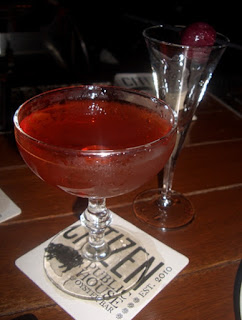
west fens

1 1/2 oz Tuthilltown's Hudson Manhattan Rye
3/4 oz Aperol
1/2 oz Carpano Antica Sweet Vermouth
1/4 oz Luxardo Maraschino Liqueur
2 dash Jerry Thomas Decanter Bitters

Stir with ice and strain into a coupe glass. Garnish with a brandied cherry on the side.

For my last cocktail at the Citizen Public House, bartender Sean Frederick recommended a drink he created in the Manhattan vein. His tribute to the bar's neighborhood, the West Fens, was first created for bartender Jeff Grdinich (now of Drink, then of White Mountain Cider Co.) when he first sat at the Citizen's bar. Jeff requested a drink that would pair up with the pork schnitzel he had ordered. Sean has made the drink with a variety of ryes in the past, and this time he selected one from Tuthilltown in New York State.
The rye shone through on the West Fens' aroma along with the Aperol's fruit note, and the whiskey continued on as a spicy malt flavor in the sip that played well with the Carpano Antica. Next, the rye's barrel notes appeared at the beginning of the swallow along with the bitters' clove, and the swallow closed with the Maraschino liqueur flavor. The drink's recipe somewhat reminded me of Paul Clarke's Two Birds; however, Paul's use of crème de cacao and Peychaud's Bitters took the drink in a different direction than Sean's use of Maraschino and Decanter Bitters.

scarlet swizzle

2 oz Scarlet Ibis Rum
1/2 oz Yellow Chartreuse
2 oz Don's Mix (*)
4 dash Bittermens Tiki Bitters

Build in a Collins glass. Add crushed ice and swizzle until the glass begins to frost over. Garnish with a grapefruit twist and 4 mists of St. Elizabeth's Allspice Dram. Add a straw.
(*) 3 parts white grapefruit to 1 part cinnamon syrup. Note that this varies from the regular Don's Mix which is 2 parts grapefruit to 1 part cinnamon syrup; 1 1/2 oz of regular Don's Mix + 1/2 oz of grapefruit juice should be equivalent.

Two Mondays ago, Andrea and I got dinner at the Citizen after my DJ gig. For my first drink, I asked bartender Sean Frederick for the Scarlet Swizzle that replaced the 19th Century Swizzle on the menu. While the 19th Century Swizzle called for Smith & Cross as the base spirit, the Scarlet Swizzle acquired its name from the Scarlet Ibis Rum from Trinidad & Tobago. Scarlet Ibis was created by request for Death & Co. by blending a variety of 3-5 year old rums to pack a funky, strong punch.
The Scarlet Swizzle's nose was full of grapefruit oil and allspice notes that combined to proffer a clove-like aroma. The grapefruit from the Don's Mix mingled with the aged rum's caramel notes on the sip, and the rum's heat and funk appeared along with the Don's Mix's cinnamon on the swallow.