Friday, June 19, 2015

franklin square

2/3 Rye (1 1/2 oz Old Overholt)
1/3 Sweet Vermouth (3/4 oz Dolin)
2 dash Pineapple Juice (1/2 oz)
1 dash Picon (1/4 oz Torani Amer)

Shake with ice and strain into a cocktail glass.
A few Saturdays ago, I turned to Pioneers of Mixing at Elite Bars: 1903-1933 and spotted the Franklin Square in the whiskey section. The Franklin Square seemed like a Liberal or Monahan Cocktail accented with pineapple juice which seemed like an intriguing concept. Once mixed, the drink offered a rye aroma with a dark fruity note. Malt and grape on the sip were complemented by the Picon's caramel, and the swallow rounded things off with rye, pineapple, and dark orange flavors. Indeed, the Franklin Square came across like a darker, sweeter Algonquin.

Thursday, June 18, 2015

javari mai tai

1 oz Cachaça (Seleta Gold)
1 oz Pisco (Macchu Pisco)
3/4 oz Lime Juice
1/2 oz Orange Liqueur (Van der Hum)
1/2 oz Orgeat (BG Reynolds)

Shake with ice and strain into a rocks glass filled with crushed ice. Garnish with a spent half lime shell and mint sprigs.

About 3 weeks ago, after participating in the Puka Punch Challenge, I was game to try the next Instagram-driven Tiki-themed event. That theme was for the Mai Tai. Instead of following the ingredients to the letter (and island) as I did in the Puka Punch, I decided to move beyond the classic rum-based Mai Tai. Recapping the variations that I have had, there were the tequila Pinky Gonzalez, whiskey Bluegrass Mai Tai, fortified wine Sherry Mai Tai, rum and mezcal Tia Mia, and bitters Stormy and Bitter Mai Tais. And there was also the Nuclear Daiquiri cocktail-based Bikini Atoll, so there was a lot of ground already covered. In thinking of what might work well with lime juice and the other ingredients, I remembered a pisco and cachaça pairing I did in the Loreto Swizzle where the funky grape flavors of one spirit complemented the funky grassy flavors of the other. Therefore, I concocted the Javari Mai Tai named after the river valley separating Peru and Brazil.
The Javari Mai Tai began with mint aromas from the garnish. Lime and orange notes on the sip stayed true to the Mai Tai feel. The swallow though was grassy, earthy, nutty, and funky with a tart lime finish. Overall, the combination was a win, and it was not too distant from many rhum agricole-containing Mai Tai concepts out there. Depending on the pisco, the drink could take an earthier or a more floral direction as well.

:: boston cocktail allstars - tom schlesinger-guidelli ::

In conversations of late, I have been discussing various Boston bartenders and their contributions to the Boston cocktail scene that still hold weight in the modern day mixology world. One name that kept popping up was Tom Schlesinger-Guidelli who has graced the bars of Eastern Standard, Craigie on Main, and to some degree Island Creek Oyster Bar. Since Tom was my first craft bartender back in June 2007, he has set the bar for what hospitality and drink craftsmanship can be, and it seemed like a good place to start this series. I figured that a 5 drink or so retrospective might be a fitting tribute to these Boston Cocktail Allstars.
1. The Jaguar
Very few people were mixing with tequila in Boston back in 2007 save for various Margarita variations and the like. Everything was shaken and laden with citrus fruit to dull the edge of the spirit. A stirred tequila drink? Unheard of. Balancing it with bitter and herbal liqueurs? Sure, if it's 2012, but 5 years prior to that? The secret of this drink was how well the edges of tequila and Green Chartreuse were soothed over by the caramel-dark orange richness of Amer Picon. This drink opened my eyes to what agave spirits could offer, and how blessed Boston was back then with our unearthed stash of Amer Picon that Eastern Standard luckily did not buy up the whole of (I still have most of my one liter bottle from that discovery).
2. The Prospect Park
I remember drinking many of these in Eastern Standard's gorgeous coupe glasses (as well as Hoskins which was created by then New Orleans blogger Chuck Taggart). The recipe might have been one of the first famous Manhattan variations to come out of our city, and it showcases our inexplicable love of Maraschino liqueur. I have heard the drink described once as an Aperol-stretched (or -softened) Red Hook which could explain why the balance works so wonderfully. Moreover, I have recently had good luck switching this rye-based formula to both brandy and aged rum with great success showing how timeless and versatile the base structure is.
3. The Northern Lights
In late 2008, Tom crossed the river and helped Tony Maws transition across town from Craigie Bistro to Craigie on Main. I recall how difficult it was to score a seat in the bar or lounge back then for this level of craftsmanship was novel on this side of the Charles River. The Northern Lights was what Tom created on his brief hiatus from the stick, and was inspired by drinking with friends in Wesport, MA, under the stars. One of the Northern Lights' secret weapons was the hot new St. Germain, but it was balanced by smoke and pine notes from Scotch and another new ingredient, Douglas Fir eau de vie, respectively. The third hot ingredient in the mix was the Bittermen's Tiki Bitters. Seven ingredients in all that tie together gracefully.
4. Jerez Flip
My first egg drink was served to me by Tommy, well because I told him that I was a little scared of egg drinks. That was back at Eastern Standard, and I do remember that it was based off of a Vieux Carré with different proportions. At Craigie on Main, there was no shortage of Flips either. While the Florentine Flip almost got the spot here, the Jerez Flip won out for it focused on sherry which was rather novel and hip back then. While I would have to give the nod to Misty Kalkofen for bringing sherry to the forefront of Boston mixology, the ingredients in this drink complemented the sherry rather elegantly.
5. Pirate's Revenge
After Craigie on Main, Tom stepped back from the bar to assume a more managerial position at Island Creek Oyster Bar. Yet, he was not able to stay away from tinkering with recipes though. The Pirate's Revenge was something that he and Vikram Hedge came up with -- a four equal parter with a few dashes of something extra that has the feel of something Sam Ross would come up with.

These recipes do show but one side of Tom; the other being the hospitality side. While I do remember the first conversations we had with him back in 2007 about pastis brands and how he took the time to talk to us throughout the night despite the full bar on an early Saturday evening, one story stands out in my head about what TSG hospitality was about. It involved the Espresso Martini... and two incredulous women doubting that Eastern Standard could make a good one. Tom handled their attack with grace and explained lovingly how the house Espresso Martini was made with such poetry that I was even tempted to get one. I recall how the two women looked at each other and nodded, and then ordered probably the best Espresso Martini they have ever tasted. Perhaps due to the ingredients and thought behind it, but most definitely because someone took the time to treat their inquiry as seriously as a discussion of Islay Single Malt Scotches or rare amari on the shelves. And that is what has helped define what Boston hospitality is all about. And personally, thinking back to when I was making drinks at home and doubted my wife (then girlfriend) that there were bars out there making drinks like I was doing at home, Tom was the one that guided me across that threshold. So cheers to TSG!

Wednesday, June 17, 2015

riviera di ponente

1 1/2 oz Plantation Barbados 5 Year Rum
1/2 oz Lemonhart 151 Rum
1/2 oz Amaro Ramazzotti
1/2 oz St. Elder Elderflower Liqueur
1/2 oz Cinnamon Syrup
1/2 oz Lime Juice
6 drop Absinthe
2 dash Angostura Bitters

Shake with ice and strain into a tulip glass filled with crushed ice. Garnish with a paper umbrella, cherry, lime wheel, and mint sprigs, and add a straw.
I continued on with the Italian Tiki theme at No. 9 Park with the Riviera di Ponente. Bar manager Ryan Lotz explained that this was the first drink that he had on the menu and that previous bar manager Ted Kilpatrick had named it. Once prepared, the drink's garnishes contributed lime and mint notes. The lime continued on into the sip where it mingled with the caramel notes from the two rums and the amaro. Most of the rum notes came out in the swallow though along with cinnamon, floral, and spice flavors. Over time as the ice melted, the cinnamon notes decreased and the elderflower ones took a bit more dominance in the balance.

Tuesday, June 16, 2015

amaro di cocco

1 oz Appleton 12 Year Rum
3/4 oz Pineapple Juice
3/4 oz Campari
3/4 oz Cinzano Sweet Vermouth
3/4 oz Coconut Cream

Shake with ice and strain into a white wine glass. Fill with crushed ice, float 1/4 oz Hamilton's Jamaican Blackstrap Rum, and add straws.

The Thursday before Negroni Week began, I stopped into No. 9 Park and found a seat in front of bartender Ryan Lotz. Ryan mentioned that he had a fresh housemade coconut cream, but that did not fully pique my interest until he continued on to say that it was in their Negroni Week special!? Ryan merged a Kingston or rum Negroni with a Piña Colada, and I could not say no to that concept. It also reminded me greatly of a Jungle Bird with the addition of vermouth and coconut. However, it lacked a name at the time though and Piña Negrada was my favorite with Noce di Cocco being where the house was leaning; when the menu launched though, it appeared as Amaro di Cocco.
On the nose, the blackstrap molasses and funky Jamaican rum notes joined hints of pineapple. The thick sip gave forth caramel, coconut, and pineapple flavors, and this led into the rum, Campari, and pineapple swallow.

Monday, June 15, 2015

joie de julep

1 1/2 oz Rye Whiskey (Old Overholt)
1/2 oz Simple Syrup
1/4 oz Green Chartreuse
1/4 oz Lemon Juice
1 dash Peychaud's Bitters

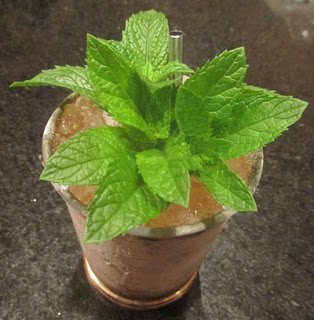
Muddle 4 mint leaves in the lemon juice in a Julep cup. Add the rest of the ingredients and ice, stir to mix and chill, and garnish elaborately with mint sprigs.

In mentally preparing for Tales of the Cocktail this July, I reached for the Stir Your Soul recipe book from Tales of 2010. There, I spotted the Joie de Julep which placed second in the official 2009 cocktail competition for the best Julep. The recipe was created by Boston's own Corey Bunnewith then of Drink, but by the time the book had come out, he was already the bar manager at Coppa. First place that year though was Maksym Pazuniak of Cure and Rambla with the Creole Julep. Regardless, it was time to delve into the mint patch and bring back some fresh specimens.
The Joie de Julep presented a grand mint bouquet to the nose especially with the short straw in use. Lemon and malt on the sip shared a decent mouthfeel, and this led into rye whiskey, mint, and herbal notes from the Chartreuse on the swallow.

Sunday, June 14, 2015

take a minute

1 1/2 oz Cocchi Americano
3/4 oz Pimm's No. 1
1/2 oz Cynar
1/4 oz Pierre Ferrand Dry Curaçao

Stir with ice and strain into a cocktail coupe. Garnish with a lemon twist.

A few Sundays ago, I stopped into Backbar on the way home from my shift for Alex Homans was the guest bartender that night. The bar's drink of the day was Alex's Take a Minute; he described the concept as something he created for when people are out drinking and want to continue their night, so something with lots of low proof ingredients to recalibrate is needed. This shim (or low proof cocktail) intrigued me for I recall how well a slight amount of Cynar worked in the Fox Hunt (and despite my need for something more in line with uncalibrating my night after getting off work).
The Take a Minute shared a lemon aroma that gave way to a light, citrussy wine sip. The swallow though was full of strawberry and earthy bitter flavors ending in an orange peel swallow.

Friday, June 12, 2015

zebratail

1 1/2 oz Blandy's 5 Year Sercial Madeira
1 1/2 oz Dolin Dry Vermouth
1 dash Angostura Bitters
1 dash Angostura Orange Bitters

Stir with ice and strain into a cocktail glass. Twist a lemon peel over the top and discard.

When we put a "Low Octane" section on the Loyal Nine cocktail menu, I was asked for the recipe to a preprandial drink that got raved about from the few guests that I served it to. That cocktail was a riff on the classic Bamboo that utilized dry madeira instead of dry sherry. While most Bamboos are fino-based, I prefer mine with an amontillado or oloroso sherry, so swapping to a dry madeira like Sercial seemed like a decent substitution to my palate. For a name, we started riffing on bamboo-like names. I did suggest Cattail, but that name had already been taken. Since the menu needed to be printed for the evening, I opted for the best suggestion of the moment -- the "Not a Weed." Punting on the name did not pay off, and changing the name to another reed-like plant, namely the Zebratail, increased this aperitif's sales. Zebratail also made a little of sense since the island of Madeira is right off the coast of Africa.
Once prepared and served here in one of my favorite glasses here at work, it presented a lemon oil aroma over the madeira's grape notes. A dry, acid crisp sip was not thin like the classic Bamboo but contained a decent bit of mouthfeel. Finally, the swallow presented a creamy grape flavor with a spice-driven finish. Overall, the Zebratail was still solidly in the aperitif camp but with a more complex flavor profile due to the madeira substitution.

Thursday, June 11, 2015

hubba hubba (and :: the story of hub punch ::)

The theme for this month's Mixology Monday (MxMo XCVII) was picked by Stuart Putney of the PutneyFarm blog. The theme he chose was "Hometown Hooch," and he elaborated on the theme with his description of, "One of the best recent developments in the world of cocktails and spirits is the reemergence of regional, craft distillers. And we say 'reemergence' because 100+ years ago, before the twin scourges of Prohibition and virtual monopolization 'industrialization,' distilling was often a truly local endeavor. Not so long ago, if you wanted some booze, it was often made in your neighborhood and for the tastes of the locals. Sadly, for a few generations, that wasn't the case... But, quite happily, those days are back... There are literally hundreds of local and regional distillers making some seriously tasty spirits... and now is the time for our monthly online cocktail party to send them some love. Your quest is simple. Create a new cocktail, or refashion a classic, using your favorite 'hometown hooch'… A little local flavor or history on your 'hometown hooch' is very welcome."
While I thought of local rum producers like Privateer and Old Ipswich a/k/a Turkey Shore and local gin producers like GrandTen, I have already covered those distilleries via tours (see links) and written about their products a bunch here. Pondering the concept of "hometown hooch" made me recall a bottle I found at a local antiques mart back in March of 2013 for a spirit made locally back in the late 19th century, namely Hub Punch. The two other parts of the above label read:
Boston, May 1, 1879.
At the earnest solicitation of a number of our hotel patrons and personal friends we have decided to offer our Rum and Brandy Punch in bottles, an article that has a most excellent reputation, having been originally prepared by our senior member, July 4th, annually. -- C.H. Graves & Sons.

The foreign liquors and cordials forming the component parts of the Hub Punch are of our importation, and guaranteed strictly pure. To warrant genuineness see that our autograph label is over each cork, under tin foil capsule. Set the Punch on ice one hour before using, and on opening, use half water or lemonade. -- C.H. Graves & Sons.
Fast forward several months, and I received an email from Will Willis of Bully Boys Distillery here in Boston asking for permission to recreate Hub Punch. While I did unsuccessfully throw the idea to another distiller shortly after I found the bottle, I had completely forgotten about this find. As described in Mise Magazine and Boston Magazine, there was a link between the Bully Boys brothers and myself -- namely, bartender and writer for BostonApothecary Stephen Shellengberger. Stephen found my find too intriguing to let drop and forwarded the concept to Dave and Will Willis. Of course I gave them my blessing to recreate the stuff and was flattered that they would even consider asking me (much less namedrop Stephen and me in interviews).

While the bottled Hub Punch was made in Boston, the original recipe stemmed from upstate New York despite Boston being known as the "Hub." The old Hub House in Thousand Island, New York, was the debaucherous hotel, dance hall, and bar that served this punch in the 1870s and 1880s. The recipe was attributed to Bart Keether, a bartender from Oswego, New York. Luckily, the Graves distillery decided to produce a bottled version of the punch, for the Hub House burned down soon after in 1883. Despite the bounty of ads for the bottled punch in newspapers and magazines of the day, there was no record of the flavor profile of the original or bottled versions. The Willis brothers decided to work backwards using what little clues they had. They assessed the flavor and sweetness balance of the bottled version by how it was supposed to be drank (see second half of the label transcription above). And an advertisement they found gave hints about the fruit component involved. They decided to utilize classic orange and lemon peels in a rum base and take their own direction with raspberries. They also mixed in an assortment of herbs and spices of which I recall tasting a hint of anise. Yes, fast forward a few more months, and Will Willis was at my bar at Russell House Tavern with a prototype. I tinkered with it and discovered that it was no drop-in for Kronan Swedish Punsch but that it would work well in drinks in the same vein as perhaps St. George's Raspberry Liqueur. I am not sure if the Hub Punch they later brought to market was all that different from my prototype bottle, but I have to assume that it is pretty close.
When deciding what to do with the cordial for this event, I turned to the OnTheBar app's recipe database and found one from bartender Tom Hardy from Saloon here in Somerville, MA, called the Hubba Hubba.
Hubba Hubba
• 1 oz Bully Boy Hub Punch
• 3/4 oz Manzanilla Sherry (Lustau Dry Amontillado)
• 3/4 oz Lime Juice
• 1/2 oz Appleton Estate Rum (Smith & Cross)
• 1/2 oz Simple Syrup
• 2 dash Orange Bitters (Regan's)
Shake with ice and strain into a coupe glass. Garnish with a lime wheel.
Lacking both manzanilla and fino sherry at home, I opted for amontillado which seemed like it would work well with the fruit flavors here as well as be about as dry. And for a rum, I opted for a more funky-flavorful Jamaican rum, namely Smith & Cross, instead of Appleton. Once prepared, the Hubba Hubba offered a lime and raspberry aroma. The lime and berry notes continued on into the sip along with the sherry's grape. Finally, the swallow began with funky rum and dark cassis-like flavors from the nutty sherry and the punch.

So thank you to Stuart for picking the theme and running the show once again, and thanks to the rest of Mixology Monday for paying tribute to their hometown heroes and playing along with this event. Cheers!