Friday, December 8, 2017

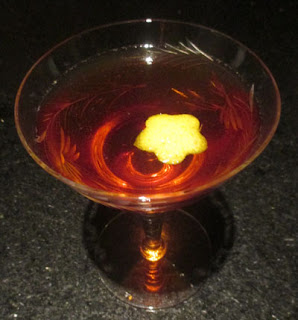
el presidente

1 1/2 oz Don Q Añejo Rum
1 1/2 oz Dolin Blanc Vermouth
1 bsp Pierre Ferrand Dry Curaçao
1 bsp Grenadine

Stir with ice, strain into a cocktail glass, and garnish with a cherry and an orange twist.
The El Presidente became quite popular here in Boston around a decade ago as a combination of light rum, dry vermouth, curaçao, and a touch of grenadine. This is the way I have always made the drink, although I have not returned to the combination in years. It seemed to work for my palate and others including the night I mixed them at a friend's house using their recently acquired stash of Havana Club 3 Year. In 2012, David Wondrich in Imbibe Magazine declared that the drink recipe was first recorded as containing "Chambery" which probably meant the blanc or sweet-white vermouth that the region was famous for. For my recipe, I tracked down the 1924 Manual del Cantinero via EUVS that Wondrich referred to as well as the 1932 Sloppy Joe's Bar book via EUVS that included both the curaçao and the grenadine modifiers (the 1924 recipe had an option for one or the other). The latter recipe declared the drink a dry vermouth one (Noilly Prat is best known for their dry vermouth and appears to have never made a blanc style) as do most of the rest of the recipes to follow with the former one only suggesting at blanc vermouth.
Since many people have touted the blanc vermouth version as superior, I merged the 1924 recipe with the liqueur and syrup combination from the 1932 recipe. In the glass, the El Presidente gave forth an aged rum aroma with a hint of orange fruitiness. Next, a sweet white grape paired with the rum's caramel note, and the swallow continued on with rum, orange, berry, and floral flavors. Overall, this combination was a touch too sweet for me so perhaps upping the rum (or using a rougher spirit) and toning down on the blanc vermouth might work. In Pioneers of Mixing at Elite Bars: 1903-1933, they recommend subbing in a rhum agricole for any call of Bacardi during this era to better mimic its grassiness, so perhaps using an overly smooth rum is indeed a detriment here (as is the case in the Twelve Mile Limit from the same era). Moreover, this sweetness could have also been due to the lack of structure imparted by dry vermouth's acid (such as from Noilly Prat), so it came across as a bit more flabby than the recipe I am more familiar with; perhaps this might be effected by my Dolin Blanc bottle not being the freshest (despite it working well recently in other recipes).

Thursday, December 7, 2017

second sip

2 oz Compass Box Asyla Scotch (1 3/4 oz Famous Grouse + 1/4 oz Laphroaig 10 Year)
1/2 oz Carpano Antica Sweet Vermouth (Cocchi)
1/2 oz Cockburn 20 Year Tawny Port (Sandeman Tawny)
1/4 oz Fernet Branca
2 dash Bittermens Mole Bitters

Stir with ice and strain into a cocktail coupe.
After Thanksgiving dinner, I was in the mood for a digestif cocktail, and I recalled that there was a Fernet Branca recipe on the Bittermens webpage. That drink was the Second Sip which reminded me a bit of an embittered Chancellor or a less floral Skyfall. The provided history was that Avery and Janet Glasser of the Bittermens challenged Brian Miller at Death & Co. to come up with a cocktail with Scotch, their bitters, and Fernet Branca, and this was the result. Once prepared, the Second Sip gave forth a peat smoke nose with hints of Fernet's menthol. Next, a rich grape sip from the vermouth and port led into a smoky whisky and bitter herbal swallow with a chocolate-menthol finish.

Wednesday, December 6, 2017

haole's downfall

1 1/2 oz Don Q Cristal Rum (Angostura White Oak)
1/2 oz Kronan Swedish Punsch
1/2 oz Guava (Guava jelly melted down 1:1 with water)
1/2 oz Lime Juice
1/2 oz Simple Syrup

Shake with ice, strain into a rocks glass, fill with crushed ice, and garnish with a paper umbrella.
Two Wednesdays ago, I ended up on the Kronan Swedish Punsch website where there were a few suggested recipes. The one that called out to me was the Haole's Downfall crafted by Nick Feather at San Francisco's Restaurant Skool. The ingredient listed as "guava" might have meant guava juice or concentrate (guava syrup would probably be too sweet here given the Swedish punsch and simple syrup already in the recipe), but I had some melted guava jelly left over from the Fascination Street that I figured would work well here. Once prepared, the Haole's Downfall gave forth rum and darker tropical notes perhaps from a combination of the guava and Swedish punsch. Next, lime and caramel were joined by viscosity from the guava's pectin on the sip, and the swallow shared rum, guava, and Swedish punsch's tea and funk flavors.

Tuesday, December 5, 2017

the clermont

1 oz Wild Turkey Rye Whiskey
1 oz Laird's Applejack
1/2 oz Cider Syrup (*)
1/2 oz Lemon Juice
1 dash Angostura Bitters

Shake with ice and strain into a rocks glass.
(*) Cloudy apple cider boiled down (perhaps by a third to a half) with cinnamon and clove. Dissolve an equal part of sugar and let cool.
Two Tuesdays ago, Andrea and I had dinner at Trina's Starlite Lounge. For a first drink, I asked bartender Kevin McNally for the Clermont that seemed like an interesting riff on the Stone Fence. I later asked bartender Isaac Sussman about the syrup, but I regret now not asking about the drink's name. If it were made with a Jim Beam whiskey instead of Wild Turkey, the name would make sense due to the Beam distillery's home in Clermont, Kentucky. Regardless, the Clermont greeted the nose with apple and cinnamon aromas. Next, lemon and apple flavors mingled on the sip, and the swallow offered rye and apple notes with a bitter finish.

something must break

2 oz Dewar's 12 Year Scotch
1/2 oz Sweet Potato Syrup (*)
1/4 oz Cynar
1/2 oz Lemon Juice

Shake with ice, strain into a rocks glass, add ice, and garnish with a lemon twist.
(*) Bake a sweet potato wrapped in tin foil for 45 minutes at 400°F. Let cool, chop, and blend with 6 oz water. Strain through a tea towel with a squeeze at the end, and dissolve an equal part of sugar into this liquid.
In the same Trader Joe's shopping adventure that I purchased the persimmons, I also selected some sweet potatoes for my night at the Earl's Cocktail Lab. I ended up baking two of them: one of them for dinner that night and the other to make syrup the next day. Again, a quick Google search at the store confirmed that sweet potato plays well in cocktails and provided ideas on how to transform them into syrup. Given the roasted vegetal notes, my mind thought that Scotch would work well here; moreover, I added some Cynar to complement both ingredients as well as some lemon juice to balance the sweetness here. The syrup ended up slightly "gritty" with sweet potato particulate, so I opted for serving this on the rocks to hide the light starchy silt. For a name, I dubbed this one Something Must Break in keeping with the Joy Division theme.

Monday, December 4, 2017

new dawn fades

1 1/2 oz Macchu Pisco
1/2 oz Persimmon Syrup (*)
1/2 oz Amaro Montenegro
1/2 oz Lime Juice
1 dash Regan's Orange Bitters

Shake with ice, strain into a glass, and garnish with an orange twist.
(*) Two persimmon sliced and added to a pot with 1 cup of sugar and 1 cup of water. Bring to a boil, simmer covered 20 minutes, let cool, blend, and strain through a tea towel.
While shopping at Trader Joe's in preparation for my Cocktail Lab night at Earl's Prudential two weeks ago, I spotted the display of persimmons and thought that this fruit's melon and peach notes would work rather well in a drink. A quick Google search confirmed that the idea was a sound one and also provided me hints on how to transform it into a syrup. Once the syrup was prepared, my mind quickly went to the earthy notes in pisco, and I thought about supplementing the fruit aspect with either Aperol or Amaro Montenegro. Montenegro ended up adding more complementary notes as well as a delightful citrus-herbal complexity to the mix. For a name, I kept with the Joy Division song title theme and went with New Dawn Fades given how persimmons reminded me of the color of a rising or setting sun, and I garnished with a moon sliver-esque orange twist.

a means to an end

1 1/2 oz Del Maguey Mezcal Vida
1/2 oz Celery Syrup (*)
1/2 oz St. Germain Elderflower Liqueur
1/2 oz Lime Juice

Shake with ice, strain into a cocktail coupe with 1 oz soda water, and garnish with a grapefruit twist.
(*) Celery stalks chopped and blended with a little water (2 oz for a medium head). The fine strained juice was mixed with an equal volume of sugar and stirred to dissolve without heat.
Two Mondays ago was my fourth Cocktail Lab night at Earl's Prudential out of the five week series. For a theme, I went with songs from the band Joy Division. One of the ingredients that I was tinkering with was a celery syrup made from the stalk's juice; the two drinks that inspired me here were Chez Henri's Lamplighter that utilized celery juice and simple syrup in a Bourbon Sour and Drink's Means of Preservation that paired celery bitters and St. Germain. Since celery bitters go rather well with agave distillates, I selected mezcal as the base and lime as the citrus to balance out the sugar content of the celery syrup and elderflower liqueur. Also to help lighten things up and fill up the larger than normal coupes at the bar, I added soda water to the mix. Keeping the Means of Preservation in mind, the Joy Division song A Means to an End seemed quite appropriate.

Sunday, December 3, 2017

palaver punch

2 oz Bluecoat Gin (Damrak)
1/2 oz Dolin Dry Vermouth (Noilly Prat)
1/2 tsp Allspice Dram (1 bsp St. Elizabeth)
1 dash Orange Bitters (Regan's)
1/2 oz Grapefruit Juice
1/2 oz Lemon Juice
1/2 oz Brown Sugar Syrup

Shake with ice, strain into a glass with 1 oz soda water, fill with ice, and add a mint sprig.

For the cocktail hour on Sunday night two weeks ago, I pulled out my copy of Tom Sandham's World's Best Cocktails and found the section on punch compiled by Al Sotack then of Philadelphia's Franklin Mortgage & Investment Co. From those recipes, I selected Sotack's Palaver Punch that seemed to merge a Dry Martini with citrus and spice elements of a more classic punch.
The Palaver Punch met the senses with a minty aroma. Next, a carbonated sip matched caramel-molasses notes from the brown sugar with citrus ones from the grapefruit and lemon juices, and finally, the swallow proffered botanical flavors from the gin and allspice liqueur with a citrussy finish.

Saturday, December 2, 2017

lucky wireless

3/4 oz Appleton Reserve Rum
3/4 oz Pierre Ferrand Cognac (Courvoisier VS)
3/4 oz Carpano Antica (Cocchi Sweet Vermouth)
3/4 oz Cinzano Sweet Vermouth (Cocchi Sweet Vermouth)
1 dash Peychaud's Bitters
1 dash Allspice Dram (1 bsp St. Elizabeth)

Stir with ice, strain into a cocktail coupe, and garnish with a lemon twist.
Two Saturdays ago, I searched through the Brooklyn Bartender book for a nightcap. There, I uncovered Tyler Caffall's Lucky Wireless as his riff on the Marconi Wireless that he crafted at Fort Defiance. Since I only have one sweet vermouth at home, I combined the two volumes and utilized my medium bodied Cocchi Vermouth di Torino to span the range between the called for Carpano Antica and Cinzano. Once prepared, the Lucky Wireless offered lemon oil aromas over rum notes on the nose. Next, grape and barrel-aged caramel flavors filled the sip, and the swallow elegantly paired aged rum and brandy with an allspice finish.