Wednesday, July 15, 2009

'ti punch

2 oz Rhum Agricole Blanc
1/2 oz Sugar Cane Syrup (Clement Sirop de Canne)
Large Lime Wedge (Ideally 50/50 ratio of pulp to zest)

In a rocks glass, squeeze lime slice and pour syrup over the lime. Add rum and use a wood swizzle (a Bois Lélé) or bar spoon to stir. Add 1 tbsp of ice, stir, and serve.

We had the 'Ti Punch twice -- once on Wednesday at the Rhum Agricole tasting room and once on Thursday at the Sugar Cane Spirits seminar. 'Ti Punch is the unofficial national cocktail of Martinique. While the word "'Ti" is an abbreviation of the Creole word for petite, the drink weighs in pretty heavy with a large swig of rhum that is only slightly diluted in the end product. It is one of the best showcases for the spirit since the lime and sugar do not detract from rhum agricole's vegetal and fruit aromas. The one I had on Wednesday was made with JM Rhum and I opted for no ice which made the bartender on the right quite pleased. A bit of hogo (sort of rubbery notes which I greatly enjoy when in moderation) from the rhum with a hint of lime and sweetness to balance the burn of the 100 proof spirit. The one I had at the seminar was made with Rhum Clement and it was more tasty than the first one. No clue whether it was the rhum or the fact that the small amount of ice made the drink more palatable. Since I love Rhum JM, I am guessing that it was the latter.

Tuesday, July 14, 2009

art of choke

1 oz White Rum
1 oz Cynar
1/8 oz Lime Juice
1/8 oz Demerara Syrup (2:1)
1/4 oz+ Green Chartreuse (to taste)
Mint

Muddle a mint sprig with the other ingredients. Stir with ice and strain into a rocks glass filled with fresh ice. Garnish with a fresh mint sprig.

After the Martin Miller cocktail reception for the bloggers on Tuesday night last week, Andrea and I decided to go out to Cure. We ignored the advice to take a taxi out there and decided to walk. Not sure how far down St. Charles before we should turn to get onto Freret Street, we turned early and enjoyed a nice walk... um, through what we later learned are the Magnolia Projects. I cannot tell if it was years of experience walking through bad parts of Boston and a summer walking through all of Manhattan or just plain luck, but we made it through unscathed save for a few comments hurled at us. One of the bartenders gave us not only major props for walking the 4 miles from the French Quarter to the bar but for seeing the sights. Honestly, we were more disturbed about the suicidal cockroaches that would dash under out footfalls on the sidewalk. Apparently, the Magnolia Projects are not what they used to be during the pre-Katrina days, but the Crips writing and other gang evidence was still evident.

So after an hour walk, it was definitely time for a drink! Cure had their normal menu plus a special smaller one just for Tales of the Cocktail. The latter one was taken directly from their Rogue Cocktails book which helped to promote its sale (part of the reason we bought it). Bartender Maksym Pazuniak made my first drink, the Art of Choke, from the shorter cocktail list. The rum and Cynar pairing seemed to bring out different aspects from the Cynar than we have tasted when paired with other spirits. The drink had a surprising amount of mint flavor and it worked rather well with the Chartreuse. Usually mint is more of a smell than a taste, but perhaps the pairing with Chartreuse and/or Cynar promoted some synergy on the taste buds. The Rogue book cites bartender Kyle Davidson as the source and describes the drink as follows, "Picture yourself in the limestone-walled courtyard of an Italian villa off the coast of the Riviera. You are surrounded by fragrant herbs and flowers, and the sea air is blowing gently. The sun is bright, but it's not hot, and you have nothing to do all day but relax and savor the sensations all around you. Drinking this cocktail is kind of like that if somebody suddenly punched you in the stomach just as you were beginning to doze off in the sun. In a good way." While the quantity of drinks in the book is not grand, the quality of the recipes is high and edgy and the text is replete with a similar sense of humor as the Art of Choke's entry.

For my second drink, I asked Rhiannon Enlil to make their Black and Blue Grass off of their regular menu. Sazerac Rye, Averna, Aperol, Peychaud's and Angostura Bitters with a grapefruit twist. This Black Manhattan-like drink was pre-batched so I did not get a recipe and it was served on the rocks (I later found it posted on BarNotes and made it here). After that drink, we decided to walk home through the safer Garden District -- great scenery, but rather uneventful save for a kitty who wanted to follow us home.

mosel cocktail

1 1/2 oz Martin Miller Gin
1 1/2 oz Mosel Spatlese Riesling
2 dash Cherry Bitters
2 dash Peach Bitters

Stir with ice and strain into a chilled coupe glass. Garnish with a lemon twist.

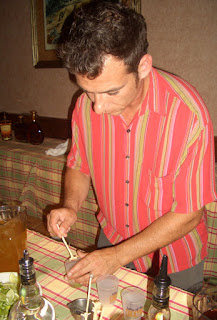
After dinner at Bennachins, Andrea and I went to the blogger meet-up cocktail hour sponsored by Martin Miller at the rather posh M.S. Rau Antiques. One of the drinks was a wine-based one created by Thad Volger called the Mosel Cocktail. The photo shows Martin Miller's brand ambassador Jon Santer mixing up this drink for me inside a beautiful antique wood bar. I did not try the punch in the left of the image which was served from a $20,000 punch bowl (it was for sale along with other cocktail oddities such as the 1920's German Art Deco sterling silver airplane which disassembled into a multi-piece bar set). The Mosel Cocktail tasted like a blanco-vermouth Martini through the two housemade bitters and perhaps some of the botanicals in the gin transforming the wine into something very vermouth-like in flavor. Both the lemon oil from the twist and the gentle peach aroma from the bitters paired nicely with the wine.

monteleone cocktail

2 oz Rye Whiskey
1 1/2 oz St. Germain Elderflower Liqueur
1/2 oz Domaine De Canton Ginger Liqueur
2 dash Fee Brothers Orange Bitters
Splash Ginger Ale

Shake ingredients and strain into a julep cup or cocktail glass filled with crushed ice. Garnish with orange slice.

Shortly after landing on Tuesday, we headed out to the Monteleone Hotel and stopped into the Carousel Bar where we spotted our friend Jonathan Forester. When bartender Marvin Allen took my drink order, I originally asked for a Vieux Carre which had been invented at the Hotel Monteleone's bar back in 1938. Jonathan reminded me that the bar also had the Monteleone Cocktail which won their recent contest for the bar's signature cocktail. Wanting to try something new, I caught Marvin before he had started on my drink and changed my request (luckily, the Ramos Gin Fizzes Andrea and Jonathan ordered provided me this opportunity).


The drink was rather St. Germain tasting on the forefront and a relatively more subtle ginger on the swallow. My enjoyment of this cocktail increased once the ice melted and the sugar content was diluted. I then was glad that the drink was served on the rocks instead of up. Andrea thought that this recipe would have rather widespread appeal due to its sweetness and could introduce and excite people to both St. Germain and Domaine de Canton. I enjoyed the drink as we slowly rotated around the Carousel Bar; however, after a few rotations, I was more tempted to get off my amusement park ride than have another drink. Alas, we bid our adieus to Jonathan, although only for a few hours, and headed off to Bennachins down Royal street for some tasty West African food. At some point, I hopefully will write up Bennachins and the other veggie/vegan-friendly restaurants we ate at during the week.

Monday, July 13, 2009

:: new products - tales of the cocktail 2009 ::

Andrea and I just got back today from Tales of the Cocktail in New Orleans where we have been since Tuesday. Expect a whole lot of recipes from drinks we had there in bars, restaurants, tasting rooms, seminars, cocktail hours, and parties over the next few weeks. I havve narrowed them down a bit but it will still be a large undertaking. As a teaser, I will present my favorite new products. True, there were lots of new absinthes, rums, unaged whiskeys, and the like; however, I am focusing here on products that stood out for one reason or another as unique (besides tasting rather good).

Starting first are a few products from Eric Seed of Haus Alpenz. Aperitivo Cocchi Americano is a product already available in Europe but will soon be here in the U.S. It is possibly the closest thing to Kina Lillet -- the quinine-laden and sharper form of Lillet Blanc that got discontinued. With this product, people will get to see that James Bond meant a bit more business with the Vesper Martini and will be able to approximate older recipes truer to form. Bonal Gentiane Quina is another European product that will be introduced to the American market. Perhaps not a product for everyone's taste buds, but imagine Moxie mixed with a quinquina sweet vermouth. I thought it was delicious and imagined it immediately mixed with gin or rye along with a dash of Fernet Branca. Two more products of Haus Alpenz that stood out were R&W Orchard Cherry and Linnea Swedish Punsch, but I did not have a chance to taste these delights due to time constraints. While I believe that the Orchard Cherry is a new product, the Swedish Punsch will re-introduce a once available spirit to the American market (in the past by a variety of producers).

St. Germain formally presented Creme Yvette this year after presenting a prototype last year at Tales. Creme Yvette was a defunct violet liqueur that was resurrected from the recipe crypts. Unlike the more single note and slightly sharp Creme de Violette, Creme Yvette is more subtle and more fruity with hints of cassis. I felt lucky to have the opportunity to taste it straight and in a cocktail (a more full report later).

From the makers of Cherry Heering is Heering Coffee Liqueur. While I do not frequently use coffee flavors in my cocktails, this product is pretty close to what I would want it to taste like if I were to design a coffee liqueur myself. Rich, toasted espresso flavors as opposed to a syrupy, almost faux coffee taste I have experienced elsewhere. Again, this is another product available in Europe that will soon be made available here in the United States.

There were two grain-based spirits that stood out as unique. Wasmund's Single Malt Whisky from Virginia utilizes cherry and apple wood to smoke the barley instead of peat, so for lovers of smoke flavor but not necessarily peat, this product is rather good. And with a liquor score of 93, others apparently feel the same. From Piedmont Distillers is a flavored (legal) moonshine product called Catdaddy. Catdaddy uses their all-corn Midnight Moon as a base with a secret botanical mix to give it a custard, eggnog, clove, and cinnamon sort of taste. We also had the Catdaddy in an Carolina-inspired Aviation variant, the Kitty Hawk cocktail.

A quick mention is needed for Herbsaint re-introducing their Legendre absinthe since wormwood liquors are now legal again. Also, they were celebrating the 75th anniversary of Herbsaint itself, and the Herbsaint-flavored chocolate truffles that they handed out to celebrate this were the tasty!

Alas, sleep beckons. It has been a long, wonderful, but tiring week... and thanks to all the folk I met along the way who helped to make this a great experience. Cheers!
Sunday, July 5, 2009

gin daisy

1 1/2 oz Gin (Berkshire Mountain Distillers Ethereal Gin)
1/2 Lemon (~3/4 oz Juice)
1 tsp Grenadine
1 dash Pastis (optional)

Shake with ice and strain into a highball glass filled with ice cubes. Top with soda water, garnish with a lemon twist, and add straw. Using an egg white is another option for this drink.

On Friday night, I needed to find a cocktail that used lemon juice to utilize our channel-knifed up lemon left over from making the Trident. In addition, we were excited to try out our purchase of the new Berkshire Mountain Distillers gin, Ethereal. The distillery has a standard gin, Greylock, and recently bolstered their repertoire with this more unique style. The concept for the Ethereal is to be "brimming with botanicals" and to switch up the herbal line-up with each batch (signified by a different label color). Upon tasting the gin on its own, it is much lower on the juniper berry piny notes than most gins out there so Ethereal might make for a good "give gin another chance" gin. There was a decent mouthful of citrus peel flavors and something rather violet flower-like which might be orris root. I wish the distillery would list either the botanicals or tasting notes for each batch to make the gin less mysterious to the cautious buyer and more tempting to the gin lover who seeks out certain botanicals over others (*). Then again, the intrigue did lure me into trying it out.


For a drink, we opted for making a Gin Daisy from our Patrick Gavin Duffy 1975 edition of The Official Mixer's Manual. The recipe there gives the options of including a dash of Pernod and an egg white, and we opted for the former to give the drink a little more complexity. Duffy's Daisy recipe is also loose on the amount of alcohol (1 1/2 to 3 oz) and suggests applejack, brandy, gin, rum, or whiskey as base spirit choices. Overall, our Gin Daisy was very tart and refreshing. The scant amount of grenadine provided a pleasing pink hue but did not provide that much sweetness to balance the lemon juice like the quarter or half ounce of simple syrup does in a Collins. The pastis did serve to add a little extra character and worked well with the gin's botanicals. Moreover, I somewhat regret not doing the egg white option although it would have masked some of the gin taste we were trying to fully appreciate this time around.

(*) Postnote 2/9/10: The newest batch of Ethereal Gin is out with a pink label. It is stronger in the rose elements and less "medicinal" as the rep described it. Perhaps the newer batch is going after the Hendrick's market? Regardless, the new sales rep gave me the okay to list the botanicals (7 in Greylock and 14 in Ethereal):
Ethereal and Greylock: juniper berry, orange peel, orris root, cardamom, cinnamon bark, angelica root, licorice.
Ethereal only: lemon peel, black pepper, cubeb berry, rose hips, elderberry, nutmeg, spearmint.

Saturday, July 4, 2009

trident

1 oz Dry Sherry (Lustau's Don Nuño Dry Oloroso)
1 oz Cynar
1 oz Aquavit (Aalborg)
2 dash Peach Bitters (Fee Brothers)

Stir with ice and strain into a cocktail glass. Garnish with a lemon twist.

Last week, I finally bought a bottle of aquavit after frequently eying it when I went liquor shopping. Aquavit is a caraway flavored liquor in the same way that gin is a juniper flavored one. Apparently, there is as much variation in aquavits as there is in gins. The Aalborg Aquavit alone tasted of caraway but the flavor was tempered by the mix of other botanicals; in addition, it was not as harsh and intense tasting as the other caraway-flavored liquor we own, namely kümmel. On Friday night, when I asked Andrea what we should make with it, she already had the Trident in mind. The drink had mocked her ever since she saw it in Robert Hess' The Essential Bartender's Guide. She is a big fan of sherry cocktails and of the bitter artichoke-containing liqueur Cynar, so it was not a big surprise that she zoomed in on this recipe. The book describes how the drink was created by Hess in 2002 for the Zig Zag Cafe in Seattle, and looking at the recipe, it is indeed very similar to a Negroni with more common cocktail ingredients swapped out for more obscure ones.

Over all, the Trident did not disappoint. The sherry and lemon nose worked rather well together as a prelude to the first sip. The aquavit and Cynar combination was stunning and it was hard to tell where one began and the other ended. The drink was much sweeter than expected given the generally dry ingredients. This could be due to Cynar's cynarin content. Cynarin is a polyphenolic compound found in artichokes which does not taste sweet itself but makes everything afterwards taste a little sweeter. The Trident was definitely worth the price of the bottle of aquavit, and hopefully I will get to try a few other brands including Chicago's North Shore Distillery's version in the near future.

Friday, July 3, 2009

cesar moro

1 1/2 oz Pisco
1/2 oz Cointreau
1/2 oz Pineapple Juice
1/2 oz Dry Vermouth
1 dash Fee's Whiskey Barrel (or other Aromatic) Bitters

Shake with ice and strain into a cocktail glass. Float 2 drops of orange blossom water (orange twist would make for a fine substitution).

The theme for last night's Mixoloseum Thursday Drink Night was the orange liqueur Cointreau. Since Kaiser Penguin had already gotten me excited about this one between his email reminder for the event and his asking my opinion on his drink, the Royal Fool, I decided to scheme up a recipe to offer up to the chat room. When I spotted the pisco on my shelf, a recipe began to form that was a part Pisco Punch and a part Algonquin or perhaps the recently mixed Floor Polish Cocktail. Given the South American origin of the base spirit, the cocktail was dubbed the César Moro after the Peruvian surrealist and poet who collaborated with Andre Breton during the 1920's and 30's. In this drink, the orange blossom water on the nose prepared the taste buds for the wave of Cointreau to follow. The sweetness from the Cointreau and pineapple juice were matched by the spiciness from the pisco, vermouth, and bitters. My one regret is that my bitters shelf lacks Amargo Chuncho Bitters which would have added the perfect accent to this drink.

means of preservation

2 oz Beefeater Gin
1/2 oz St. Germain Liqueur
1/2 oz Dolin Dry Vermouth (I used Noilly Prat)
2 dash Celery Bitters

Stir with ice and strain into a coupe glass. Garnish with a grapefruit twist.

While talking to John Gertsen at Drink on Sunday night about my celery bitters, he mentioned an Ephemeral variant that he had crafted. The Ephemeral is drink Paul Clarke wrote about in his 30 drinks in 30 days quest on The Cocktails Chronicles blog, and his entry describes how David Shenaut from the Teardrop Lounge in Portland, Oregon, came up with the drink. While Paul gives credit to Chuck Taggart for posting about it first, I give Paul credit for influencing Gertsen to try the recipe and fiddle with it. The original recipe is as follows:
Ephemeral
1 1/2 oz Old Tom Gin
1 oz Dolin Blanc Vermouth
2 barspoon St. Germain Liqueur
3 dash Celery Bitters

Stir with ice and strain into a coupe glass. Garnish with a grapefruit twist.
Gertsen's variation, the Means of Preservation, switched the gin to a less sweet and more junipery one of Beefeater. While he did up the liqueur proportion, he decreased the amount and sweetness of the vermouth to generate what on paper seems a bit drier of a drink. He found the grapefruit peel essential to both recipes, for he noted that that it worked rather well with the celery bitters to bring out a great earthy flavor in each drink. To get a full appreciation of the change, I made both:
The Ephemeral is at the right in the straight stemmed glass and the Means of Preservation is at the left in the balled stemmed glass; the increase in St. Germain as well as my change to the more straw-colored Noilly Prat dry (I currently only have 2 of the 3 Dolins at home) gave the Means of Preservation the darker hue. The Ephemeral was indeed a tasty drink. With a lot of grapefruit on the nose, the first sip gave a very smooth and sweet impression. Of note was how well the celery played with the St. Germain elderflower liqueur. The Means of Preservation was very similar, but sharper and drier. The nose was not just the grapefruit but included some additional aromatics from the Noilly Prat and perhaps the Beefeater gin. The celery flavors from the bitters stood out more in this drink, while the St. Germain, despite being greater in proportion, surprisingly stood out less. In the Ephemeral, there was some sort of synergy that amplified the St. Germain which did not occur in the variant. Andrea's comment was that the Means to Preservation might be a good change for a dry Martini lover while the Ephemeral, which was a tad too sweet for her, was "more like a lady's Martini" in comparison. Then again, both of our palates seem to be a lot drier than most.