Showing posts sorted by relevance for query crusta. Sort by date Show all posts

Wednesday, March 9, 2011

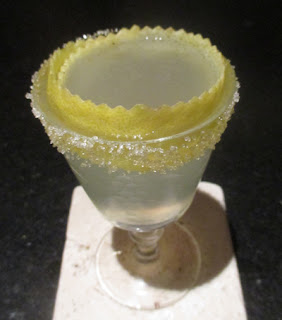
pisco crusta

2 oz Capel Pisco
1/2 oz Cointreau
1/2 oz Lemon Juice
2 dash Abbott's Bitters (sub Angostura)

Shake with ice and strain into a small wineglass with a sugar-coated rim. Garnish with a wide lemon peel looped around the inside of the glass' opening.

Last Friday, Andrea and I went to Rendezvous for dinner. There, I spoke to bartender Scott Holliday about an online class I took on Cognac. Scott was curious as to what the course covered, and he got excited when I mentioned that the Brandy Crusta was one of the drinks they discussed.

The Crusta was created by Joseph Santini in New Orleans around 1852. At his Jewel of the South bar in the French Quarter, he was believed to have created the drink that eventually transformed into the Sidecar. A decade or two later, Jerry Thomas described the Crusta as being a Fancy Brandy Cocktail with the addition of a sugar-crusted rim and lemon juice. While the sugar-coated rim helped to give the drink its name, the addition of citrus to cocktails was a big leap forward. To put the Crusta in perspective, Jerry Thomas also provided the recipes for the classic Brandy and the Fancy Brandy Cocktails. The Brandy Cocktail was spirit, bitters, curaçao, and gum syrup on crushed ice, and the only upgrade from that to the Fancy Brandy Cocktail was straining out the ice and adding the lemon peel that later became better associated with the Crusta. It is also worth mentioning that subsequent versions of the Crusta contain Maraschino liqueur in place of or in addition to the orange liqueur.

Originally, according to David Wondrich in Imbibe!, the lemon juice was meant more as an accent than as the basis of a Sour type drink. Today, the lemon juice portion can be quite considerable, and it is the addition of the bitters, the wide lemon peel, and sometimes the glassware choice that distinguishes the Crusta from the Sidecar.
The spirit that Scott has been excited about experimenting with recently is Pisco, so he decided to make me a Pisco Crusta. The drink was very much like a Sidecar, but here, the citrus peel donated a grand lemon oil aroma. Moreover, the pisco added a delightful grape eau de vie note to the drink and the Abbott's Bitters provided a bit of complexity to the mix including clove and pimenta racemosa flavors. Indeed, the balance was a bit tarter than most Sidecars usually are, but still within the acceptable if not preferable range; the addition of sweetness from the sugared rim did adjust the balance as needed.

Sunday, May 15, 2016

cuban crusta

1 jigger Bacardi (1 1/2 oz Seleta Gold Cachaça)
Juice 1 Lime (3/4 oz)
1 tsp Grenadine (1/2 oz)
1 dash Curaçao (1/2 oz Senior)
White of 1 Egg

Shake once without ice and once with ice, and strain into a glass crusted with sugar. I added a long lime peel around the top interior diameter; as an afterthought, freshly grated nutmeg or a few droplets of aromatic bitters would not be out of place here on the egg white froth.

A few Saturdays ago, I was perusing Pioneers of Mixing at Elite Bars: 1903-1933 when I spotted another curious Crusta recipe that included egg white like the Niagara Crusta from that same tome. And like a few other Crusta recipes in that book, this one also left out the bitters that seemed to be a hallmark feature of classic Crusta recipes. Regardless, it seemed worthy of a try even if it was an outlier for a few reasons.
The Cuban Crusta shared a lime and grassy nose. Next, a creamy pomegranate and lime sip led into grassy rum and orange flavors. While looking at the drink photographs, I realized that freshly grated nutmeg or perhaps a few droplets of Angostura Bitters on the egg white froth surface would not be out of place here. Plus, the bitters garnish would add back an element that I found missing from the classic formula.

Tuesday, April 16, 2013

rye crusta

1/2 jigger Rye (1 1/2 oz Rittenhouse 100)
1/3 Orgeat (1/2 oz BG Reynolds)
1/2 Lemon Juice (3/4 oz)
2 dash Grenadine (1/4 oz)

Shake with ice and strain into a sugar-crusted wine glass. I garnished with a wide lemon peel (the recipe suggests garnishing with fruit, berries, mint, etc.).

Two Thursdays ago, the copy of Pioneers of Mixing at Elite Bars: 1903-1933 was still on the counter, so I began to flip through it again. There, I spotted a Rye Crusta that seemed different than the standard Maraschino, orange liqueur, lemon juice, and bitters combination. While this one did have the classic sugar-crusted rim, it had a very 19th century way of garnishing with lots of fruit, berries, and herbs and lacked the traditional wide citrus peel; the fruit garnish was something that I also observed in the Whiskey Crusta from Harry Johnson's Bartenders' Manual. Johnson's Crusta was also unique as it called for an orchard syrup which has been interpreted cider boiled down several fold into a sweet syrup. In the end, I added the standard citrus peel garnish to the Rye Crusta and spared the fruit (which worked in Johnson's because the glass was filled with crushed ice which supported the garnishes).
rye crusta
The rye whiskey aroma joined that of the lemon peel garnish's. A lemon and malt sip contained some of the fruitiness from the grenadine; the rest of the rye flavor came through on the swallow along with the orgeat's almond.

Sunday, September 2, 2018

brandy crusta

1 jigger Brandy (2 oz Camus VS Cognac)
2 dash Apricot Brandy (3/8 oz Giffard)
1/2 Lime Juice (3/4 oz)
1/2 tsp Grenadine (3/8 oz)

Shake with ice and strain into a sugar-rimmed glass; I added a wide lime twist inserted into the interior diameter of the glass.

After my bar shift two Sunday nights ago, I turned to Pioneers of Mixing at Elite Bars: 1903-1933 and spotted a Brandy Crusta recipe that I had never made. I probably skipped over the recipe dozens of times for we have already written up a more standard Brandy Crusta here before, and for the longest time, I did not have wanted another one with the same name. In addition, the Pioneers book has some nonstandard Crusta recipes which frequently leave out the bitters element (the Crusta after all was the first known cocktail to contain citrus) as well as the classy citrus peel rosette or ring at the top of the glass. Here, I included the citrus peel anyways, and I probably figured that I should make this since spirit, lime, apricot liqueur, and grenadine has been a winner in drinks like the Bermudian (renamed the Boston Cocktail most likely by the Mr. Boston series) and the Cuban Cocktail #6.
This version of the Brandy Crusta greeted the nose with apricot and Cognac aromas that were brightened by the lime twist and juice. Next, lime and berry on the sip stepped aside to Cognac and apricot flavors on the swallow with tart barrel-aged notes on the finish. Overall, the combination was rather pleasant, elegant, and fruity.

Saturday, March 5, 2016

niagara crusta

2 jigger Rye (1 1/2 oz Old Overholt)
1/2 Lemon Juice (1/2 oz)
1 tsp Sugar (1/2 oz Simple Syrup)
1 Egg White

Shake with ice and strain into a sugar-crusted glass. Put 2 dash Crème Yvette at the bottom of the glass (1/4 oz inserted at the bottom via plastic pipette). I added a wide lemon twist curled around the inside of the glass.

Every once in a while, there is a historical aberration from a classic style that makes you either shake your head or curious enough to give it a try (and sometimes like here, both at the same time). And many of these can be found in Pioneers of Mixing in Elite Bars: 1903-1933. I associate the classic 1852 Crusta as being a spirit, citrus, a sweetener (usually a liqueur), and bitters in a sugar-rimmed glass that contains a wide citrus twist garnish. In the Pioneer's Niagara Crusta, some of the basics are there, but there is an egg white, no bitters, and no citrus twist? I have made others from that book that lacked the bitters like the Newkirk and Rye Crustas (and the rye one lacked the citrus twist and recommended garnishing with fruits, berries, and mint instead), but to me it is the early presence of citrus in a cocktail (and by cocktail I mean in the classic sense where they need to have bitters) that make the Crusta important (besides being a predecessor of the Sidecar). The egg white is also an oddity; however, the sink of liqueur makes this recipe a dandy! Most Crustas have some liqueur like curaçao or Maraschino as the sweetener, but here the sweetener is sugar and the liqueur element is present in Pousse-café style. I added a citrus twist to the book's instructions to round out the drink and help adjust the recipe slightly to my perceived norm.
The Niagara Crusta had made a list of recipes to try, but I had always skipped over it until two weeks ago after my work shift. I definitely needed to tweak the proportions since I was not downing 2 jiggers of whiskey to test out this drink; moreover, that amount was odd since most of the recipes in the book are for smaller sized libations. Once built, the Niagara Crusta provided a lemon aroma from the citrus swath I added. Next, the creamy sip offered malt notes and a tart lemon aspect that was assuaged by the sugar on the rim; and lastly, the rye began the swallow that ended with a return of the tart lemon on the finish. Once the Crème Yvette entered the picture (assisted by agitation of the glass once it was half drained), the flavor gained berry, floral, and vanilla notes as well as an increase in sweetness.

Sunday, December 4, 2016

devery crusta

1 jigger Scotch (1 1/4 oz Pig's Nose, 1/4 oz Caol Ila 12 Year)
1/2 tsp Raspberry Syrup (1/2 oz Royal Rose)
Juice 1/2 Lemon (1/2 oz)

Shake with ice and strain into a glass with its rim crusted with sugar. I added a lemon twist.

Two Sundays ago after work, I decided upon the Pioneers of Mixing at Elite Bars: 1903-1933 as my evening's liquid adventure tour guide. In those pages, I found a curious Crusta in the non-American whisk(e)y chapter called the Devery Crusta. While there was no indication of what the drink was named after, one of the most famous Devery's of that time period was William Devery who became New York City's first police chief. A few years after telling his men, "They tell me there's a lot of grafting going on in this precinct. They tell me that you fellows are the fiercest ever on graft. Now that's going to stop! If there's any grafting to be done, I'll do it. Leave it to me.", he was arrested for bribery and extortion. Despite being dismissed from the police force, he was reinstated and eventually promoted to Chief of Police. The other thing Devery was famous for was buying a Baltimore baseball team, renaming it the Highlanders, and bringing it to New York in 1903; in 1912, that team became the New York Yankees.
Like many of the Crustas in Pioneers, the Devery Crusta lacks calls for the wide citrus peel garnish as well as bitters; of the two, I added back in the former. In the glass, this Crusta gave forth a peaty aroma along with the lemon oil one from the garnish. Next, a lemon, berry, and malt sip led into a swallow offering smoky Scotch melding into a raspberry finish. Overall, the whisky's peat and the raspberry made for a unexpectedly delightful combination.

Thursday, February 19, 2015

newkirk crusta

1 jigger Bacardi (1 1/2 oz Caliche Rum)
2 dash Port Wine (1/2 oz Taylor Fladgate Ruby)
2/3 Lime Juice (1/2 oz)
1/2 tsp Raspberry Syrup (1/4 oz Royal Rose brand)

Shake with ice and strain into a small wine glass rimmed with lime juice and encrusted with sugar on the rim. Add a wide lime twist.

After the Midnight Stinger, I decided to take it back to earlier in the century via Pioneers of Mixing at Elite Bars: 1903-1933. There, I spotted a quirky Crusta recipe in the rum section called the Newkirk Crusta. The Crustas in that book, such as the Rye Crusta often leave out key aspects or make strange additions (one has egg in it?!); here, both the Rye and Newkirk Crustas leave out bitters which seem to be a hallmark of the spirit plus small amounts of citrus and liqueur(s) plus bitters structure (not to mention the sugar-crusted rim) laid out in the mid 19th century. Regardless, I was game to try their nonstandard recipe.
The Newkirk Crusta began with a lime oil aroma from the twist along with a fruitiness from the raspberry syrup and port; later, the nose became more rum and lime driven. Next, the fruity grape aspect of the port joined the lime on the sip, and the swallow offered the rest of the port notes in addition to rum and raspberry flavors. Indeed, Andrea commented that despite the lack of bitters, it still "tastes very old school."

Thursday, June 21, 2018

negroni crusta

3/4 oz Gin (Beefeater)
3/4 oz Sweet Vermouth (Cocchi)
3/4 oz Campari
1/4 oz Curaçao (Pierre Ferrand Dry)
1/4 oz Maraschino (Luxardo)
1/4 oz Lemon Juice
1 dash Angostura Bitters

Shake with ice, strain into a narrow cocktail glass (sub narrow wine glass or small flute) rimmed with sugar, and garnish with a long wide lemon or orange twist (lemon twist) wrapped around the interior of the glass' rim.

Two Thursdays ago in the midst of Negroni Week, I began pondering what Negroni mashups that I could do. My mind set off in a Tiki direction such as I did last year for Negroni Week with the Negroni on Saturn and as I have done more recently with the Negroni Grog and the Zombie riff The Count Rides Again. Somewhere along the line, it dawned on me that a Crusta would be delightful. I had not touched the 1852 vintage structure since last summer with the Deauville Crusta. In pondering whether to make the added sweetener to balance the citrus and bitters the classic curaçao or the slightly newer Maraschino, I thought "why not both?" akin to what I did with the Bamboo Crusta years ago. While curaçao would round out the orange flavor in Campari, I have learned from drinks like the Carnivale (née the Pisco Disco) how Maraschino can soften Campari in the direction of Aperol. Lemon juice and Angostura Bitters were the additions that I went with by routine, and I did consider a wide orange swath for garnish but my orange at home has had too much peel taken off of it to make that happen. I ended up sticking with a lemon peel garnish, but orange would not be out of place here.
The Negroni Crusta greeted the nose with lemon oil over an orange and grape aroma. Next, the sip mirrored the bouquet with lemon, orange, and grape notes, but the swallow took things in a more complex direction with gin, bitter orange, and nutty Maraschino flavors and a clove and allspice finish. Overall, the citrus and liqueurs worked to make this rather gentle for a Negroni-based drink.

Friday, February 3, 2012

javanese crusta

1 1/2 oz Batavia Arrack
1/4 oz Orgeat (BG Reynolds)
1/4 oz Cinnamon Syrup (BG Reynolds)
1/4 oz Lime Juice
2 dash Angostura

Shake with ice and strain into a small wineglass with a sugar-coated rim. Garnish with a wide lime peel looped around the inside of the glass' opening.

For Thursday Drink Night last week on Mixoloseum, the theme was "nuts." For a nut ingredient, I wanted to stay away from the temptation of trying to imitate the glory of the Peanut Malt Flip and instead focused on orgeat syrup. When thinking about orgeat recipes, I thought about the classic Cognac drink, the Japanese, and decided to make it a bit funkier by swapping in Batavia Arrack for the brandy. To add some extra flare, I paired the orgeat with cinnamon syrup as in Ben Sandrof's Cuban Anole and merged the concept with the Crusta. Using the Japanese cocktail name as a base, I dubbed it the Javanese Crusta.
The Javanese Crusta hit the nose with Batavia Arrack, lime oil, and cinnamon aromas. The lime and orgeat on the sip was followed by Batavia Arrack's funkiness spiced with cinnamon syrup and Angostura Bitters on the swallow.

Tuesday, September 4, 2018

lemon drop crusta

2 oz Vodka (Ketel One)
3/4 oz Lemon Juice
3/8 oz Orange Liqueur (Cointreau)
3/8 oz Simple Syrup
2 dash Citrus Bitters (1 dash Regan's Orange, 1 dash Berg & Hauck's Lemon)

Shake with ice, strain into a narrow-diameter glass rimmed with sugar, and garnish with a long, wide lemon swath wrapped around the interior diameter of the glass.

On Saturday night two weeks ago, I was working the front bar at River Bar with my coworker Peaches when a ticket came in for a trio of Lemon Drops. I enthusiastically demanded to do the ticket that Peaches had pulled which amused one of our industry guests. Peaches was already familiar with my joy in making this drink despite my general hating to rim glasses with salt or sugar save for Crustas and Sidecars; however, our bar guest found it quite entertaining. I explained the circumstances of my first Lemon Drop: I went with my friend to go hangout with his girlfriend at the bar around the corner from her house, namely the B-Side Lounge circa 1999, before continuing on to a party nearby. The B-Side has been cited as the birthplace of the Boston cocktail renaissance and my visit was within the first year or so of it being open. At the time, I rarely drank cocktails save for club drinks like the Mind Eraser and Red Death and the occasional Manhattan when I needed to be a bit more business like. Therefore, when my friend's girlfriend ordered a Lemon Drop from the waitress, I panicked and said that I would have one too. And it was good -- with fresh lemon juice and a fancy sugared rim, it was a step up from the drink culture around town. Though I cannot recall having another in the next nearly two decades, I have made plenty for guests at various establishments.
My industry bar guest after taking a photo of me and posting it with the hashtag #fredloveslemondrops suggested that I ought to write up the drink on the blog. At first I thought about non-ironically revisiting the Lemon Drop; however, it seemed a touch out of place even if I could explain it as a vodka Chelsea Sidecar (or a Vodka Sour). So I got to thinking, and it dawned on me that the drink already has a sugared rim like the Crusta, so why not add some bitters and a wide citrus swath garnish? That way I could take the infamous 1970s neo-classic crafted at Henry Africa's Bar in San Francisco and give it some dignity by crossing it with the 1852 Crusta. Once prepared, the Lemon Drop Crusta sang out with lemon oil aromas to the nose. Next, lemon with hints of orange filled the sip, and the swallow continued on with the lemony flavors along with spiritous notes from the vodka. Like my first Lemon Drop, this was still rather good. While I cannot say complex or dynamic, it had a solid structure that I also witnessed in the Casper Sour that utilized a quality rice wine vinegar as the acid source.

Monday, March 15, 2010

whiskey crusta

1/2 oz Orchard Syrup (* see below)
1-2 dash Boker's Bitters
1 dash Lemon Juice (1 tsp)
2 dash Maraschino Liqueur (1 tsp Luxardo)
1 1/2 oz Whiskey (Jim Beam Rye)

Wet outer edge of a wine glass with a slice of lemon and coat with sugar. Add a long wide lemon peel to a wine glass, and fill with crushed or finely shaved ice. Shake rest of ingredients separately with ice and strain into glass. Garnish with fruit.

On Friday, I read about one of Erik Ellestad's Sazerac variants which intrigued me not for its use of pig-infused whiskey but for its use of "orchard syrup" as a sweetener. Orchard syrup was a cocktail ingredient in the late 1800's and I had just spotted a few recipes in my copy of Harry Johnson's Bartenders' Manual a few days earlier. After two instances in a week, I decided that I needed to make my own (see recipe below). At the scale I made mine at, it took about 90 minutes to boil down the apple cider to a quarter of its original volume. At that point, the sweetened and spiced cider took on a honey-like consistency when cooled.
For an orchard syrup recipe, I went with the Whiskey Crusta since apples and whiskey seemed like a good pairing (see Stone Fence) and I have not made a crusta at home in quite a while. The drink started with a sharp, hot rye flavor, and this was tempered somewhat by the fruity sweetness of the apple syrup and Maraschino liqueur. The sugar on the rim helped to mitigated the various sour, rough, and bitter notes in the drink by providing a sweet respite when needed through rotating the glass to a fresh part of the rim. While most Whiskey Crusta recipes lack apple syrup, the drink definitely benefited from the richness of flavors from its inclusion.
Orchard Syrup
• 6 cups Apple Cider
• 1 tbsp (1/2 oz) Lemon Juice
• 1 tsp Chinese 5 Spice Powder
• 1/2 cup Sugar
Pour ingredients into a pot. Heat to reduce ingredients down to 1/4 original volume (around 1 1/2 cup) while stirring every 10 minutes or so. Easiest way to determine the end point is to mark the initial liquid depth on a wood skewer and then measure what 1/4 the height would be with a second mark. Should be lightly adherent to a spoon when done (and still hot) and honey-like when cold (easier to measure out when warm or at least room temperature). Recipe modified from here with spice suggestion from Jennifer Colliau of Small Hand Bartender.

Wednesday, January 23, 2013

quin quina crusta

2 oz Bonal Gentiane Quina
1/2 oz Lemon Juice
1/2 oz Peychaud's Bitters
1/4 oz Luxardo Maraschino Liqueur

Dry shake the ingredients to mix and pour into a cocktail glass rimmed with sugar and filled with crushed ice. Garnish with a lemon twist (added after the photo was taken).

A few weeks ago, my friend Jake Parrott was in town; Jake is our regional Haus Alpenz rep, and he showed me the company's pamphlet and recipe sheet. One the drinks, the Quin Quina Crusta, was one I had spotted back in November in a Washington Life article on Bonal-based cocktails. I definitely remember the recipe for its edginess but questioned Jake if it was truly balanced. Jake explained that there was plenty of sugar in the Bonal to keep the citrus and Peychaud's notes in check. The recipe itself was created by Leo Robitschek of Eleven Madison Park in Manhattan, and two weeks ago, we gave it a try.
bonal gentiane quina crusta
The Quin Quina Crusta offered a fennel-like aroma from a combination of the Peychaud's anise and some of the Bonal's herbalness that was all brightened by the lemon oil. Next, a lemon and grape sip was chased by bitter herbal notes transitioning into Maraschino on the swallow. As the ice melted, the drink became more bitter and spiced, so the sugared rim came in handy.

Saturday, July 15, 2017

deauville crusta

3/4 oz Lustau Brandy
3/4 oz Coquerel Calvados
3/4 oz Clement Creole Shrubb Orange Liqueur
3/4 oz Lemon Juice
1 dash Angostura Bitters

Shake with ice, strain into a narrow cocktail or wine glass rimmed with sugar, and garnish with a long wide lemon peel wrapped around the glass' top inner diameter.
Two Saturdays ago for drink of the day at Loyal Nine, I decided to merge two New Orleans cocktails. The first was the Crusta created by Joseph Santini in 1852 that was the first recorded cocktail containing citrus (not the first drink, but the first with the classic spirits, sugar, bitters, and water structure) and the combination of brandy, orange liqueur, and lemon with a sugared rim perhaps morphed into the Sidecar. In figuring out what to do for the recipe, I stuck with the idea of a Brandy Crusta and selected the 1930s Deauville that I always think of as a Hoop La with the Lillet swapped for apple brandy or perhaps the cousin of the Between the Sheets. To take the Deauville into the proper cocktail format, I added a dash of bitters and figured that the sugared rim of the Crusta would compensate for any tartness or bitterness from its addition.

Thursday, April 14, 2011

alabazam

1 tsp Angostura Bitters (1/6 oz)
2 tsp Orange Curaçao (1/3 oz Senior Curaçao)
1 tsp White Sugar
1 tsp Lemon Juice (1/6 oz)
1/2 wineglass Brandy (1 oz Martell VS)

Stir juice and sugar until all dissolved. Add rest of ingredients and ice, shake, and strain into a claret glass.

On Friday night, I spotted the Alabazam in Leo Engel's American and Other Drinks from 1878, and the addition of a teaspoon of Angostura Bitters to what otherwise could be a Sidecar (despite the Sidecar recipe being published a few decades later in 1922) seemed like something I ought to try. In the notes added in the reprint of Louis Fouquet's Bariana, Charles Vextant provided the tidbit that the Alabazam was "one of his [Leo Engel's] specialties made at the Criterion in London." Most later recipes for the Alabazam, such as the one in The Flowing Bowl were less interesting to me for they decreased the Angostura to a dash or two which would never have gained my notice except for having a similar name to another Angostura-heavy drink, the Alamagoozlum.
The Alabazam's aroma was mainly the citrus notes from the lemon juice and orange liqueur with hints of Angostura's spice poking through. While the first taste was a dry citrus sip, later sips were increasingly muddled due to the Angostura Bitters affecting the palate most notably with a cherry-like flavor. The swallow though contained the brandy and Angostura spice with a lingering clove, allspice, and cinnamony finish. Given the decreased ratio of juice and liqueur to brandy, the drink reminded me more of the Brandy Crusta than the Sidecar (unless David Embury was my bartender). With the Crusta's creation in 1852 and inclusion of bitters, the Alabazam being an extreme (sugared-rim- and lemon peel-less but bitters heavy) Crusta might be more accurate.

Thursday, February 23, 2017

newkirk

2/3 Jamaican Rum (1 oz Coruba + 1/2 oz Rumfire)
3 dash Port Wine (1 oz Sandeman Tawny)
1 dash Lemon Juice (1/2 oz)
1 dash Angostura Bitters

Shake with ice and strain into a cocktail glass.

After getting home from Craigie on Main, I was in need of a nightcap so I reached for Pioneers of Mixing at Elite Bars: 1903-1933. There in the rum section, I found the Newkirk that was similar to the Newkirk Crusta from that book except for the Crusta's citrus being lime, the presence of raspberry syrup, and the serving style. Moreover, the Newkirk contained bitters which most Crustas (save for the ones in Pioneers such as the Newkirk Crusta) often do. Also, the combination of rum, citrus, wine of some sort, and bitters reminded me of the Fig Leaf Cocktail.
For Jamaican rums, I went with a combo of funky ones - one dark and one white; in retrospect, perhaps a smoother Jamaican such as an Appleton mixed with a touch of something funky might do better here. Luckily, I love rum funk and it began in the aroma department where it joined a hint of the port's grape. The grape continued on into the sip where it mingled with the lemon and the Coruba's caramel notes, and the swallow offered the return of funky rum elements that were mellowed by the port. Finally, the drink finished with lemon and allspice flavors.

Monday, October 15, 2012

pomme en croute

1 1/2 oz Calvados (Morin Selection)
1/2 oz Curaçao (Pierre Ferrand)
1/2 oz Campari or Gran Classico (Campari)
1/2 oz Lemon Juice

Shake with ice and strain into a glass with a sugared rim. Garnish with a long orange twist.

Two Mondays ago, I picked up our copy of Food & Wine: Cocktails 2012 and saw which riffs on classics I had not yet made. The one that caught my eye was Chris Hannah's Brandy Crusta variation. Chris works at Arnaud's French 75 in New Orleans, and he selected the Crusta for it was created a mere 4 blocks away from his bar back in 1850. For this version, he took an apple twist and replaced the nonpotable bitters with Campari.
Lemon and Campari aromas greeted the nose, and the lemon continued on into the sip where it worked well with the Curaçao's orange flavors. On the swallow, the Calvados' apple mingled with the Campari. Overall, the drink came across more as an Apple Sidecar than as a traditional Crusta. Moreover, the recipe made me think of Rendezvous' Scott Holliday who has made me many Crustas as well as variations that replace a spirit with Calvados.

Tuesday, March 22, 2011

bamboo crusta

1 oz Dry Sherry (Lustau Amontillado)
1 oz Dry Vermouth (Noilly Prat)
1/4 oz Triple Sec (Cointreau)
1/4 oz Maraschino Liqueur (Luxardo)
1/4 oz Lemon Juice
1 dash Orange Bitters (Angostura Orange)
1 dash Angostura Bitters

Shake with ice and strain into a small wineglass with a sugar-coated rim. Garnish with a wide lemon peel looped around the inside of the glass' opening.

Last Thursday, I started brainstorming for a recipe for Mixoloseum's Thursday Drink Night. Although technical difficulties got in the way, I still created my drink. My concept was to create a hybrid of two older drinks -- the Crusta from New Orleans in 1852 and the Bamboo Cocktail created in Yokohama, Japan, during the early 1890s. The Bamboo Cocktail is one of our favorite aperitif cocktails and giving it a new feel by enacting an old treatment was my goal.
The Bamboo Crusta began with a nutty and lemon oil aroma. The sip presented a semi-dry orange flavor that was followed by sherry and Maraschino notes on the swallow. Overall, the drink was really light and smooth yet flavorful. Indeed, the recipe hybrid elevated the classic Bamboo Cocktail to a different level by adding some additional flavor complexity while still retaining a good amount of its aperitif charm.

Friday, December 23, 2016

simplicity

2/3 Strathmore Scotch (1 oz Buchanan's 12 Year, 1 oz Pig's Nose, 1 bsp Caol Ila 12 Year)
2 dash Dry Vermouth (1 oz Noilly Prat)
2 dash Raspberry Juice (1/2 oz Royal Rose Raspberry Syrup)
1 dash Orange Bitters (Regan's)

Stir with ice and strain into a cocktail glass.
After my work shift two Fridays ago, I turned to Pioneers of Mixing at Elite Bars: 1903-1933 for some liquidy inspiration. In the non-American whisk(e)y section, I was drawn to the Simplicity for it paired Scotch with raspberry akin to the Devery Crusta but in a Bobby Burns or Rob Roy sort of format. Once prepared, the Simplicity share a malt, smoke, and raspberry nose. Next, malt with light berry and white wine notes filled the sip, and the swallow was the combination of smoke, whisky, and raspberry. Sadly, the combination of Scotch and raspberry was not as magical here as it was in the Crusta, so perhaps the flavor is improved with some brightness from citrus' acidity, but overall, it was definitely a solid drink.

Sunday, October 14, 2018

second line season

2 oz Calvados (Boulard VSOP)
1/2 oz Lemon Juice
2 tsp Amaro Montenegro (1/3 oz)
1 tsp Maraschino Liqueur (1/6 oz Luxardo)
2 dash Boker's Bitters (Jerry Thomas Decanter)

Shake with ice, strain into a wine glass half rimmed with sugar, fill with pebbled (crushed) ice, and garnish with 3-4 dried (fresh) apple slices and freshly grated nutmeg.

Two Sundays ago, I went shopping for an apple to properly garnish a cocktail that I had spotted in Punch Drinks called the Second Line Season. The recipe was created by Nick Detrich and Chris Hannah as they prepare to open the Jewel of the South in New Orleans. The original Jewel of the South was the bar at the New Orleans City Exchange on Gravier Street in the American Quarter (just west of the French Quarter) where Joseph Santini invented the Brandy Crusta circa 1852. The new Jewel of the South will be on St. Louis Street near N. Rampart Street in the French Quarter with an eye on preserving bits of history such as this tribute to the Crusta akin to how Detrich and associates Bellocq paid respect to the Cobbler at Bellocq.
The Second Line Season offered up apples accented by woody spice on the nose. Next, the apple continued on into the crisp sip along with lemon notes, and the swallow followed up with more apple, nutty Maraschino, orange, and spice on the swallow.

Monday, September 26, 2016

pie-o-my

1 oz Rye Whiskey (Sazerac)
1 oz Cynar
3/4 oz Lemon Juice (1/2 oz)
3/8 oz Maraschino Liqueur (1/4 oz Luxardo)
3/8 oz Curaçao (1/4 oz Senior)
5-6 Mint Leaves

Shake with ice and strain into a sugar-rimmed glass. Garnish with lemon oil, a long lemon twist, and a mint sprig.
Later that Monday night, I turned to Imbibe's drink archives to find a good rye whiskey recipe. There, I spotted a 2014 Crusta recipe by Brynn Smith of Los Angeles' Sotto that included Cynar and mint along with the more more traditional Crusta ingredients of lemon, Maraschino, and orange liqueur. Once built, the Pie-O-My offered up a lemon and mint bouquet. Next, malt, lemon, and caramel on the sip gave way to rye, orange, Maraschino, and minty-bitter herbal flavors on the swallow.