Showing posts sorted by relevance for query crusta pioneers. Sort by date Show all posts

Sunday, September 2, 2018

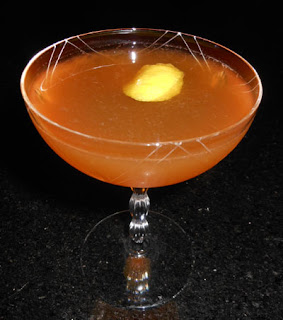
brandy crusta

1 jigger Brandy (2 oz Camus VS Cognac)
2 dash Apricot Brandy (3/8 oz Giffard)
1/2 Lime Juice (3/4 oz)
1/2 tsp Grenadine (3/8 oz)

Shake with ice and strain into a sugar-rimmed glass; I added a wide lime twist inserted into the interior diameter of the glass.

After my bar shift two Sunday nights ago, I turned to Pioneers of Mixing at Elite Bars: 1903-1933 and spotted a Brandy Crusta recipe that I had never made. I probably skipped over the recipe dozens of times for we have already written up a more standard Brandy Crusta here before, and for the longest time, I did not have wanted another one with the same name. In addition, the Pioneers book has some nonstandard Crusta recipes which frequently leave out the bitters element (the Crusta after all was the first known cocktail to contain citrus) as well as the classy citrus peel rosette or ring at the top of the glass. Here, I included the citrus peel anyways, and I probably figured that I should make this since spirit, lime, apricot liqueur, and grenadine has been a winner in drinks like the Bermudian (renamed the Boston Cocktail most likely by the Mr. Boston series) and the Cuban Cocktail #6.
This version of the Brandy Crusta greeted the nose with apricot and Cognac aromas that were brightened by the lime twist and juice. Next, lime and berry on the sip stepped aside to Cognac and apricot flavors on the swallow with tart barrel-aged notes on the finish. Overall, the combination was rather pleasant, elegant, and fruity.

Sunday, December 4, 2016

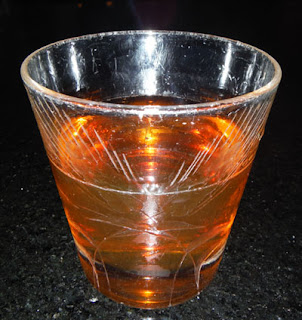
devery crusta

1 jigger Scotch (1 1/4 oz Pig's Nose, 1/4 oz Caol Ila 12 Year)
1/2 tsp Raspberry Syrup (1/2 oz Royal Rose)
Juice 1/2 Lemon (1/2 oz)

Shake with ice and strain into a glass with its rim crusted with sugar. I added a lemon twist.

Two Sundays ago after work, I decided upon the Pioneers of Mixing at Elite Bars: 1903-1933 as my evening's liquid adventure tour guide. In those pages, I found a curious Crusta in the non-American whisk(e)y chapter called the Devery Crusta. While there was no indication of what the drink was named after, one of the most famous Devery's of that time period was William Devery who became New York City's first police chief. A few years after telling his men, "They tell me there's a lot of grafting going on in this precinct. They tell me that you fellows are the fiercest ever on graft. Now that's going to stop! If there's any grafting to be done, I'll do it. Leave it to me.", he was arrested for bribery and extortion. Despite being dismissed from the police force, he was reinstated and eventually promoted to Chief of Police. The other thing Devery was famous for was buying a Baltimore baseball team, renaming it the Highlanders, and bringing it to New York in 1903; in 1912, that team became the New York Yankees.
Like many of the Crustas in Pioneers, the Devery Crusta lacks calls for the wide citrus peel garnish as well as bitters; of the two, I added back in the former. In the glass, this Crusta gave forth a peaty aroma along with the lemon oil one from the garnish. Next, a lemon, berry, and malt sip led into a swallow offering smoky Scotch melding into a raspberry finish. Overall, the whisky's peat and the raspberry made for a unexpectedly delightful combination.

Sunday, May 15, 2016

cuban crusta

1 jigger Bacardi (1 1/2 oz Seleta Gold Cachaça)
Juice 1 Lime (3/4 oz)
1 tsp Grenadine (1/2 oz)
1 dash Curaçao (1/2 oz Senior)
White of 1 Egg

Shake once without ice and once with ice, and strain into a glass crusted with sugar. I added a long lime peel around the top interior diameter; as an afterthought, freshly grated nutmeg or a few droplets of aromatic bitters would not be out of place here on the egg white froth.

A few Saturdays ago, I was perusing Pioneers of Mixing at Elite Bars: 1903-1933 when I spotted another curious Crusta recipe that included egg white like the Niagara Crusta from that same tome. And like a few other Crusta recipes in that book, this one also left out the bitters that seemed to be a hallmark feature of classic Crusta recipes. Regardless, it seemed worthy of a try even if it was an outlier for a few reasons.
The Cuban Crusta shared a lime and grassy nose. Next, a creamy pomegranate and lime sip led into grassy rum and orange flavors. While looking at the drink photographs, I realized that freshly grated nutmeg or perhaps a few droplets of Angostura Bitters on the egg white froth surface would not be out of place here. Plus, the bitters garnish would add back an element that I found missing from the classic formula.

Tuesday, April 16, 2013

rye crusta

1/2 jigger Rye (1 1/2 oz Rittenhouse 100)
1/3 Orgeat (1/2 oz BG Reynolds)
1/2 Lemon Juice (3/4 oz)
2 dash Grenadine (1/4 oz)

Shake with ice and strain into a sugar-crusted wine glass. I garnished with a wide lemon peel (the recipe suggests garnishing with fruit, berries, mint, etc.).

Two Thursdays ago, the copy of Pioneers of Mixing at Elite Bars: 1903-1933 was still on the counter, so I began to flip through it again. There, I spotted a Rye Crusta that seemed different than the standard Maraschino, orange liqueur, lemon juice, and bitters combination. While this one did have the classic sugar-crusted rim, it had a very 19th century way of garnishing with lots of fruit, berries, and herbs and lacked the traditional wide citrus peel; the fruit garnish was something that I also observed in the Whiskey Crusta from Harry Johnson's Bartenders' Manual. Johnson's Crusta was also unique as it called for an orchard syrup which has been interpreted cider boiled down several fold into a sweet syrup. In the end, I added the standard citrus peel garnish to the Rye Crusta and spared the fruit (which worked in Johnson's because the glass was filled with crushed ice which supported the garnishes).
rye crusta
The rye whiskey aroma joined that of the lemon peel garnish's. A lemon and malt sip contained some of the fruitiness from the grenadine; the rest of the rye flavor came through on the swallow along with the orgeat's almond.

Saturday, March 5, 2016

niagara crusta

2 jigger Rye (1 1/2 oz Old Overholt)
1/2 Lemon Juice (1/2 oz)
1 tsp Sugar (1/2 oz Simple Syrup)
1 Egg White

Shake with ice and strain into a sugar-crusted glass. Put 2 dash Crème Yvette at the bottom of the glass (1/4 oz inserted at the bottom via plastic pipette). I added a wide lemon twist curled around the inside of the glass.

Every once in a while, there is a historical aberration from a classic style that makes you either shake your head or curious enough to give it a try (and sometimes like here, both at the same time). And many of these can be found in Pioneers of Mixing in Elite Bars: 1903-1933. I associate the classic 1852 Crusta as being a spirit, citrus, a sweetener (usually a liqueur), and bitters in a sugar-rimmed glass that contains a wide citrus twist garnish. In the Pioneer's Niagara Crusta, some of the basics are there, but there is an egg white, no bitters, and no citrus twist? I have made others from that book that lacked the bitters like the Newkirk and Rye Crustas (and the rye one lacked the citrus twist and recommended garnishing with fruits, berries, and mint instead), but to me it is the early presence of citrus in a cocktail (and by cocktail I mean in the classic sense where they need to have bitters) that make the Crusta important (besides being a predecessor of the Sidecar). The egg white is also an oddity; however, the sink of liqueur makes this recipe a dandy! Most Crustas have some liqueur like curaçao or Maraschino as the sweetener, but here the sweetener is sugar and the liqueur element is present in Pousse-café style. I added a citrus twist to the book's instructions to round out the drink and help adjust the recipe slightly to my perceived norm.
The Niagara Crusta had made a list of recipes to try, but I had always skipped over it until two weeks ago after my work shift. I definitely needed to tweak the proportions since I was not downing 2 jiggers of whiskey to test out this drink; moreover, that amount was odd since most of the recipes in the book are for smaller sized libations. Once built, the Niagara Crusta provided a lemon aroma from the citrus swath I added. Next, the creamy sip offered malt notes and a tart lemon aspect that was assuaged by the sugar on the rim; and lastly, the rye began the swallow that ended with a return of the tart lemon on the finish. Once the Crème Yvette entered the picture (assisted by agitation of the glass once it was half drained), the flavor gained berry, floral, and vanilla notes as well as an increase in sweetness.

Monday, January 2, 2017

:: fred's picks for the top cocktails of 2016 (in) ::

I will complete my seventh annual trilogy of year end wrap up posts by picking out the best recipes we tried at our home bar this year. Given my schedule of working nights, I find myself having the home bar as the only drinking option available, so I definitely have put a bit more focus on my closest and dearest bar with my posts. This list is dedicated to the best recipes created by bartenders, living, deceased, and unknown, from around the world all brought to me at my home bar (where luckily there is no last call).

January: There were two really good drinks that I made from Lost Lake in Chicago with their eponymous Lost Lake that came across like a Jungle Bird meets a Mary Pickford getting top nod for the month. Two soda water lightened drinks got my attention as well including the Vatican City from Mikki Kristola of L.A.'s The Varnish (that influenced by Italian Stallion) and Pioneers of Mixing at Elite Bars' West Indies Fizz.

February: I definitely enjoyed the brandy Diamondback riff, the Sidewinder, from Death & Co. Cocktail Book. Also of note were the Periodista-feeling Shipwreck Daiquiri from Tiki Drinks: Tropical Cocktails for the Modern Bar and the elegant pineapple-tinged Martini, the Madame Lou, from Boothby's 1934 World Drinks & How to Mix Them (which helped to name my Queen of the Lava Beds for V-Day at work that month).
March: My pick for March was Zac Overman's Angostura Colada from Fort Defiance that took the classic into funky rum and winter spice land. Runners up were two drinks that I have should have tried long before, namely Milk & Honey's Bensonhurst Manhattan riff and Don the Beachcomber's Three Dots and a Dash.

April: I really enjoyed the Daiquiri variation given my ingredient choices and recipe interpretation of the Westward from Pioneers of Mixing at Elite Bars. The split spirit-based Harvest Moon by Daniel Eun via The PDT Cocktail Book and the ginger-spiced Daiquiri, the Snow White, were definitely good recipes in April.

May: A lot of good choices, but the fact that I made All Jacked Up by Jordan Brower of Mayahuel twice by accident should be symbolic. I was also impressed by Bravo Zulu as Vincent Toscano's Bacardi Legacy recipe and Phil Ward's Baltasar & Blimunda from the Death & Co. Cocktail Book. While not necessarily a recipe runner up, my garnish from Trader Vic's Tortuga is the photo below.
June: Another tough month, but I still remember enjoying Frank Caiafra's Frida from the updated Waldorf Astoria Bar Book a lot especially with the raspberry-Chartreuse combination. Garret Richard's Yacht Rock from NYC's Slowly Shirley and Giuseppe Gonzalez's quirky Magic Julep were also rather tasty.

July: Even with a week away from the home bar due to Tales of the Cocktail, there were still a bounty of choices. Not only did I love Nick Detrich's Absent Stars from Cane & Table at my home bar, but I also make it for certain guests at work. Also noteworthy were a Tiki duo -- one old and one new -- of Trader Vic's tequila Ponche and Lost Lake's Fog Cutter variation.

August: I am rather pleased with my purchase of the Smuggler's Cove book and the Martin Cate's Shudders in a Whisper is a good reason why. Davey Jones' Locker by Brad Farran as a Daiquiri tinged by Don's Mix and Fernet was rather good, as was the classic that I should have written about sooner, namely the Applejack Rabbit from 1928's Here's How Again.
September: It was hard ordering these three, but I'll give the honors to a Crusta, namely rye-Cynar-mint Pie-O-My by Brynn Smith of L.A.'s Sotto. Continuing on with the mint was a delightful Brazilian number from Charles H. Baker Jr.'s The South American Gentleman's Companion with the Bee's Knees-White Lady mashup, the Bahia Busy Bee. The final slot was a toss up between two beasts of flavor with the nod going to Rafa Garcia Febles' Young Marble Giants tribute, Colossal Youth (the other was the Shattered Glasser, by the way).

October: I was really impressed by the recipes I made in Lou Bustamante's Complete Cocktail Manual, and I selected the Shark God of Molokai by Andrew Dolinsky of Cleveland Heath in St. Louis as October's pick. A brandy Brooklyn-Creole mashup from Pioneers of Mixing at Elite Bars called the Benediction was delightful as was the Luau from The PDT Cocktail Book.
November: Martin Cate's aquavit-driven Port of Göteborg was not one from his book but one published on Facebook, but it was worthy of mention. Secondly, the agave Midnight Bouquet from Meaghan Dorman of Manhattan's Raines and light but flavorful Pimm's-Tiki The Isle of Fawkes from Brian Maxwell of the Grass Skirt Tiki Room & the Side Bar both in a Columbus, Ohio, deserve note.

December: Somehow the combination of Scotch, raspberry, and lemon was magical in the Devery Crusta from Pioneers of Mixing at Elite Bars. Also of note were Sother Teague's room temperature Black Rock Chiller from The Cocktail Chronicles that astounds me at how well it works, and the Sherry Cobbler from the Canon Cocktail Book (if you can source Paxtxaran that is).

I do want to tip the hat to Sasha Petrashe: Regarding Cocktails and Brad Parson's Amaro book that had great drinks that sadly got nudged on certain months.

Thursday, February 19, 2015

newkirk crusta

1 jigger Bacardi (1 1/2 oz Caliche Rum)
2 dash Port Wine (1/2 oz Taylor Fladgate Ruby)
2/3 Lime Juice (1/2 oz)
1/2 tsp Raspberry Syrup (1/4 oz Royal Rose brand)

Shake with ice and strain into a small wine glass rimmed with lime juice and encrusted with sugar on the rim. Add a wide lime twist.

After the Midnight Stinger, I decided to take it back to earlier in the century via Pioneers of Mixing at Elite Bars: 1903-1933. There, I spotted a quirky Crusta recipe in the rum section called the Newkirk Crusta. The Crustas in that book, such as the Rye Crusta often leave out key aspects or make strange additions (one has egg in it?!); here, both the Rye and Newkirk Crustas leave out bitters which seem to be a hallmark of the spirit plus small amounts of citrus and liqueur(s) plus bitters structure (not to mention the sugar-crusted rim) laid out in the mid 19th century. Regardless, I was game to try their nonstandard recipe.
The Newkirk Crusta began with a lime oil aroma from the twist along with a fruitiness from the raspberry syrup and port; later, the nose became more rum and lime driven. Next, the fruity grape aspect of the port joined the lime on the sip, and the swallow offered the rest of the port notes in addition to rum and raspberry flavors. Indeed, Andrea commented that despite the lack of bitters, it still "tastes very old school."

Thursday, February 23, 2017

newkirk

2/3 Jamaican Rum (1 oz Coruba + 1/2 oz Rumfire)
3 dash Port Wine (1 oz Sandeman Tawny)
1 dash Lemon Juice (1/2 oz)
1 dash Angostura Bitters

Shake with ice and strain into a cocktail glass.

After getting home from Craigie on Main, I was in need of a nightcap so I reached for Pioneers of Mixing at Elite Bars: 1903-1933. There in the rum section, I found the Newkirk that was similar to the Newkirk Crusta from that book except for the Crusta's citrus being lime, the presence of raspberry syrup, and the serving style. Moreover, the Newkirk contained bitters which most Crustas (save for the ones in Pioneers such as the Newkirk Crusta) often do. Also, the combination of rum, citrus, wine of some sort, and bitters reminded me of the Fig Leaf Cocktail.
For Jamaican rums, I went with a combo of funky ones - one dark and one white; in retrospect, perhaps a smoother Jamaican such as an Appleton mixed with a touch of something funky might do better here. Luckily, I love rum funk and it began in the aroma department where it joined a hint of the port's grape. The grape continued on into the sip where it mingled with the lemon and the Coruba's caramel notes, and the swallow offered the return of funky rum elements that were mellowed by the port. Finally, the drink finished with lemon and allspice flavors.

Friday, December 23, 2016

simplicity

2/3 Strathmore Scotch (1 oz Buchanan's 12 Year, 1 oz Pig's Nose, 1 bsp Caol Ila 12 Year)
2 dash Dry Vermouth (1 oz Noilly Prat)
2 dash Raspberry Juice (1/2 oz Royal Rose Raspberry Syrup)
1 dash Orange Bitters (Regan's)

Stir with ice and strain into a cocktail glass.
After my work shift two Fridays ago, I turned to Pioneers of Mixing at Elite Bars: 1903-1933 for some liquidy inspiration. In the non-American whisk(e)y section, I was drawn to the Simplicity for it paired Scotch with raspberry akin to the Devery Crusta but in a Bobby Burns or Rob Roy sort of format. Once prepared, the Simplicity share a malt, smoke, and raspberry nose. Next, malt with light berry and white wine notes filled the sip, and the swallow was the combination of smoke, whisky, and raspberry. Sadly, the combination of Scotch and raspberry was not as magical here as it was in the Crusta, so perhaps the flavor is improved with some brightness from citrus' acidity, but overall, it was definitely a solid drink.

Wednesday, January 2, 2013

:: fred's picks for the top cocktails of 2012 (in) ::

And for a third year running, I will complete my trilogy of year end wrap up posts by picking out the best recipes we tried at our home bar this year. While I did create a few recipes this year, I will tack a few of my favorite ones at the end and keep this list solely to recipes created by bartenders, living and deceased, from around the world.

January: The best drink we had at home in January is Casey Robinson's El Nacional perhaps for how the Campari and Ramazzotti acted together. For runners up, Jacob Grier's Mexican Turnover and the Swedish Punsch and Pimm's Pimmeron from 1700 Cocktails for the Man Behind the Bar.
February: Cale Green's dark and herbal Daiquiri called the Dirt'n'Diesel gets the nod for February. Runners up are Sidecar-ish They Shall Inherit the Earth from Esquire's The Art of Mixing Drinks and Brian Miller's Benjamin Barker Daiquiri.

March: The month's winner is Palliative Potion for Pomona as a rum and Swedish Punsch Corpse Reviver from Crosby Gaige's Cocktail Guide and Ladies' Companion. Next in line are the Supreme from The How and When which conjured up a Tango #2 and Rum Frisco, and the Chelsea Sidecar-like Snake in the Grass from Café Royal Cocktail Book.
April: The tequila and sherry El Molino from PDT Cocktail Book was quite a delight in April. Runners up are the rye Hot Spring from Café Royal Cocktail Book and Clive's Classic Lounge's anti-Tiki Tar Pit that I discovered in a Diageo happy hour recipe book from Tales of the Cocktail in 2011.

May: May was a month of four equal parts drinks with or without absinthe. For a winner, I guess I'll go with Joaquin Simo's Naked and Famous. For runners up, Sam Ross' Sunflower and Jason Lograsso's Flower's of Distinction.
June: A Last Word-Jack Rose hybrid by Clover Club's Brad Farran, the Jack's Word, caught my attention for June. Erik Adkin's Pisco Ramos-like San Francisco Fizz and the lesser known Monte Carlo -- the Madeira-containing one from Pioneers of Mixing at Elite Bars: 1903-1933 -- get the nod for runners up.

July: July's pick is the reposado tequila, Punt e Mes, and strawberry-containing Resting Point from the P.D.T. Cocktail Book. For runners up, the Martinez-like L'Aurore from William Schmidt's The Flowing Bowl and the absinthe-laden Pontarlier Julep caught my attention.
August: Maksym Pazuniak's bitter and smoky Barefoot in the Dark is my pick. For runners up, the Periodista-like Superior from Boothby and Milk & Honey's Rome with a View are worthy potations.

September: The Pacer, a Bobby Burns-like drink with extra savory herbal notes from Yellow Chartreuse, deserves some extra attention. For runners up, I selected the Old Hall, a Martini crossed with a Gimlet, and P.D.T. Cocktail Book's Siesta.

October: Chris Hannah's Pomme en Croute in homage to the Crusta first made in New Orleans was rather good. The Harry Palmer is a good use of gentian liqueur in a whiskey drink and Bottoms Up's Of Thee I Sing, Baby is an interesting Periodista-like drink.
November: Despite my initial hesitation at the name, Fo Swizzle My Nizzle is a solid Cynar and gin Swizzle. For runners up, I looked to two variations: the Lion's Tail always seems like it should be a rum drink and the Hair of the Lion follows through; the Colonial is a good Pisco Punch riff.

December: The After Dark not only won the 2012 Vino de Jerez competition but also my vote for December's recipe. Strong runners up are the New Orlean's feel of the Cock 'n Bull Special and the Swedish Punsch-laden Stinger, the Tangier Night.
My favorite creations of 2012: I narrowed it down to five in no particular order. A Sainted Devil is a Fernet and tequila riff of a Blood and Sand. A Pegu Club crossed with a Scofflaw by way of some passion fruit syrup in the Tanglin Club. The classic feeling Black Friar. Finally, the rum and cacao The Cross and the Switchblade and the Batavia Arrack-driven Javanese Crusta.

Saturday, January 2, 2016

:: fred's picks for the top cocktails of 2015 (in) ::

I will complete my sixth annual trilogy of year end wrap up posts by picking out the best recipes we tried at our home bar this year. Given my schedule of working nights, I find myself having the home bar as the only drinking option available, so I definitely put a bit more focus on my closest and dearest bar. I used to also tack on the best of my own creations at the end of the post, but I think I covered that in the first part of the trilogy (and you can see the whole collection here). Thus, this list is dedicated to the best recipes created by bartenders, living, deceased, and unknown, from around the world all brought to me at my home bar (where pants are optional).

January: To start the year off, I selected the Turn Signal by Portland's Sean Hoard and Daniel Shoemaker as a great fruity, bitter, and Bourbon drink. Luna de Cosecha by Justin Noel of 1534 in NYC with a stirred bitter and chocolatey tequila Manhattan and the strange early 1900's cassis for Maraschino Martinez, the Marblehead got honorable mentions.

February: Despite the name, 50 Shades of Maguey captured my attention with the ever delightful passion fruit-Campari pairing. Seattle's Scott Diaz's A Simple Quandry as a gin and aquavit 1919 Cocktail of sorts and Central Provisions' Schooner Punch that they created up in Portland, Maine, to show off a classic punch style have my attention as well.
March: I rather enjoyed Natalie Jacob's Jake Barnes for combining the Jack Rose with the pineapple-laden Jersey City. March's secondary honors go to Jeremy Oertel's Haunted House from The Old-Fashioned book with its use of Swedish punsch as the sweetener, and the sherry and orgeat Youngs from Pioneers of Mixing in Elite Bars: 1903-1933.

April: April was quite a Manhattan-filled month. First, I was quite impressed with the gin-pineapple-IPA beer combo in Thomas Waugh's Strange Brew from The Death & Co. Cocktail Book. Next, for runners up, Phil Ward's R'Cobbler -- a Rosita riff he created at Mayahuel, and Jesse Vida's Square Root -- an earthy Paper Plane-like equal parter that he created at Dead Rabbits.

May: May brought things back to Boston with Ryan Lotz's Benny & the Jets Tiki-style drink that he created for a Beachbum Berry event in town. Keeping with the Tiki theme, one of the second spots goes to Pleasure Island by Seattle's Ryan Lobe. And on the elegant side, Morning from Boothby's 1934 book captured elements of the Brandy Crusta without all the peel and sugar rim.
June: Tiki did continue on with the 1961 Puka Punch as a top pick, and Blair Reynold's Hilo Hala that he created before he even opened Hale Pele as a runner up. The other runner up, the Baltimore Cocktail, was created by Andrew Willett as a Madeira and spice variation using the Vieux Carré structure. The photo above was also from this month, the 1946 Zombie, which was also delightful but the photo and garnishing were more top notch than the variation recipe.

July: The month was a tough one to narrow down, and the top nod will be shared by two bartenders mentioned already. One was Scott Diaz's The Count's Swizzle which veered from the Negroni into Swizzle-land but still kept the Campari; and the other was Jeremy Oertel's Cynar and fire Artichoke Hold. For honorable mention in July, Jessica Gonzalez's Night Watch from The Death & Co. Cocktail Book made for a great nightcap. A garnish nod to myself went to my pirate ship on Blackbeard's Ghost.

August: It was easier to narrow the pack down to three than it was to pick a top drink. Perhaps Seattle's Connor O'Brien's Unique Bird that split the difference between a Jungle Bird and a Daisy de Santiago and graced the pages of Paul Clarke's The Cocktails Chronicles book. The Spiced Park Swizzle from Tiki Drinks: Tropical Cocktails for the Modern Bar and a leftover recipe from Tales of the Cocktail, the Sip Sip Hooray from San Diego's Noble Experiment, both were solid drinks.
September: Jason Alexander's Golden Shellback offered Tiki with elegant Benedictine and Swedish punsch notes for September's pick. Next, Maksym Pazuniak's A Moment of Silence still holds up after all these years since Beta Cocktails was published, and Gregory Buda's update of the Japanese Cocktail -- the Orientation at Dead Rabbits both deserve some recognition.

October: When Will Isaza of Fairsted Kitchen competed for Bacardi Legacy in Boston, I went home and made his winning drink the Paraiso at home to show myself why it was top dog. October also found me drinking a lot of quirky banana liqueur drinks with the Banana Boulevardier from the Anvil being one of the better ones. And for the other runner-up, a strange Daiquiri variation using an already taken name -- the White Lion from the irreverent Pioneers of Mixing at Elite Bars: 1903-1933 reminded me of a little of a Periodista.
November:Hale Pele's Mindy Kucan crafted one of the better seasonal drinks this year with the Nutty Like a Fruitcake. Silver and bronze medals (in no particular order) go to Eric Witz's Last Word-Widow's Kiss hybrid the Widow's Word and Boothby's 1934 dry vermouth elegant yet tropical egg white Pantomime.

December: Another great seasonal drink came from Chicago's The Whistler with Billy Helmkamp's South Pole Swizzle. A nod should be given to a pair of egg drinks, namely Griffin Lawler's Treaty of Paris with its Earl Grey tea notes and Pip Hanson's Angophile with a hearty dose of Angostura balanced and complemented by the vanilla-driven Licor 43.

Saturday, August 31, 2013

new orleans

1/2 Rye (1 1/4 oz Redemption)
1/2 Sweet Vermouth (1 1/4 oz Cocchi) (*)
1 dash Sherry (1/4 oz Lustau Amontillado) (*)
1 dash Maraschino (1/4 oz Luxardo)
1 dash Ojen Bitters (Herbsaint rinse)

Stir with ice and strain into glass. I opted to take the anise element out of the stir and add it in as a rinse akin to a Sazerac.
(*) Perhaps drop the vermouth to 1 oz and up the sherry to 1/2 oz.

After the Oaxacan Fix, I opened up Pioneers of Mixing at Elite Bars: 1903-1933 and spotted the New Orleans. With the rye, vermouth, and small amounts of Maraschino and other ingredients, the structure reminded me of a Brooklyn. As I began to interpret the recipe, I figured that I could drop the anise spirit from the stir and give it a New Orleans flair à la the Sazerac by including it in as a rinse.
The Herbsaint rinse donated a light anise note to the aromatics. A grape sip gave way to a rye swallow that was followed by nutty Maraschino and sherry flavors. Finally, the Herbsaint returned on the finish to wrap up this Crescent City-themed Manhattan-Sazerac-Crusta hybrid. My only recipe notes were that the sherry was a bit subtle here and perhaps doubling the quarter ounce I used might improve the complexity of the drink.

Tuesday, December 18, 2012

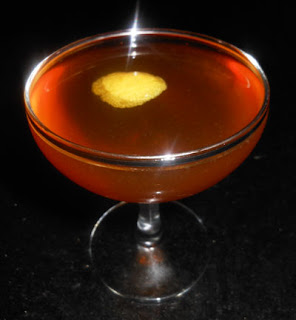
snyder

2/3 Applejack (2 oz Laird's Applejack)
2 dash Sweet Vermouth (1/2 oz Cocchi Vermouth)
1 dash Lemon Juice (1/4 oz)
1 dash Curaçao (1/4 oz Pierre Ferrand Dry Curaçao)
(+ 1 barspoon Simple Syrup for balance)
1 dash Orange Bitters (Regan's)

Shake with ice and strain into a cocktail glass. I added a lemon twist to the drink.

After the Vow of Silence, I still had lemon juice left over, and I found the Snyder in Pioneers of Mixing at Elite Bars: 1903-1933. The recipe made me think of a Marconi Wireless if it had appeared in James Maloney's The Twentieth-Century Guide for Mixing Fancy Drinks. True, it would probably need a glass rinsed with apricot liqueur to truly belong there, but the small amount of lemon juice did make me think of the Manhattan Bell-Ringer and other drinks.
laird's applejack cocktail pre-prohibition recipe
The Snyder presented an apple and lemon oil aroma that became more orange-driven as it warmed up. A lemon and orange sip contained a fruitiness from the applejack; however, most of the apple flavors came through on the swallow along with the vermouth and a lingering Curaçao note. Overall, it came across more like an Applejack Crusta sans sugared rim than a Marconi Wireless. Perhaps adjusting the applejack and sweet vermouth to 1 1/2 and 1 oz, respectively, or 1 1/4 oz each would have helped to make it more like a Marconi Wireless.