Monday, June 6, 2011

foul weather

1 oz Orange Juice
1 oz Lemon Juice
1/2 oz Passion Fruit Nectar (Ceres)
1 dash Vanilla (1/4 oz Navan Liqueur)
1 dash Sugar Syrup (1/4 oz Jaggery Syrup)
1 oz Jamaican Rum (Smith & Cross)
1 oz Light Puerto Rican Rum (DonQ Cristal)

Pour over ice in a highball glass. Stir and decorate with fresh mint and a fruit stick.
After the Teenage Riot, I was flipping through our 1972 edition of Trader Vic and spotted the Foul Weather. The Foul Weather does not appear in our 1948 edition which narrows the window to a 24 year range when the recipe was created or curated. Once mixed, the drink presented a rather pleasing mint and vanilla aroma. The sip was slightly tart and carried the citrus and passion fruit flavors. Had I used vanilla extract instead of the vanilla liqueur (or syrup), the drink would have been even more tart which makes me wonder if passion fruit syrup would have been a better ingredient, such as in the Mara-Amu, rather than the unsweetened juice. Next, the Smith & Cross' funk notes and the Navan's vanilla filled the swallow. The vanilla worked as a good accent to complement the Smith & Cross; moreover, the tartness of the drink actually worked well with the rum as well. Indeed, the Foul Weather might be the perfect prescription for an overcast or stormy day.

teenage riot

1 1/2 oz Rittenhouse 100 Rye
1 1/2 oz Cynar
1/2 oz Dolin Dry Vermouth (Noilly Prat)
1/2 oz Lustau Dry Amontillado Sherry
2 dash Orange Bitters (Angostura Orange)

Stir with ice and strain into a coupe glass. Garnish with a lemon twist.

Two Wednesdays ago, I was drawn to the Teenage Riot created by Tonia Guffey of New York City's DRAM, Flatiron Lounge, and Lani Kai. The recipe appears in Gary Regan's Annual Manual for Bartenders and could be named after one of the Sonic Youth songs that I used to listen to in high school when it first came out in 1988. So beside the possible alterna-rock drink name, the Teenage Riot had a very Little Italy vibe to it, so I was sold.
The Teenage Riot began with a lemon oil aroma that floated over a hint of the Cynar's herbaceousness. Next, the sip was malty from the rye and grape-tinged from the sherry, and the swallow packed the rye's heat, the Cynar's complex botanicals, and the bitters' orange notes. Overall, it was drier and a little more citrussy than a Little Italy but equally as tasty to drink. Mmm... spirit desire.

Sunday, June 5, 2011

white devil

3/4 oz El Dorado 3 Year White Rum
3/4 oz Cocchi Americano
3/4 oz Dolin Blanc Vermouth
3/4 oz Luxardo Maraschino
2 dash Housemade Orange Bitters

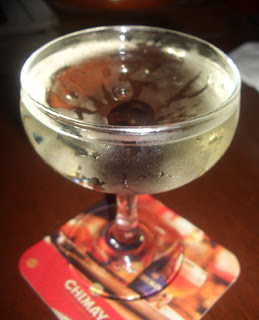
Stir with ice and strain into a coupe glass. Garnish with a Marasca cherry.

Two Tuesdays ago, Andrea and I went to Deep Ellum for dinner. For a drink, I asked bartender Evan Harrison for the White Devil on the newly updated cocktail menu. Evan mentioned that the drink was a variation of a Rum Martini called the Black Devil:
Black Devil
• 2 oz Light Rum
• 1/2 oz Dry Vermouth
Stir with ice and strain into a cocktail glass. Garnish with a black olive. Adapted from Playboy's Host & Bar Book.
Evan explained that it was actually a variation of a variation for bar owner Max Toste substituted a Luxardo Maraschino cherry for the black olive when the Black Devil appeared on the menu a while back.
Evan commented that the Cocchi Americano, Dolin Blanc, and Maraschino went well together in this drink, and he was not wrong. The Maraschino liqueur dominated much of the drink's aroma. Next, the sip was a light citrus flavor supported by a bit of body from the sugar in the drink, and the swallow was an herbal element bolstered by the Maraschino liqueur and aged white rum.

Friday, June 3, 2011

darkside iced tea

1/2 oz Rittenhouse 100 Rye
1/2 oz Zaya Rum
1/2 oz Fernet Branca
1/2 oz Combier Orange Liqueur
1/2 oz Lemon Juice
1/2 oz Demerara Syrup

Shake with ice and pour into a highball glass (here a rocks glass). Garnish with a lemon wedge and add a straw.

Two Mondays ago was a Fernet Branca industry event at the Franklin Southie. While I sadly did not win the Fernet Branca beach cruiser bicycle that night, I did have some tasty Fernet and Carpano Antica drinks. One of the original recipes was created by Chad Arnholt of the Woodward and Citizen Public House and was his Fernet Branca-inspired tribute to the Long Island Iced Tea called the Darkside Iced Tea. Amusingly, the Long Island Iced Tea will also be honored at this year's Tales of the Cocktail. The original was voted to be buried after a jazz band leads its funeral procession in July to join the ranks with previous year's winners the Appletini, Red Headed Slut, and Sex on the Beach.
Chad's version started off with a caramel and menthol aroma from the Zaya rum and Fernet Branca, respectively. The Zaya then donated a richness to the sip that was balanced by the citrus notes of the lemon juice and orange liqueur. Next, the swallow was a combination of the Fernet Branca's herbal flavors and Rittenhouse Rye's barrel notes. The only thing that I felt the Darkside Iced Tea needed was the original's splash of Coca Cola for I felt that it would greatly complement both the rum and the Fernet.

jungle bird

1 1/2 oz Myer's Rum (sub dark Jamaican rum)
3/4 oz Campari
3 oz Pineapple Juice
1/2 oz Lime Juice
1/2 oz Simple Syrup

Build in a goblet or Tiki mug on crushed ice, and stir. Garnish with mint and a pineapple spear.
One of the other drinks I had at Ben Sandrof's Sunday Salon was his variation of the Jungle Bird. The original was created at the Aviary Bar of the Kuala Lumpur Hilton in Malaysia around 1978. The drink is unusual for most Tiki drinks do not call for Campari liqueur and only LUPEC Boston's Ken-Tiki comes to mind as another Campari-laden Tiki drink that I have tried. However, Tiare of the Mountain of Crushed Ice blog has done her homework and has a lot more experience with Campari in Tiki drinks and lists a few more here and there. Ben's variation reduced the pineapple proportions from 4 to 3 ounces and slightly modified the garnishes. Here, the mint garnish Ben used contributed greatly to the drink's nose. On the taste, the sip contained the citrus and richness of the dark rum, and the swallow presented the pineapple and Campari notes. Over time as the ice melted, the Campari definitely took a greater role in the flavor profile.

Thursday, June 2, 2011

maroquet swizzle

2 oz Neisson Rhum Agricole Blanc
1/2 oz Grapefruit Juice
1/4 oz Lime Juice
1 dash Simple Syrup
1/2 oz Grenadine

Add grenadine to the bottom of a Highball glass. Gently add crushed ice and other ingredients. Swizzle to mix while taking care not to disturb the grenadine layer on the bottom. Garnish with mint sprigs and a few drops of Pernod; add a straw.

Two Sundays ago, Andrea and I attended another of Ben Sandrof's Sunday Salons. The first drink on the menu that lured me in was the Maroquet Swizzle. Ben explained that Maroquet was a small fishing village located on the most eastern part of Martinique. The location explained the Martinician rum as well as the presence of the grenadine on the bottom. Why the grenadine? Well, Ben reasoned that it was the the part of the island that would see the dawn first, and thus, the grenadine was in the style of a Tequila Sunrise.
The mint sprigs and Pernod's anise pleasantly greeted the nose. The first sips of the Maroquet Swizzle possessed the sweetness and fruitiness of the grenadine, and later sips contained a crisp grapefruit flavor aided by the rhum agricole's grassiness. Lastly, the rhum agricole's funky notes rounded out the drink on the swallow.

madeira (or sherry) cup

1 bottle Madeira or Sherry (6 oz Blandy's 5 Year Old Verdelho Madeira)
1 wineglass Orange Brandy (1/2 oz Grand Marnier)
1/2 Lemon Peel (1/8)
2 bottle Soda Water (6 oz)
Sugar to Taste (1/2 oz Simple Syrup)
A few sprigs Borage, Woodruff, or Balm, or half rind of small Cucumber (1/8 Cucumber Rind)
A few slices of lemon (2)

Mix all but soda water in a jug and immerse in ice for an hour to steep. Strain and add soda water. The original recipe makes around 8 servings; scaled down version makes around 2.

Before making the Horse Tonic, I started on the Madeira (or Sherry) Cup from the 1871 Gentleman's Table Guide as the recipe required a bit of steeping time. While we are big fans of sherry, I opted for Madeira since there are fewer reasons in the historical literature to mix with it and modern bartenders have not warmed up to it yet like they have sherry. I was also drawn to the Cup by the cucumber rind which imparts a very pleasing flavor to drinks such as in the Tea Julep; moreover, it is often more readily available than the borage, woodruff, or balm options in the recipe.
The cucumber definitely provided an aromatic element to the drink and Andrea noted the orange from the Grand Marnier as well. In addition, the cucumber provided an herbal element to the crisp, carbonated sip. Finally, the swallow contained the Madeira flavors along with lingering cucumber and lemon peel notes. Overall, the Madeira Cup was light, refreshing, yet flavorful like the other recipes we have tried in the Gentleman's Table Guide such as the National Rifle Cup.

Wednesday, June 1, 2011

horse tonic

1 1/2 oz Dark Rum, preferably Gosling's Black Seal
1/2 oz Cruzan Black Strap Rum
3/4 oz Lemon Juice
1/2 oz Ginger Syrup
1/4 oz Velvet Falernum
1 Egg White

Shake once without ice and once with. Strain into a Fizz glass containing 1 oz of soda water. Garnish with a pinch of espresso (mortar and pestle ground dark roast coffee beans) and an orange twist.

Two Saturdays ago, I was flipping through the new Food & Wine: Cocktails 2011 book and spotted the curious sounding Horse Tonic. The drink was created by Richard Boccato who bartends at Dutch Kills, Painkiller, and Weather Up TriBeCa in Manhattan. Richard designed the drink with mid- to late-19th century Bracers, like the Saratoga Brace Up, in mind. Braces became popular with the advent of sparkling water and were well utilized in the morning as hangover palliatives.
The Horse Tonic's garnishes provided a dark roast coffee and orange oil aroma. On the sip, the pair of dark rums offered a caramel flavor that worked surprisingly well with the lemon juice. Next, the black strap molasses appeared on a swallow spiced by clove and ginger notes. Furthermore, the coffee garnish began to enter the flavor profile over time and complemented the dark rums. Of all the flavor combinations, it was the fresh ginger syrup pairing with the sharp carbonation that was most enjoyable for me.

white witch

Juice 1/2 Lime (1/2 oz)
1/2 oz White Crème de Cacao (Marie Brizard)
1/2 oz Cointreau
1 oz White Jamaican Rum (J.Wray & Nephew)

Add to Sling glass with ice and stir. Fill with soda water (~2 oz). Decorate with a spent lime shell and mint sprigs dusted with bar sugar. I skipped the sugar dusting, used crushed ice instead of cubes, and added a straw.

After the Theresa #4, I was still in a highball mood, and I spotted a drink, the White Witch, that would make use of the new bottle of Marie Brizard crème de cacao that was replacing a less glorious brand. I found the recipe in our 1972 edition of Trader Vic's Bartender's Guide but not in the 1948 version; the book provides little information about the drink save for that it was probably created some time in that 24 year span. Given that the drink calls for Jamaican rum, perhaps the White Witch refers to Annie Palmer who married the owner of the Rose Hall Plantation in Jamaica in 1820. This husband and Annie's next two husbands died suspiciously and it was hypothesized that Annie brought about their demise. Stories of her deep involvement in voodoo, romantic involvements with her slaves (before murdering them too), and the like suggested that she was indeed a psychopath to be feared. Perhaps the drink would make a good nerve calmer after a spooky séance or a thirst quencher after playing a round of golf on the Rose Hall estate (now a Ritz-Carlton golf resort). With neither of those two options open at that moment, I just figured that the drink would be tasty for crème de cacao pairs up well with Cointreau in the Prospector Cocktail and works well with with citrus in the Mady and Twentieth Century.
The mint garnish contributed greatly to the aroma and, along with the spent lime shell, helped to break up the stark absence of color. On the sip, the lime and soda water provided a crispness that was also flavored by the orange notes from the Cointreau. Meanwhile on the swallow, the funky notes from the overproof Jamaican rum were chased by a lingering chocolate note from the liqueur. Overall, the White Witch was dangerously easy to drink and the flavor combinations did indeed play well together.