Thursday, December 1, 2011

felonious monk

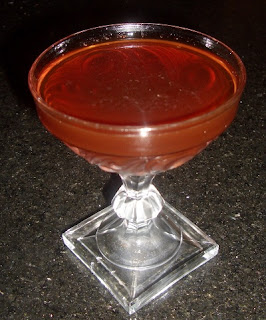
1 1/2 oz Martin Miller Westbourne Strength Gin
1 1/4 oz Lemon Juice
3/4 oz Yellow Chartreuse
1/2 oz Benedictine
3 dash Angostura Bitters
1 Egg White

Shake once without ice and once with ice. Strain into a Collins glass filled with ice and 1 1/2 oz Belgian abbey beer (Ommegang Abbey Dubbel). Garnish with an orange peel rosette. I added a straw as well.

Two Wednesdays ago, it was time to make Tim Lacy's Felonious Monk from the Beta Cocktails book. The ability to make this drink as described in the book was another product of my trip to New York City back in September where I was finally able to find Martin Miller's Westbourne Strength Gin. Certainly, other gins would work as substitutions here, but the recipe made for a fine excuse to purchase this spirit. The other ingredient I needed was a Belgian abbey ale; instead of going European, I went with one made in New York State. Indeed, I have been quite impressed with Ommegang's products and we got a chance to tour the brewery in Cooperstown back in October. With the egg white Fizz lightened with beer, the Felonious Monk reminded me of some of Ted Kilpatrick's drinks such as the Zimmermann Telegram, the Morning Glory Fizz variation, and the Park Street Cup that he has made for me at No. 9 Park.
The orange peel rosette garnish on the Felonious Monk donated citrus oil notes to the malty beer aroma and herbal notes from either the gin or the liqueurs. The carbonated sip showcased the lemon and Yellow Chartreuse flavors, and the gin and Benedictine appeared at the beginning of the swallow. The beer's hop signature then contributed greatly to the pleasing aftertaste. Indeed, we were quite impressed at how such complex flavors were in perfect harmony in this glass. I was unsure of how the Belgian-style Dubbel would work here, but it did a splendid job accenting the citrus notes.

girl from jerez

1 oz Rhum Clément VSOP (JM Rhum Gold)
1 oz Mãe de Ouro Cachaça (Seleta)
3/4 oz Lime
1/2 oz Lustau San Emilio Pedro Ximenez Sherry
1 barspoon St. Elizabeth Allspice Dram

Shake with ice and strain into a coupe glass. Garnish with freshly grated nutmeg.

Two Tuesdays ago, I decided to make the Girl from Jerez from the PDT Cocktail Book. The drink was created by Jim Meehan in 2009 when he was inspired by Stan Getz' saxophone work in the 1964 bossa nova hit, "The Girl from Ipanema." As for the Jerez part, Jim softened and sweetened this Daiquiri variation with a Pedro Ximénez sherry.
Once mixed, the Girl from Jerez had a strange vegetal green-brown color from the lime and sherry. The nose was a sweet lime and funky sugar cane spirit aroma that was spiced by the nutmeg garnish. Next, the sip showcased the lime and grape flavors along with a grassy note. The swallow started with the pairing of rhum and cachaça flavors with allspice accents from the liqueur, and it ended with a cleansing wave of lime notes. With the sugar cane spirits, the cachaça seemed to dominate the sip more while the rhum agricole was stronger on the swallow. The combination of grape, rum, and lime reminded me of the Bishop I had at No. 9 Park as well as the Whistler's No Contest that I recently made at home.

Wednesday, November 30, 2011

champ clark

2/3 Rye Whiskey (2 oz Ryan & Wood)
1/6 Apricot Brandy (1/2 oz Rothman & Winter)
1/6 Sweet Vermouth (1/2 oz Vya)
1 dash Ojen (1 barspoon La Muse Verte Absinthe)

Stir with ice and strain into a cocktail glass. Garnish with a cherry (Luxardo Maraschino).

Two Mondays ago for a nightcap, I flipped through the Pioneers of Mixing at Elite Bars: 1903-1933 to one of the drinks I had marked off, the Champ Clark. What caught my eye was how similar it was to the Slope with sweet vermouth and Ojen bitters in place of the Slope's Punt e Mes and Angostura. The drink was named after one of the politicians of the day, James Beauchamp Clark. Champ was a Democrat who worked his way up to being the Speaker of the House of Representatives. In 1912, he raised his political aspirations to the Presidency; however, Woodrow Wilson ended up getting the nod as the Democratic presidential candidate that year. After a let down like that, I am sure that he could have used one of these cocktails. Moreover, since Clark was strongly opposed to Prohibition that unfortunately came upon the country shortly before the end of his political career, we should raise a glass for his efforts.
The cocktail began with an absinthe and rye whiskey aroma that led into a malty sip with a hint of grape. The swallow presented the rye's barrel notes that merged gracefully with the apricot flavors, and the absinthe rounded out the Champ Clark on the finish. Even with a lot of apricot liqueur in the drink, it did not come across as such; perhaps the combination of rye and absinthe helped to subdue it. Overall, the drink reminded me a bit of another political cocktail, the Remember the Maine which utilizes cherry brandy in place of the Champ Clark's apricot.

floridita

>1 1/2 oz Matusalem Platino Rum
1/2 oz Martini & Rossi Sweet Vermouth
1/2 oz Lime Juice
1/4 oz Marie Brizard Crème de Cacao (White)
1/4 oz Grenadine

Shake with ice and strain into a cocktail glass. Garnish with a lime wedge.
For my second drink at Green Street, I asked bartender Philip MacLeod for the Floridita. The drink was named after the bar in Havana, Cuba, that Ernest Hemingway helped to make famous. While Ernest declared, "My mojito in La Bodeguita, my daiquiri in El Floridita," this was probably not the drink he was ordering. However, as an abstraction of the Daiquiri, this drink seemed worth a try. The Floridita's lime wedge garnish contributed greatly to the aroma and helped prepare the mouth for the sip's fruity flavor from the lime, vermouth's grape, and grenadine. The rum appeared in the swallow that finished with chocolaty notes.

Tuesday, November 29, 2011

skipper's flip

1 1/2 oz Myer's Dark Rum
1/2 oz Benedictine
1/2 oz Lime Juice
1/2 oz Brown Sugar Syrup
1 dash Bittermens Tiki Bitters
1 Whole Egg

Shake once without ice and once with. Strain into a wine glass and garnish with freshly grated nutmeg.
Two Sundays ago, Andrea and I ventured down to Green Street where Derric Crothers and Philip MacLeod were tending bar. For our first cocktail, Derric wanted to show us his new creation that has quickly become his seasonal drink this year. Derric took the hot Skipper's Punch from the menu, modified it, and converted it into a tasty Flip. In tracing back the source, the Punch was bar owner Dylan Black's riff on the Skipper's Particular from the Esquire's Handbook for Hosts. Here, the nutmeg garnish contributed greatly to the Flip's aroma. The sip was a rich dark rum and brown sugar flavor that led into the lime and spice notes from the Benedictine and Tiki Bitter on the swallow.

follow that black rabbit

3/4 oz Fernet Branca
3/4 oz Beefeater Gin
3/10 oz Lemon Juice
3/4 oz Orange Juice
3/4 oz Maple Syrup

Shake with ice and strain into an ice-filled highball glass. Perhaps an orange slice garnish would not be out of place here. I added a straw.

After the Sloe Combustion, I decided to make one of the recipes I spotted in Gary Regan's Bartender's Gin Compendium called Follow that Black Rabbit. The drink was created by Kristian Kramp, a bartender from Denmark who now works at Gefährlich, who claimed that he was influenced by both Donnie Darko and Alice in Wonderland in naming this drink. With the orange juice, lemon juice, and maple syrup, my guess is that the Savoy and Embury classic, the Apple Jack Rabbit, was his starting point. Instead of apple brandy, Kristian opted for Fernet Branca lightened by gin.
The drink began with a Fernet Branca nose that was soothed by a maple aroma. While the orange juice on the sip was not surprising, the presence of the gin's juniper and other botanical notes was, for gin generally comes across on the swallow. Instead, the swallow mirrored the scent with maple syrup and mellowed out Fernet Branca flavors. As the ice melted, however, the drink became more Fernet forward in its balance.

Monday, November 28, 2011

sloe combustion

1/3 Sloe Gin (1 oz Plymouth)
1/3 Dry Vermouth (1 oz Noilly Prat)
1/6 Sweet Vermouth (1/2 oz vya)
1/6 Grapefruit Crush (1/2 oz Rieme Pink Grapefruit Sparkling Limonade)
2 dash Peach Bitters (Fee's)

The instructions were to shake with ice and strain into a cocktail glass. Instead, I stirred all the ingredients but the soda with ice and strained into a coupe glass. Next, I added the soda, briefly stirred, and garnished with a grapefruit twist.

Two Saturdays ago, I was flipping through the United Kingdom Bartenders Guild's Approved Cocktails from 1937 and spotted the amusingly named Sloe Combustion. Besides the pun, I found the call for Grapefruit Crush to be quite curious. I double checked and the Crush brand of soda was around back then with the original Orange Crush appearing in 1906. While we did not have this specific soda at home, we did have a fine French sparkling grapefruit lemonade on hand.
The grapefruit twist I added in conjunction with the grapefruit soda provided much of the aroma with hints of sloe gin and perhaps sweet vermouth poking through. The grape and berry sip was chased by a peach and grapefruit swallow. While the drink did not start sweet, the swallow did have a lingering sweetness. Indeed, the Sloe Combustion was not as sweet as I expected perhaps from the dry vermouth and the carbonation offering some crispness.

six inch gold blade

1 1/2 oz Smith & Cross Rum
1/2 oz Punt e Mes
1/2 oz Nardini Amaro
1/2 oz Campari
1/2 tsp Laphroaig Scotch
2 dash Angostura Bitters
1 dash Mole Bitters

Stir with ice and strain into a cocktail coupe glass. Twist an orange peel over the top and discard.

Two Fridays ago, since we finally had all the ingredients to make it, we decided to concoct the Six Inch Gold Blade that appears in the Beta Cocktails book. The drink was created by Al Sotack of Philidelphia's Franklin Mortgage & Investment Co. and was probably named after one of Nick Cave's early songs from the Birthday Party era. The two bottles we lacked until recently were Laphroaig Scotch and Nardini Amaro, and the only thing we needed was the right moment to take on a drink that appeared on the Franklin's challenging "I Asked Her For Water She Gave Me Gasoline" section of their menu.
The Six Inch Gold Blade began with a combination of orange oil, Smith & Cross rum, and Punt e Mes aromas. The sip presented the Punt e Mes' grape and the Nardini's caramel and was relatively simple compared to the swallow. Indeed, the swallow first showcased the funky rum and a complex bitter symphony, and then it provided a smoky Scotch, residual woodiness, and chocolate aftertaste. Besides the mole bitters, the chocolate notes also stemmed the Nardini Amaro which otherwise reminded me a bit of Bénédictine. Lingering over this drink only allowed for the bitterness to grow as the Six Inch Gold Blade warmed up, so nursing it like a Rusty Nail might not be the best option.

Sunday, November 27, 2011

knickroni

1/2 oz Campari
1/2 oz Sweet Vermouth (Vya)
1 Egg, separated
1/2 oz Gin (Aviation)
1 dash Regan's Orange Bitters

Stir Campari and sweet vermouth with a spoon in a 2 oz sherry glass to mix. Layer an unbroken egg yolk on top. Layer gin on top of that. Beat egg whites until they are stiff (whisk or cobbler shaker with a balled up Hawthorne spring) and cover gin layer with egg whites. Garnish with a dash of orange bitters. Drink in a ceremonial 4 step process as laid out below by Leo Engel in 1878:
1. Pass the glass under the Nostrils and Inhale the Flavour –- Pause.
2. Hold the glass perpendicularly, close under your mouth, open it wide, and suck the froth by drawing a Deep Breath. -- Pause again.
3. Point the lips and take one-third of the liquid contents remaining in the glass without touching the yolk. -- Pause once more.
4. Straighten the body, throw the head backward, swallow the contents remaining in the glass all at once, at the same time breaking the yolk in your mouth.
Two Thursdays ago, the theme for Mixoloseum's Drink Night was "red and yellow" in honor of the leaves changing color as we get further into Autumn. Therefore, the use of red and/or yellow cocktail ingredients was encouraged. The idea for this drink came midway through the night in a discussion of how egg yolks were another yellow ingredient besides the obvious Yellow Chartreuse, Galliano, Strega, and Lillet. To figure out a red ingredient, I thought of Campari and somehow that triggered an old thought about how to modernize the Knickebein, a layered drink created in 1878 by Leo Engel that features an unbroken egg yolk in the middle. When we made a Knickebein for a Mixology Monday back almost 3 years ago, we lacked the crème de noyau to craft Engel's, so we opted for the one in Boothby's 1907 World's Drinks and How To Mix Them. The kümmel in Boothby's Knickebein was not so appealing despite the liqueur working well in other drinks. Therefore, the concept of modifying a favorite liqueur-laden drink and dividing it up into Pousse-café format led me to crossing a Negroni with a Knickebein especially since Campari and sweet vermouth fulfilled the red part of the colored drink night theme.
The Knickroni began with a pleasant orange aroma from the Regan's Bitters; I replaced the original Knickebein's aromatic bitters with orange ones to represent the Negroni's orange twist garnish. The first part of the drink contained the gin flavor smoothed by the egg white meringue. Next were the sweet vermouth and the sharper Campari notes; these flavors were greatly softened once the egg yolk was burst on the tongue.

Overall, the Knickroni offered up a more desirable flavor base than the other Knickebein combinations I have read in old drink books, so I chalk that up as a success. Another success was reading a post by Matt Hamlin in the A Jigger of Blog; Matt saw the tweet about the drink and commented that "There is some serious WTFery going on here."