Wednesday, March 6, 2013

:: this must be the place ::

While preparing for my first bartending gig last month, I read various treatises on the vocation in order to mentally prepare myself for the night. In reading Gary Regan's Annual Manual for Bartenders: 2011 about the mindful bartender, I was struck by a quote taken from This Must Be the Place. That book was a biographical number penned by Morrill Cody about bartender Jimmie Charters' time in the Montparnasse area of Paris when it was a vibrant artist and literary enclave after World War I that fizzled out shortly after the onset of the Great Depression. During Jimmie's time behind a few of the bars there, he served literary giants like Ernest Hemingway, artists like Marcel Duchamp, and models like Kiki. The following quote moved me enough to find the book and read it:
Almost anyone can learn to mix drinks accurately and fast. That is the least of it. I have always believed success behind the bar comes from an ability to understand the man or woman I am serving, to enter into his joys or woes, make him feel the need of me as a person rather than a servant.
Regan expounded on that quote by trying to figure out why a person is there at the bar and what they are trying to get out of the experience. From that, a mindful bartender can determine how much or how little interaction is desired and of what type. Likewise, Jimmie spoke of trying to size up a customer to determine if they want to be alone or are really looking for companionship. Jimmie also made observations on the effects of alcohol on people:
Liquor always has one of three effects on people. Upon a few it brings a deep depression, because, I suppose, there is some sorrow there already. On the normal person, though, the effect is either to make him amorous or belligerent, and he or she can jump from one state to the other without difficulty.
This is an added dimension to the earlier point -- it is not just why a person is there at the bar, but how the experience can shape the side that comes out that night. Jimmie offered tales and tactics of how to diffuse fights, introduce people, and offer free drinks and other distractions to make the evening go smoothly. "Diplomacy," he explained, "is a first requisite, without which a man can never be a success in anything but a very formal bar." Moreover, keeping the customer satisfied is part of the game both with the bartender experience as well as with the fellow clientele. In dealing with drinkers, Jimmie learned to handle drunks from being drunk himself. His tactic was, "I have sympathy for them, and they respond to that treatment like no other. Criticism always makes them worse." Regan took it a step further by explaining certain phrasings that avoids the criticism aspect, such as "I wonder if you could think about lowering your voice just a little, please" instead of telling them bluntly to quiet down and stop annoying everyone.

Throughout the book are glimpses of life in Paris during that time -- everything from the art students and their gala events that were captured well in William Morrow's Bohemian Paris of To-Day to the surrealists including André Breton and Man Ray. While the book does delve into quite a bit of gossip of the day, the text returns to the art of the bar with some amusing anecdotes. One cute one was where a customer ordered a Port Flip, and after Jimmie had made that, he proudly presented it to the waiter in his best French "Porto Flip." A bit later, the person who ordered it got a bit peeved and wanted to know where his drink order was. Upon Jimmie asking the waiter, the waiter explained, "Porto flip? I thought you said porte au flic (take it to the cop)!" at which point Jimmie peered through the window at a police officer on the street corner enjoying his gift.

In my night behind the stick, I certainly did not see the wide spectrum of people and experiences, but it did help going into it somewhat prepared. Part of that experience got described in a BostonChef's Drink Like a Pro article, but many of the details and moments never made it in there.

broken flower

1 1/2 oz Reposado Tequila (Espolón)
3/4 oz Cynar
1/2 oz Lime Juice
1/2 oz Grapefruit Juice
1/2 oz Cinnamon Syrup (BG Reynolds)
2 dash Angostura Bitters

Shake with ice and strain into a coupe glass. Twist a grapefruit peel over the top.

Two Saturdays ago, I decided to make the Broken Flower that I found in the supplemental recipes to the current issue of Imbibe Magazine. When Andrea heard the name, she asked if we had tried that one before, but that was Kelley Swenson's unrelated Broken Flower recipe. This Broken Flower was crafted by Chris lane at Lolinda in San Francisco. With tequila, lime, and cinnamon, it reminded me of the Gilda Cocktail recipe but perhaps one that had been crossed with the Peralta or perhaps the Under the Volcano.
broken flower tequila cocktail
The grapefruit and Cynar began the drink's aroma, but over time, the tequila gained some space on the nose. A grapefruit and lime sip gave way to a tequila and Cynar swallow that ended with cinnamon notes.

white lion

1 wineglass Santa Cruz Rum (2 oz Caliche White)
1 tsp Sugar (1/4 oz Simple Syrup)
1 tsp Curaçao (1/4 oz Pierre Ferrand)
1 tsp Raspberry Syrup (1/4 oz)
Juice 1/2 Lime plus Rind (1/2 oz + Rind)

Shake with ice and strain into a rocks glass filled with shaved ice. Garnish with fruit.
jerry thomas white lion
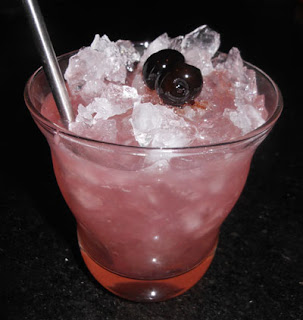
After having Max Toste's White Lion variation at Deep Ellum, I decided to made the original that appears in Jerry Thomas' book. Once mixed, the White Lion offered a fruit aroma from the garnishes and ingredients. A lime and orange liqueur sip led into a rum and raspberry swallow with a lime peel bitterness on the finish. Indeed, the Curaçao and raspberry flavors were rather subtle here; later versions, such as the one in The Old Waldorf-Astoria Bar Book change that in the direction of the Boston version of the Periodista's proportions:
White Lion (1935)
• 1/2 glass Jamaican Rum
• 1/4 glass Curaçao
• 1/4 glass Raspberry Syrup
• Juice of Lime or 1/2 Lemon
Shake with ice and strain into a tumbler filled with shaved ice. Garnish with fruit.

Tuesday, March 5, 2013

fearless

1 1/4 oz Rhum JM Gold
3/4 oz Campari
1 oz Cocchi Americano
1 pinch Salt
Lemon oil from a long twist

Stir with ice and strain into a coupe glass. Garnish with the oils from another long lemon twist.

After the Rubus Swizzle, I decided to stick with the rum theme and make the Fearless from Portland, Oregon. The recipe was given to me by Central's Dustin Knox along with the one for the Twelve Rounds; my reason for asking for them was that when we went to Central during Portland Cocktail Week, there was a special event and we did not have a chance to experience the house recipes from regular menu.
central portland oregon dustin knox
The copious amounts of lemon oil contributed greatly to the Fearless' aroma, and perhaps the oils joined the Cocchi Americano to donate a light citrus flavor to the sip. Most of the flavor came through on the swallow that packed an intense grassy and herbal wallop followed by lingering bitter notes. The pinch of salt did help to shape the drink by making the Campari less sharply bitter and thus more complementary to the aged rhum agricole.

rubus swizzle

1 1/2 oz White Rum (Privateer Silver)
3/4 oz Lemon Juice
1/2 oz Raspberry Syrup
1/4 oz Orgeat (BG Reynolds)

Swizzle in a Collins glass with crushed ice to mix and chill. Garnish with a lemon wheel and a blackberry.

Two Thursdays ago, I decided to make the Rubus Swizzle from this month's Imbibe Magazine. The drink was crafted by Hal Brock at Houston's Anvil Bar & Refuge, and it appeared like a nutty Swizzle variation of the White Lion. Instead of the Nicaraguan rum that their menu lists, I opted for a local one, Privateer Silver, since I felt its fruitier notes would do well here.
anvil houston hal brock
The lemon garnish's aroma prepared the mouth for the lemon sip that was joined by a berry note. Most of the raspberry flavor appeared on the swallow though along with the rum, and the swallow ended with hinds of almond nuttiness on the finish.

Monday, March 4, 2013

sideways in reverse

3/4 oz Laird's Bonded Apple Brandy
3/4 oz Campari
3/4 oz St. Germain
3/4 oz Lime Juice

Shake with ice and strain into a cocktail glass.

After the Rose Dragon, I decided to make a drink that I had spotted in the SeriousEats article about Philadelphia's Franklin Mortgage & Investment Co.'s new drink menu. While it was mainly a photo album, the Sideways in Reverse slide mentioned that it was equal parts of Laird's Bonded, Campari, St. Germain, and lime. The slide also described how the recipe was crafted by Colin Shearn shortly before he moved off to Louisville to run the Franklin's sister establishment, St. Charles Exchange. Considering the good luck I have had with Colin's recipes, I was definitely excited about trying the drink. With many of Colin's drink names being musical references, I surmise that the drink is named after a Mark Lanegan song.
franklin mortgage and investment company philadelphia
The Sideways in Reverse began with a fruity nose that contained an apple aroma spiked with some Campari notes. Lime and St. Germain's fruity flavor filled the sip, and the swallow began with apple followed by the Campari tempered by St. Germain floral notes. Finally, the drink shared a pear-like finish. Overall, I was impressed at how well the apple brandy paired with the St. Germain; moreover, I was quite surprised how few recipes on the blog use that combination, but one of them, the Boutonnière, is still a major seller at Rendezvous in Cambridge. In addition, the pairing of Campari and St. Germain is one that has worked well before in the Cell #34 that Ben Sandrof made for me and the St-Argent served at the Franklin Southie.

rose dragon

1 1/2 oz Gin (Beefeater)
3/4 oz Lemon Juice
1/2 oz Royal Rose Rose Syrup
1/2 oz Green Chartreuse
3 dash Angostura Bitters

Shake with ice and strain into a cocktail glass

About two weeks ago, I received a bunch of samples from Royal Rose Syrups. I had met Emily Butters, one of the two owners of the company, right before my book signing at the Boston Cocktail Summit last October in the Boston Shaker store's room. Recently, Emily asked if I wanted to try out the syrups, and after looking through the recipes on their page, I was definitely excited about a few of them, so I gave her the thumbs up. The ones that I was most excited about trying used the rose syrup, and the recipe that called out to me the most was the Rose Dragon which seemed like a riff on the Last Word. A short time later, I also made a drink with the saffron syrup that I will cover soon; the five other syrups include raspberry, three chili, tamarind, lavender-lemon, and cardamom-clove. Locally, Adam at the Boston Shaker store in Somerville sells seven of Royal Rose's syrups; while he lacks the saffron I mentioned, he does carry a strawberry-fennel that I have heard good things about.
royal rose syrups cocktail recipe
The Rose Dragon presented a gin and Chartreuse aroma that was joined by sweet floral notes. The lemon sip was joined by some herbal notes that were perhaps due to the rose syrup; however, most of the rose came through on the swallow where it mingled with the gin and Green Chartreuse botanicals. Indeed, the rose syrup played a similar role as the Maraschino Liqueur in a Last Word.

Friday, March 1, 2013

the old (barbara) west

1 oz Ransom Old Tom Gin
3/4 oz Lustau Dry Amontillado Sherry
3/4 oz Lemon Juice
1/4 oz Meletti Amaro
1/4 oz Simple Syrup
2 dash Angostura Bitters
1 pinch Salt

Shake with ice and strain into a cocktail glass. Garnish with a lemon twist.

Two Mondays ago, we headed down to the Blue Room for the third installment of Wild West-themed Whiskey & Amari Night. The hosts that evening were Sam Treadway of Backbar and Noon Inthasuwan of Moksa. While Andrea went with Noon's green tea-laden 6 Shots in My Gun, I opted for Sam's variation on the Barbara West he called the Old (Barbara) West. Though the recipe varied by including some amaro and simple syrup, the real game changer was a pinch of salt which altered the roll of the gin in the classic.
The lemon twist aroma joined that of a sweet grape. A slightly tart lemon and grape sip transitioned into a lightly herbal swallow with a pleasantly lemony finish. Indeed, the salt squashed a lot of the flavor of the hearty Ransom Old Tom Gin as well as that of the Meletti Amaro; however, as the drink warmed up, the swallow became more flavorful. Perhaps doubling the Meletti and removing the simple syrup would help push the swallow into a more herbal realm. Moreover, perhaps the salt helped to increase the perception of sweetness in this recipe that would otherwise appear to be rather dry and tart.

cappa cocktail

1 1/2 oz Plymouth Gin (Ryan & Wood Knockabout)
1 1/2 oz Pineau des Charentes
1/2 oz Luxardo Maraschino Liqueur

Stir with ice and strain into a cocktail glass. Garnish with a lemon twist.

Two Saturdays ago, I decided to make a cocktail that Gary Regan posted about called the Cappa Cocktail. The drink was created by Ms. Franky Marshall of The Tippler and The Monkey Bar in New York City, and the spirit-fortified wine-Maraschino trio and proportions reminded me of the Creole Contentment. Instead rye and Madeira in the Creole Contentment, the Cappa called for gin and Pineau des Charentes, and this recipe won her a recent Plymouth mixology contest.
franky marshall cappa cocktail
The lemon twist's oils and the Maraschino liqueur aroma also contained a floral note. A clean, sweet grape sip was followed by gin and then Maraschino on the swallow. Overall, I was quite impressed at how well the Pineau des Charentes worked with the Maraschino liqueur.