Showing posts sorted by relevance for query tiki tequila. Sort by date Show all posts

Saturday, May 11, 2019

:: tiki through a polynesian lens ::

The first talk that I attended at Thirst Boston was entitled "Tiki Through a Polynesian Lens" and sponsored by Patron Tequila. The seminar was delivered by West Coast bartender Sam Jimenez who has worked at Prizefighter, Interval at Long Now, and Striped Pig and is about to open Here's How in Oakland. Sam's heritage is half Samoan and half Mexican that he described as Akafasi meaning "half of one" (or half Samoan/Polynesian). He began with the premise that Tiki bars utilized symbols that he was familiar with, but they executed them differently that he was used to being brought up in the culture.

Sam ran through the history of Tiki to set up the genre. The timeline is better read elsewhere including in Beachbum Berry's books than I can do right now, so here are more of the salient aspects. Tiki began in California right after Prohibition. During this time, Hollywood blossomed and offered escapism and exoticism especially escapism from the harsh times during the Great Depression. People were willing to spend their money on escape but could only do so locally instead of through travel. Sam put up a quote from Sigmund Freud that read:
Life as we find it is too hard for us; it entails too much pain, too many disappointments, impossible tasks. We cannot do without palliative remedies. We cannot dispense with auxiliary constructions, as Theodor Fontane said. There are perhaps three of these means: powerful diversions of interest, which lead us to care little about our misery; substitutive gratification, which lessen it; and intoxicating substances, which make us insensitive to it.
Sam continued that escapism is not inherently bad. These Polynesian restaurants became places of status especially with the amount of money sunk into decorating them. Many people could not afford to travel across the ocean during the Depression; moreover, people had a lot of interest in the area due to the media's influence whether through music or through Hollywood that set many movies in the late 1920s and early 1930s in the South Pacific. World War II added to the interest for soldiers coming back from the Pacific front wanted to return to innocence by experiencing familiar aspects without the cloud of combat lurking overhead.
With this exoticism came a focus on colorful and unusual traits considered characteristic of these foreign lands. When these traits were exaggerated, it became racist. Sam brought up the idea of "othering" which engenders marginality and persistent inequality based on group identity; here, self is anything that you identifiy as similar to yourself and everything else is other. Othering does not have to lead to racism just as exoticism does not have to lead to negativity, but these do occur through exaggeration and inaccuracy. Finally, Sam brought up that you cannot unlearn things such as when something is wrong. In terms of Tiki, most people doing the style have little experience in Polynesian culture, so the ideas do not trigger things internal to their development and culture.

Sam described that Oceania is a series of islands united by the sea that could be broken down into three regions: Polynesia, Micronesia, and Melanesia. Polynesia is the most familiar for it has the most United States military outposts and has a lot of lighter skinned people. These great seafaring people migrated from Taiwan throughout the South Pacific, and there is evidence that they made contact with South America and procured the sweet potato from there. In worshipping gods of the sea and nature, they carved statues of these gods out of wood; these sculptures would later become known as "Tiki." The American Tiki culture born in California in the 1930s was built more on Polynesian culture with some borrowing from Micronesian and Melanesian ones as well.

The history of Oceania cannot be discussed without mentioning the effects of colonialism. This falls under three aspects: economic exploitation, exploitation of defense, and colonization of education. For the first, agriculture such as sugar production in Hawaii was a major draw for continental countries to seek out the islands as a means of profit. For the second, many countries including France and the United States wanted to use the Pacific for military presence. For some, it was a first line of defense as well as an area to test out nuclear bombs to the detriment of those displaced or too close. For the third, when islanders learn American or European culture instead of their own, they lose sense of themselves and begin to view the island culture as "other." Children there are not taught about their own history or things that make them valuable.
A lot of the imagery of Tiki culture can be seen in Trader Vic and other restaurants' menus with the oversexualization of women, infantilism, savage behavior, and servitude to white people. This view can be traced back to the early 1700s when Captain James Cook's voyage brought them to the islands. They wrote about Hula as rather sexually liberating and promiscuous despite it not being so to the islanders. With Tiki mugs, there is othering of Hawaiian gods and people as well as the Chinese such as with the Fu Manchu mug. For some reason, we do not expect workers in Tiki bars to know what words and symbols mean; by contrast, Sam pointed out that we would expect a worker in a Spanish restaurant to understand the menu and be able to explain it.

Tiki is built on the back of Polynesian imagery, but the food and drink is from elsewhere. The food is a bastardization of American Chinese food, and the drink is rather Caribbean. In fact, Polynesia does not have a drinking culture, so creating a bar based on that would be a significant misrepresentation. For flavors, there is some overlap with coconut and banana, but those two elements are throughout the area. Furthermore, Tiki was created in a time when this behavior was accepted, but now we should ask if we can do better. Some bars do it well like Lost Lake that approach it as tropical instead of Tiki. They do not use mugs with exaggerated features, and there is no word or symbol appropriation. Sam continued that Tiki is more than escapism as it is build on false representation of real cultures. It can indeed be done without the cultural aspects; otherwise, Tiki comes across as a lazy means to a quick buck. Finally, creativity and design factors can lead to escapism without treading on others' cultures.

Sunday, August 2, 2020

something tequila

3 oz Añejo Tequila (Cimarron Reposado)
1 oz Lime Juice
1 oz Orange Juice
1 oz Pineapple Juice
1 oz Simple Syrup
1/2 oz Passion Fruit Syrup

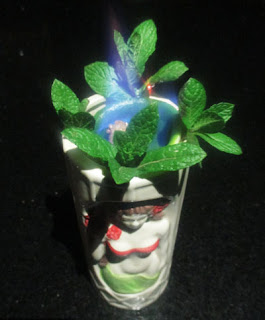
Whip shake with crushed ice, pour into a barrel-shaped Tiki mug, and top with crushed ice. Garnish with mint, citrus wedges or wheels, flowers, and swizzle sticks (mint sprigs and honeysuckles).
Two Sundays ago, I spied the Something Tequila in Chloe Frechette's Easy Tiki book. The recipe was crafted by John Bernard at Cleveland's Porco Lounge & Tiki Room in response to requests for "A Margarita? Or something tequila?" by merging aspects of the Margarita with the 1960s era Rum Barrel. In the glass, the Something Tequila welcomed mint over orange and passion fruit aromas to the nose. Next, tropical fruit notes from the lime, pineapple, orange, and passion fruit filled the sip, and the swallow began with vegetal tequila flavors followed by passion fruit and mango-like elements.

Tuesday, January 2, 2018

:: fred's picks for the top cocktails of 2017 (in) ::

I will round out my eighth annual trilogy of year end wrap up posts by selecting my favorite recipes we tried at our home bar this year. Given my schedule of working nights, I find myself having the home bar as the only drinking option available, so I definitely have put a bit more focus on my closest and dearest bar with my posts. This list is dedicated to the best recipes created by bartenders living, deceased, and unknown from around the world all brought to me at my home bar (where luckily there is no last call).

January: January's Winter doldrums were assuaged by a number of Tiki drinks including the vanilla and molasses riff on the Piña Colada, Wicked Wahine's Blackstrap Betty. For runners up were a duo of elegant potations, Jupiter Disco's quirky sparkler Negative Space and Death & Co.'s spiced tequila Alaska called Alto California.

February: Elegance this time stole the month with the Canon Cocktail Book's Daisy Royale with sparkling wine, Yellow Chartreuse, pineapple syrup, and a duo of base spirits. Tiki was definitely strong with the 12 word drink name, The Facts Concerning the Late Van Hagen & The Thirsty Man's Safari, that appeared like a riff on the Mr. Bali Hai, and my other runner up was more Caribbean-themed with Pioneers of Mixing at Elite Bars' Cubanola that reminded me of a Hawaii Cocktail with a hint of Painkiller.
March: The Canon Cocktail Book came through with another Champagne cocktail winner with the Liliko'i Royale that utilized the passion fruit-Campari pairing that Boudreau taught me with his Novara back in 2011. Also worthy of the nod were the Oaxacanite from Sasha Petraske: Regarding Cocktails and the Yankee Skipper, a rye-rum Liberal from Pioneers of Mixing at Elite Bars.

April: The pisco Martini variation gracefulness of the Sweet Hereafter from Death & Co. was quite amazing. A duo of Tiki numbers warmed my heart and soul with Rafa Garcia Febles' Papa Hogo and Pagan Idol's Pagan Breakfast #2.

May: Another Jupiter Disco recipe got my approval with the 100 Year Old Cigar, one of Maks Pazuniak's recipes that got into the Brooklyn Bartender Book. Like April, tropical fraternal twins gave me some joy with the Apricole Swizzle from Matt Pietrek of CocktailWonk and By Way of the Dodo as a Tiki Last Word riff by Matt Rose at his Watson and the Shark nights.
June: I'm having a hard time picking my favorite from two Brooklyn Bartender recipes, so let's call it a tie between the smoky Scotch-maple Daiquiri called Mr. Howell and the Singapore Sling riff pictured above dubbed the Brooklyn Sling. For tropical delights, I rather enjoyed the Tiki Bowl that came across like an orange for grapefruit Navy Grog with shades of a Volcano Bowl.

July: My pick for July had me running out to my mint patch for Chad Arnholt's 3's Away first crafted at Trickdog. The runners up were a duo of orgeat-laden tropical libations, namely Humuhumunukunukuapua'a from Smuggler's Cove and the smoky Scorpion Reef.

August: The drink we returned to for its magical tequila, cucumber, and absinthe combination was the Hole in Cup from Sasha Petraske: Regarding Cocktails. Noteworthy were Eryn Reece's smoky and vegetal rye drink the Intrepid and Zac Overman's crafty Three Scots and a Dash.
September: Dirty Dick's Polynesian Remedy as Paris' answer to a tropical of a Penicillin was rather delicious. The secondary nod goes to a duo of flavor extreme drinks of the Fernet-laden Golden Gate Swizzle and Nick Jarrett's lesser known Prizefighter No. 7 (lesser known since most people only have heard of the first of this series).

October: Martin Cate's 3 gin (gin, Genever, sloe) Zombie, The Modern Prometheus, was a mighty note of October. Ian Kearney's Mambo #5 with tequila, Swedish punsch, Campari, and orgeat, and the pear-Genever delight of Billy Helmkamp's Church Key at the Whistler in Chicago were worthy libations for the month.
November: The agave Grand Street of sorts from Jason Eisner called the Mero Mero was perfect nightcap material. As runners up, the well-balanced Genever punch of Ricky Gomez at Teardrop Lounge, the Weirding Way, and the pisco-based Hemingway Daiquiri meets a French 75 from Death & Co., the Muccho Picchu, helped to make November a champ!

December: I was impressed by the elegant sparkler, Cleopatra's Champagne Cocktail via the 2016 Waldorf Astoria Bar Book for its red apple notes. Worthy to mention were the smoky riff on the Red Hook called the Meat Hook from Vancouver's L'Abattoir and the tropical Haole's Downfall by Nick Feather at San Francisco's Restaurant Skool.

For trends, I have enjoyed the resurgence of sparkling wine-containing cocktails at my home bar quite a bit; they have crept in both as crafty riffs and as unique creations and sourced throughout the decades. Tiki and tropical drinks are still going strong at my home bar in both modern and historical forms, and these gems brings some great dignity to the genre. It is good to see Genever getting more action here after the cocktail world's interest in it plummeted not too long after the Bols Genever release. Moreover, smoke appearing through Scotch or mezcal in intriguing split spirit pairings was also a solid trend at home and in my drink creations at work.

Friday, July 29, 2016

:: best of tales and nola 2016 ::

On Monday I got back from Tales of the Cocktail. It was my fifth time in the Big Easy for the event, and I approached this year like I did last year with an emphasis of making the most of my media pass by getting into talks. And despite closing a few sponsored night events and a few bars, I still made it to breakfast followed by 3 talks a day for 4 days straight. So for the second year in a row, I went 12 for 12 at the expense of sleep and at the expense of day time events such as tasting rooms, luncheons, pool parties, and the like. Given how hot it was, I really should've skipped a talk to take a dip into the pool

Favorite night time sponsored event: It was Jagermeister's Deergarden which showed off the craft side of the spirit in a laid back, not overfilled venue. The drinks were well thought out (albeit a touch sweet for my palate) and they provided food to match each table's drinks. Nods go to Daigeo's sports-themed night with Tiki drinks served out of Zacapa-branded coconut Tiki mugs and some serious foosball competition being two highlights, as well as to the Bartenders' Breakfast for assembling such star power and for introducing me to Big Freedia's music (they performed live).

Favorite late night hangout (unsponsored): Barrel Proof. Last year, I found myself at the Avenue Pub drinking beer more often than any other location, but this year it was Barrel Proof for the cross between quality and divebar. The two dive bars I did visit this year were the Erin Rose for frozen Irish coffee and the Dungeon for entertainment value.
Best breakfast to power the day: Surrey's in the Lower Garden District.

Best swag: Swag at Tales of the Cocktail has been slowly disappearing, but I did snag a great pair of Monkey Shoulder bartending socks at one of their after parties. Getting excited about socks made me feel like an old man, but there are only so many t-shirts, decks of cards, and sunglasses that you can get excited about. Well, actually, the USBG Thursday Night Tradition shirt was rather cool, but I decided not to wear that on the airplane home for the words TNT and a picture of dynamite didn't seem so prudent.

Best photo request: While at the Diageo's summer games, I said hello to Hollis Bulleit, and she asked if I wanted to take our yearly photo together. Here is the result:
Agave variety: Throughout the week, there were plenty of opportunities to taste agave spirits. Unlike previous years where most of the liquor was based off of Blue Webber (tequila) and Espadin (the easiest to grow of the mezcal agave), I got to try a variety of other agaves - 15 in total plus 1 tastes-like-agave (desert spoon that goes into Sotol). Perhaps my favorites was Tepextate from Gracias a Dios that I got to taste at the Foosball Competition with glorious vegetal olive notes with brighter fruit ones.

A sea of Aloha shirts: Tiki culture had its place this year with everything from how to run a high-volume Tiki bar to Martin Cate taking home an award for Smuggler's Cove. Beachbum Berry's Latitude 29 served as a great base for refreshment and food, and Jeff Berry gave a few seminars as well. Almost Tiki, like a class on Swizzles and the launch of Planation's 138° overproof dark rum of Jamaican, Demerara, and Barbadian spirits put together by Tiki bar legends, bridged the gap.
The importance of low ABV offerings: Last year, I mentioned the number of offerings around town that allowed you to enjoy a variety of flavors and refreshment without getting too inebriated. That year, I remember asking one night at Latitude 29 for something low in alcohol since I had a long night ahead of me, and the bartender commented that was an unusual request in a Tiki bar but pointed out the Missionary's Downfall; this year, the menu had a separate low ABV section. Also, the talks featured low alcohol aperitifs ideas such as David Wondrich & Eric Seed's session on the Americano.
Random cool moments:
• Bumping into Neil Bodenheimer who introduced himself to me because he always saw me taking notes. When I later went to Cure, he made me an Ojen Frappe using vintage Ojen from the bar's locked spirits cabinets.
• With one empty seat on either side of me at Cure, I volunteered to slide over, and I then realized it was Simon Difford. When I mentioned that he had written up one of my drinks, he mentioned that quite enjoyed my Chutes & Ladders and gave it 4.5/5 stars on Difford's Guide (he upped the tequila by 1/4 oz and changed the brand in his adaptation). He later invited me to share his Uber to go visit the new pisco-themed bar at the Catahoula Hotel.
• Attending the International Bartending talk and having three of the four panelists say hello to me when I sat in the front row. And at the end of the talk, Julio Cabrera handed me a Cuban cigar as he departed to go to his next event.
• High fives from my old bar manager Sam Gabrielli throughout the week. Seriously, that man means a lot for he was the one willing to give me my start in the industry (on that side of the bar) save for one-off events.

Thursday, January 1, 2026

:: fred's picks for the top cocktails of 2025 ::

At the end of 2010, someone asked what my favorite drink of the year was, and I lacked an answer at first for there were so many good options to chose from. My choices were influenced by two factors – tastiness and uniqueness; it had to be both memorable and worth repeating. In past years, I did one post for drinks that I had out at bars and one post for drinks that I had at home; however, as I found myself going out less due to my work schedule and other factors, I cut it down to one post back in 2018. Each month here was selected for when the drink post appeared and not when it was enjoyed (unlike my real time Instagram account, I have a two week delay here before it goes live to give myself an ample window to write). Without further ado, here is the sixteenth annual installment of my best drinks for the year with a pair of runner ups.

January: The month with its cold, blustery winds was matched by a lot of stirred instead of citrusy cocktails. It was tough to pick a top drink, but I gave the award to Elayne Duff's Bienvenidos, an agave bitter-banana number from the updated The Tequila Ambassador from Wonk Press. Given the nod for second and third was Rosewater in Houston's Road to Ruin, a big, burly, and bitter number that came with an intriguing warning that was close to the top spot, and the Fireside Chat that was a maple-tinged Old Fashioned with the 1910's mezcal-Cognac base from Clyde's in Alexandria, Virginia.

February: The top choice for February went to the most gentle Malört drink I had all year with a solid ounce and a half – namely, the Wake Up Call at Shame & Regret in Colorado Springs. Bronze and silver in no particular order are the bitter Mane of Needles by Jason O'Bryan at URBN in San Diego as a Boulevardier riff on The Violet Hour's Autumn Negroni, and the Sidewinder, an apple-maple take on the Rattlesnake – the rye-sugar egg white Sour from The Savoy Cocktail Book.
March: For March, a rather elegant Martini riff that spun in touches of Jamaican rum and banana liqueur, the Portorico from the 1000 Misture book from 1936, was a favorite, and I enjoyed serving it to my regulars who went off-menu with dealer's choice at the C-Side Bar. Honorable mention to Backbar's Right Paw of Destiny as a sherry and Montenegro twist on the neo-classic Right Hand, and to Butcher Chef's Patty O'Cann as a Scotch-Irish whiskey mashup of a Preakness and a Little Italy.

April: The Mohu as a Scotch-Bourbon Creole variation of sorts from the private members-only club The Poodle Room in Las Vegas caught my attention for the month. Urban Grub's dual amari Black Manhattan, the Spaghetti Western and Butcher Chef's apple-tinged Prospector Cocktail-style drink, the Forbidden Forest, were solid sippers too.
May: I really enjoyed the Anyone's Shadow from Portland's Rum Club so much that it inspired me to riff on it with the Souls of the Mountain a few days later. May is also the month when my mint patch returns, so second tier mention went to Craig Herman's cribbage-Tiki (And) Knobs is Thirteen redux of the Ward 8, and also tropical but not citrussy with Brian Maxwell's Right Hand riff, Save the Last Dance.

June: I'll call June a draw with one shaken: an apple brandy-rum Swedish punch number called the Lost Generation at Bygone in Baltimore, and one stirred: a bitter fruity tequila drink dubbed Isla Bonita at Good Company in St. Louis.
July: July was a winner of tropical-tiki month with top pick to Raine's Law Room's Bright Side as a banana-Armagnac Rye-Tai. Also delicious were Erick Castro's tequila-based Tiger's Claw at Gilly's and the complex Mistah Bittah Hai by Jacoby Morciglio at Adrift Tiki Bar in Denver.

August: August was a rather tough month to choose with a lot of tropical winners (as well as a few stirred ones as well). However, the Samson Swizzle by Samson Miller at the Zombie Village took the Queen's Park Swizzle into the tiki waters got my attention. Close second and third (in no order) were one of the many Coco Lopez drinks that I made, the Barrio Tropical at Good Company in St. Louis (the Piña Verde might have gotten the mention but it is already well known and Green Chartreuse is too difficult to source right now to promote an ounce and a half at a time), and a Meaghan Dorman's Averna for curaçao Mai Tai riff called Across the Pacific.
September: The simple elegance of the Mexico Navy by Jordan Valls at Palomar in Portland read like a ginger Infante gets top merits for September; a few weeks later in October, I had a chance to get a drink from Jordan at Palomar during Portland Cocktail Week. A cool coffee-chile liqueur Coco Lopez number, the Aztec Warrior by Chad Austin in his Pandemic-era Everyone Has a F*cking Cocktail Book, and a great nightcap called the Essenza Vintage at Jacksonville's Cataluna were definitely notable.

October: The most memorable drink of the month was at a Ford's Gin-sponsored seminar at Portland Cocktail Week where they served a 3 Martini Lunch; riffing on my favorite Martini riff, the Tuxedo #2, to yield the Velvet Tuxedo No. 2 with the added fruit complexity and richness of sloe gin was a winner. Tavolota's bitter-tropical tequila Golden Eagle and the over-the-top Death Daiquiri with pineapple syrup from Rosewater in Houston need pointing out too.
November: I may have been skewed by the fact that the Elected Official was created by my Instagram friend Tim Kirkland as a tribute drink inspired by my style, but it was an complex sipper with a split base, two modifiers, and bitters. November did keep tropical going with Lost Lake's No Bye/No Aloha that seemed like a Saturn gussied up in a variety of ways, and also worth mentioning was La Factoria in Puerto Rico's Hijos de Borinquen as a complex Daiquiri of sorts that fell between the Cuban Anole and the Periodista.

December: Another Saturn-inspired recipe caught my attention to place first for December with the Beyond the Solar System with rye whiskey, cinnamon, and an apple garnish to mix things up. Nick Mallia's Day For Night as a cucumber riff on the White Negroni at Bar Lunette and the Buffalo Soldier at Nineteen at TPC Sawgrass in Florida as a tequila-Bourbon Old Fashioned played good supporting roles for the month.

Some of my favorite creations not mentioned in yesterday's year end round-up: There were some drinks that I did not mention in my other roundup that got attention on Instagram including my Lion's Tail taken through a New England lens called the Bobcat's Tail, my Overpowered by Funk that I crafted for The Clash cocktail biopic, the Montebank as a Scotch-apple-amaro number, and my St. Mark's Street tribute of Save the Robots. It was great seeing other people in my feed taking the time to give my recipes a try this year! And below is a photo of my Doctor Yah-Yah as a Drink of Laughter and Forgetting meets a Nui-Nui.
2025 was definitely a great year for cocktails even if the trend of not going out on the town as much is still a thing for me. My job last year did not provide a lot of spare spending cash, and many of the bars in town are still making drinks too complicated to write up (still a hold over from the Pandemic as folks are wanting something they cannot make at their elevated home bars). Overall, I was able to narrow down the 12 months into 35 recipes that ranged from bitter stirred drinks to garnished up tropical ones, and that is around the top ten percent of posts on here for the year. Best wishes for 2026 both in your glass and in your life. Cheers!

Friday, May 17, 2013

sagerac

This month's Mixology Monday theme, "Witches' Garden" (MxMo LXXIII), was picked by Mark Holmes of the Cardiff Cocktails tumblr. Mark's challenge was, "As far back as we can look, the use of fresh herbs have been prevalent in the world of mixed drinks. From the early days of the julep, through Williams Terrington's 19th century Cooling Cups and Dainty Drinks, to Don the Beachcomber's ahead of their time Tiki drinks, fresh herbs have always been at the forefront of mixology. So let's take influence from the bartenders that once ruled the world of mixology, raid your herb garden that too often gets neglected, and start mixing."

When reading over the theme's description about the herb garden, I thought about what herbs were already up. Since there was already a mint-themed Mixology Monday, I considered the thyme, chives, catnip, and sage that are already up. The concept of a tequila-sage pairing came to mind, and I set about to find a recipe to match. While I did find a recipe, it was actually created as a rye drink first, and after making both, I felt that the rye version was superior despite my predisposition to the pairing. That recipe was Jacques Bezuidenhout's sage Sazerac, the Sagerac, and after Jacques became the Tequila Partida bartender ambassador, he created the tequila variation. Note: the below recipe has been adapted and scaled down by a third to make it less of a spirit bomb.
Sagerac
• 2 oz Rye Whiskey (*)
• 1/4 oz Simple Syrup
• 3 dash Peychaud's Bitters
• 1 dash Angostura Bitters
• 4-6 Sage Leaves
Lightly muddle the sage leaves with the simple syrup and bitters. Stir with ice and strain into a rocks glass rinsed with Herbsaint. Garnish with a fresh sage leaf.
(*) For the Tequila Sagerac, substitute 1 oz Reposado Tequila and 1 oz Blanco Tequila in place of the rye.
For the rye version, the sage and the Herbsaint's anise paired up on the nose to generate an almost minty aroma. A sweet, malty sip led into a rye swallow containing minty, anise, and spice flavors; finally, the swallow ended with lingering sage notes. The tequila version was not too much different, but the sip was less distinctive with only a slight aged flavor from the reposado tequila, and the swallow also began with the agave notes.
Jacques Bezuidenhout sage Sazerac
So thank you to Mark conjuring the witches but not having anyone turned into a toad during this month's Mixology Monday. Quite curious as to what other herbs people will select with for this event. Cheers!

Friday, May 13, 2016

vendetta

1 1/2 oz Blanco Tequila (Espolon)
3/4 oz Lime Juice
3/4 oz Orange Juice
1/4 oz Vanilla Syrup
1/4 oz Pimento Dram (St. Elizabeth Allspice Dram)
1/4 oz Simple Syrup (not in original recipe, my addition)
1 dash Aromatic Bitters (Angostura)
8 drop Herbsaint (Pernod Absinthe)

Blend with 6 oz crushed ice (shake with ice and strain over crushed ice). Garnish with a lime wheel and I added freshly grated nutmeg to this.

A few Thursdays ago, Craig Herman a/k/a Colonel Tiki posted about a drink that he created at a Mixoloseum's Thursday Drink Night back in 2010. The theme was rum-less Tiki, and Craig mentioned that his Vendetta from 6 years ago was a tequila version of Three Dots & A Dash. I replied that I was going to make it later that evening but that it reminded me of a cinnamon-less Nui Nui. This also cued me into the fact that I had never written about a Nui Nui, and I took care of that the following evening.
The Vendetta gave forth a nutmeg and lime nose. Next, the sip was rather citrussy with lime and orange notes, and the swallow was tequila spiced with vanilla, allspice, and anise. Overall, it was a tequila drink that would not be out of place on either a Tiki menu or at a Cinco de Mayo celebration.

Wednesday, January 1, 2020

:: fred's picks for the top cocktails of 2019 ::

Towards the end of 2010, I was challenged to pick my favorite drink of the year, and I was overwhelmed due to the vast number of great options to chose from. I decided to break it down by month with a runner up or two, and I based by choices on two factors -- tastiness and uniqueness; they had to be both memorable and worth repeating. I used to divide up this list by drinks had out on the town and drinks made at the home bar, but as life changes, I decided to combine the two last year to make up for my inability to be an overactive barfly. Without further ado, here is the 10th annual installment of my best drinks for the year (by the month the post appeared).

January: For top pick of the month, I opted for Sam Treadway's Black Magic as a mezcal Negroni meets a Revolver at Backbar. For runners up, I selected two richer drinks: the first one was an Scotch-Cynar Egg Nog with maple and coffee notes called the Barnaby Jones from the Cocktail Codex book and the other was a Cognac-mezcal Manhattan of sorts with raisiny sherry and quinquina called the Nobless Oblige from Nick Desoto at London's Experimental Cocktail Club.

February: I gave the nod to an elegant rum-Cognac Old Fashioned-styled number called the French Connection at the Baldwin Bar. Notable February recipes were the Serious Moonlight as a honey-Chartreuse Pisco Sour crafted by Nick Elezovic for the David Bowie cocktail biopic and the Italian Buck from the Canon Cocktail Book as well as Brad Parson's Amaro.
March: My three picks for the month were all amaro-driven recipes with the winner being Dan Greenbaum's Remember the Alimony with its simplicity of gin, Fino, and Cynar. Frank Cisneros' Margot Tenenbaum as a Gold Rush with Zucca/Sfumato and Liam Odien's Frankie Panky as a tequila riff on the Savoy's Hanky Panky but named after a burlesque performer.

April: Sahil Mehta's Double Dutch at Estragon was a delightful Genever-Batavia Arrack Sour that got the top honor for April. Shannon Mustipher's Muertito Vivo as a Zombie riff with Jagermeister donating Tiki spices and Brian Kane's National Treasure as a Boulevardier-like drink were also pretty cool tipples.
May: I was impressed by the Boulevardier-Brown Derby mashup, the An Englishman, a Frenchman, and an Italian Walk into an L.A. Bar, crafted by a Boston amateur mixologist, James Wallace, who I met at Thirst Boston this year. The No. 2 Fleet Street as a gin-based Mr. Bali Hai of sorts and the Showdown as a Daiquiri meets a Trinidad Sour were worthy of runner up status.

June: For June, I opted for Terry Williams' Passing Deadline that came across like a gentian-tinged Manhattan that he created at the Anvil in Houston. I was also pleased with Ariana Vitale's Wicked Behavior as a floral and herbal Whiskey Sour and Blair Reynold's slight riff on a Tiki classic with the Lapu Lapu.
July: In the heat of July, Jack McGarry's Pharaoh Cooler from the PDT Cocktail Book hit the spot with a magical combination of watermelon, grenadine, and rose water. For runners up, David Wondrich's Barbadian Gin Punch Swizzle with the quirky but tasty duo of Genever and coconut water had roots in mid-19th century island culture; and also, the De La Louisiane-Old Fashioned hybrid, the Hazard, from Jiri Malis in Denmark was notable with its maple accent.

August: While I wanted to give some acknowledgement to the Beta Cocktails' Italian Heirloom, I decided that August (and September as well) will be Tiki month(s). For the gold star, it was a tough choice of two drinks from the Minimalist Tiki book by Matt Pietrek and Carrie Smith, but Chad Austin's Mammoth Tusk won out over a Jason Alexander recipe. For silver stars, Shannon Mustipher's Rumfire Walker from her Tiki: Modern Tropical Cocktails book (also difficult narrowing it down from two of hers) with its delightful Cinn-pari duo (I now have a bottle of Cinn-pari at work!), and El Nova's Moonkist Twist as his take on the Moonkist Coconut from the Mai Kai in Florida.
September: Yes, Tiki month continues into September. Passing over Jason Alexander for August was tough, but I decided that I liked his drink in the next month even more: the Port of Innsmouth as his H.P. Lovecraft-inspired Nui Nui riff from Minimalist Tiki. Deserving of the aloha nod are Justin Wojslaw's Transatlantic Orbit and the 1960s Polynesian Paralysis.

October: Veering away from Tiki for a moment and back to more classic-style cocktails. One that I really enjoyed since it is a riff on one of my favorite Martini variations, the Poet's Dream -- Keegan McGregor's agave-based Dead Poet was quite enjoyable. Garnering honors for the month, Sother Teague's Waterproof Watch and Sahil Mehta's aperitif that reminded me of dandelions -- the Lion's Tooth.
November: I was quite surprised that I had never made an old Jim Meehan drink called El Puente -- it does not appear in the PDT Cocktail Book but only in Greg Boehm and Jeff Mason's 2009 The Big Bartender's Book. I probably skipped it due to not having cucumber on hand, but this mezcal number has great melon flavors in the mix from the cucumber. Worthy of note are Pip Hanson's Marley's Ghost as a rum Manhattan of sorts and Michael Boughton's Rose Gold at the Smoke Shop in Somerville as a Gold Rush meets a Campari Sour.

December: Another challenging month to make decisions for, but the Evan Harrison's Bodega at State Park as a pineapple rum Green Point had modern flare on a slightly older feel base. I also enjoyed the Broadway from The NoMad Cocktail Book which reminded me of a Bensonhurst, and enjoyed the Mr. Pink that was a Jungle Bird reshaped to be an egg white Sour.

Alas, 2019 has come and gone. Why bother reflecting on the bad times (and the hangovers) and just recall the best moments? Here, I narrowed it down to 37 drinks (I somehow snuck in a bonus one in August by not giving it an award during Tiki Month #1) -- all great mementos of my trip around the sun. Like last year, many were made at home; while it may not have the great hospitality of the bars around Boston, it does have the latest last call, great drinking buddies (my wife and/or my cats), and cheap prices! Some were had out and about when time and finances allowed it. Good luck to all of your imbibings in 2020 and stay in touch!

Tuesday, August 24, 2010

indian summer

3 Cardamom Pods
1 1/2 oz Blanco Tequila (Casa Noble)
3/4 oz Pimm's No. 1
1 oz Pineapple Juice
1/4 oz Lime Juice
1/4 oz Simple Syrup (Gomme)

Muddle cardamom and add rest of ingredients. Shake with ice and double strain into a cocktail glass. Garnish with a lime twist.

Two Fridays ago, it was cocktail time so I opened up our newly acquired Food and Wine: Cocktails 2010 and began to flip through the pages. The Tiki-like tequila drink, the Indian Summer, stood out as quite curious. Jacques Bezuidenhout, the drink's creator, commented that "[he] love[s] the aroma of cardamom, and it works well with the spice in tequila." The Indian Summer reminded me of Joaquin Simo's Bourbon and rum-laden Punky Monkey that we made back in January, and I was curious to see how tequila would fair in a similar mix.
The shaking generated a decent foam from the pineapple juice, and the aroma was lively with young tequila and lime notes. The beginning of the sip was a combination of the pineapple, lime, and cardamom, and this was followed by the tequila in the middle. Lastly, the cardamom appeared again on the swallow as a somewhat bitter and spicy note. Indeed, Jacques was correct -- the cardamom and the blanco tequila's peppery notes complemented each other rather well.

Saturday, June 4, 2016

jim's special

2 oz Myer's Rum (1 oz Goslings)
2 1/2 oz Casadores Tequila (1 1/4 oz Espolon Blanco)
1 oz Lime Juice (1/2 oz)
1 oz Passion Fruit Syrup (1/2 oz)
1 oz Tiki-Ti Mai Tai Mix (1/4 oz orgeat, 1/4 oz Pierre Ferrand Dry Curaçao)

Blend with 8 oz crushed ice for 5 seconds (shake with ice, strain into a Tiki mug, and fill with crushed ice). Garnish with a pineapple wedge speared to a cherry (mint and a half spent lime shell filled with Don Q 151 Rum and ignited).
For my post-shift nightcap two Saturday's ago, I grabbed Beachbum Berry's Sippin' Safari and opted for the Jim's Special created at the Tiki-Ti circa 2000. Overall, the Jim's Special was a cross between a classic Mai Tai and Trader Vic's Chinese Itch with the base spirit split between rum and tequila. Once in the mug, the drink proffered a mint aroma. Next, lime and tropical fruit flavors on the sip led into dark rum, tequila, earthy, and orange notes on the swallow.

Tuesday, December 28, 2021

sherry cask cobbler

1 1/2 oz Patrón Sherry Cask Añejo Tequila (*)
1 1/2 oz Orange Juice
2 oz Pineapple Juice
1/2 oz Ginger Syrup

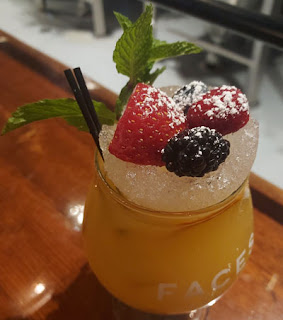
Briefly shake with ice, strain into a wine glass, and fill with crushed ice. Garnish with berries and mint (included a Tiki-style ice shell), dust with powdered sugar, and add a straw.
(*) An añejo tequila aged in Oloroso sherry casks. Perhaps an aged tequila and a 1/4 oz Oloroso or Amontillado sherry would work in a pinch.
The welcome cocktail at the Patrón event two Tuesdays ago at Faces Brewing Co. was this elegant Sherry Cask Cobbler. It featured their añejo tequila which is aged over 2 years in Oloroso sherry butts. Patrón's East coast ambassador Steph Teslar described how she fell in love with this expression when she first visited the Hacienda years ago, but alas, it was a limited offering. Years later, Patrón just relaunched this tequila on a larger scale, so it ought to be available in many markets. The nose of the spirit shared caramel, molasses, nut, apricot, and fig notes, and the flavor came through with dried pineapple, walnut, and baked pear. Sherry has been a cocktail ingredient dating back to the first cocktail book in 1862 by Jerry Thomas and even before that in Charles Dickens' 1844 novel Life and Adventures of Martin Chuzzlewit and Nathaniel Hawthorne's 1852 novel The Blithedale Romance. That early and popular drink was the Sherry Cobbler which is sherry, sugar, citrus (frequently orange), and crushed ice served in a tall glass, garnished with fresh berries, and a straw. Indeed, they followed suit by making a Cobbler from their sherry-aged tequila as their welcome drink at the event.

Tuesday, January 1, 2019

:: fred's picks for the top cocktails of 2018 ::

At the end of 2010, I was challenged to declare my favorite drink of the year, and I was overwhelmed for there were so many good options to chose from. My choices were influenced by two factors -- tastiness and uniqueness; it had to be both memorable and worth repeating. In the past 8 years, I did one post for drinks that I had out at bars and one post for drinks that I had at home; however, life has changed gears, and I find myself out on the town a lot less (although more so towards the end of 2018). So for the first time, I combined the two. Each month here was selected for when the drink post appeared and not when it was enjoyed. Without further ado, here is the ninth annual installment of my best drinks for the year with a runner up or two listed.
January: This month coincided with the Instagram event "Tiki the Snow Away," so many of my drinks were heavily influenced by that theme. For the month's pick, I chose Chad Austin's King Slayer that added Don's Spices #2 to the classic Jungle Bird. As runners up, Martin Cate's The Undead Gentleman, and the Liquid Lab's Freaky Tiki that replaced a lot of the Campari in the Jungle Bird with Tiki staples grenadine, orgeat, and bitters.

February: While February still had bleed over of posts from the Ig-Tiki event, it was two non-Tiki recipes that captured my heart. Tied for the month are Maks Pazuniak minty, smoky, and nutty Alligator Monday at Brooklyn's Jupiter Disco and Luc Thier's Fallout-inspired, grassy, and herbal Super Mutant that he served at a guest shift at Backbar in Somerville.

March: The month seemed to have a lot of riffs on Negronis for some reason despite it not being Negroni Month. Perhaps the best of the month was The Departed by Toronto bartender Sandy de Almeida with two base spirits and two amari. Secondary nods go to the coffee-tequila-Campari Lonnie Desoto by New York City bartender Rafa Garcia Febles and for a not-a-Negroni-in-the-slightest, Nick Detrich's A Thousand Blue Eyes for its beautiful simplicity of flavor that reminded me of a Robert Vermeire classic.
April: One of the new additions to the home bar was Byrrh Grand Quinquina that I was inspired to add due to it being at the new bar I was working at as well as my collecting a lot of recipes that call for it throughout the last century or so. Top honor goes to Chris Elford at Amor y Amargo with the Casualty where he brings Scotch, Montenegro, and chocolate together (along with Byrrh). For a secondary nod, the Byrrh recipe The Italian Job with Smith & Cross from Parisian bartender Joseph Akhavan and a flavorful Daiquiri Time Out (but non-Byrrh drink), the Public Mutiny, were tasty.

May: One drink that impressed me was the Who Dares Win by Scotsman Mike Aikman that came across like an Army & Navy crossed with the Silver Bullet. Also worthy to mention were Dan Braganca's riff on Trader Vic's Tortuga that he called the Langosta that I discovered on OnTheBar (sadly, that app died off this summer -- RIP) and made at home, and Donny Clutterbuck's Rum Little Italy of sorts, the Desk Job.
June: With my mint patch in full production mode, I was glad to get to utilize some of it to garnish the Passion Grove Swizzle by Matt Pietrek of CocktailWonk. Two other cool recipes for June were the Wildflower by Richard Boccato that reminded me of a Boukman Daiquiri, Volcano Bowl, and a Too Soon?, and the elegant Tropical Champagne (when made with a funky rum) from Charles Schumann's 1991 American Bar book.

July: A great name and a simple yet complex mix won out here with Agnes and the Merman from Maria Polise that utilized Punt e Mes and grapefruit in a Mezcal Sour. For honorable mention, I could not trim it down to two, so here are three: the Genever-rhum agricole Doppelganger from Vandaag, Ezra Star's Elements of the Stars from Drinking Like Ladies, and Joe Donahue's Planet Earth with apple brandy, Cynar, and orgeat from Amanda Schuster's Duran Duran drink tribute.

August: A great name and a Malört Mai Tai riff? Sign me up! Lightning Swords of Death from Chicago's Whistler! A tip of the hat to classic Tiki from Trader Vic with the Jamaica Snifter from his 1972 book, and Backbar's Pisco Sour variation, the Frightened Tiger.
September: This month's picks were all from Boston! Moe Isaza's 2018 Bacardi Legacy drink is worthy of the hype: the Poderoso with coffee, pineapple, and Montenegro. Two runners up in this close month called for Batavia Arrack with Russell House Tavern's Becky's Battles and John Gertsen/Cali Gold's Smoking Jet Pilot.

October: Paul McGee's Rum River Mystic falls into delightful nightcap land with a split spirit base that reminded me of a 1919. A tip of the hat to two drinks I had in one night out: the complexly layered Blackspot at Kirkland Tap & Trotter and the summer refreshment of Sahil Mehta's Las Pozas -- while it was Autumn, it was a cucumber-y drink of the day in July.

November: I am splitting the gold medal with two amaro-laden tropical drinks. In no order, Sother Teague's Jagermeister-cachaça Rough Seas from his I'm Just Here for the Drinks and Jason Alexander's maple-Meletti Drunken Helmsman from the Tacoma Cabana.
December: An elegant winner for the final month of the year was the Hawthorne's Alaska From a Parallel Universe that they crafted for the Hendrick's Orbium Gin launch party -- just a touch of sherry sent the drink in a different zone. For runners up, one old and one new with the Baldwin Bar's Navigator pictured above and an Amer Picon-tinged Daiquiri, the Minstrel from Pioneers of Mixing at Elite Bars: 1903-1933.

Alas, the year is done and there were my top 35 drinks as mementos of my trip around the sun. Many were made at home; while it may not have the great hospitality of the bars around Boston, it does have the latest last call, great drinking buddies (my wife and/or my cats), and cheap prices! Some were had out and about when time and finances allowed it. Good luck to all of your imbibings in 2019!

Monday, July 25, 2016

ponche

2 oz Tequila (Piedra Azul Blanco)
1 oz Pineapple Juice
1 oz Lemon Juice
1/2 oz Passion Fruit Nectar (Passion Fruit Syrup)
1/2 oz Rock Candy Syrup (1/2 oz BG Reynolds Vanilla Syrup)
2 dash Vanilla (combined above)

Blend with 1 scoop of ice and pour into a 10 oz glass (Recipe was doubled, shaken with ice, strained into a 18 oz Tiki bowl, and topped with crushed ice). Decorate with a mint sprig.
Two Mondays ago, I turned to Trader Vic's 1972 Bartender's Guide for some refreshment to cut the summer night's heat. There, I spotted the tequila-based Ponche that seemed rather tropical. I ended up doubling the recipe in part to make use of the new vintage Tiki bowl that I had bought. Once built, the Ponche gave forth luscious mint and vanilla aromas. Next, lemon and hints of pineapple on the sip transitioned into tequila, passion fruit, and pineapple on the swallow with a vanilla finish. Overall, the drink reminded me of the tequila Hurricane variation I created last year for an event, the Hopping through the Frothy Waves, with additional pineapple and vanilla elements.

Thursday, January 2, 2014

:: fred's picks for the top cocktails of 2013 (in) ::

I will complete my fourth annual trilogy of year end wrap up posts by picking out the best recipes we tried at our home bar this year. While I did create a few recipes this year both at home and at work, I will tack a few of my favorite ones at the end and keep this list solely to recipes created by bartenders, living, deceased, and unknown, from around the world.

January: It was easier to pick the top 3 drinks of the month than to sort out the order. In the end, I gave the nod to the tempered Fernet Branca La Yapa crafted by Jamal Hassan from the Ox Restaurant and Whey Bar in Portland, Oregon. For runners up, the Hemingway Daiquiri and Creole Contentment-like Throw The Horns from Jeff Baumann of the beer Mecca the Prohibition Pig in Waterbury, Vermont, and the seasonal Tiki-inspired Winter Daiquiri by Mindy Kucan of Hale Pele in Portland, Oregon, get the mention.

February: For a winner, I opted for the beer cocktail version of his Michigander, namely Jason Schiffer's Detroiter from 320 Main in Seal Beach, California. For a runner up, I narrowed it down to one, the Kirkwood by Miles Macquarrie of Leon's Full Service in Decatur, Georgia; the recipe triggers thoughts of Evan Harrison's Peralta and Stephen Schellenberger's Alto Cucina.
March: Making me think of Gilda and Underneath the Volcano, Chris Lane's Broken Flower at Lolinda in San Francisco acquires March's slot. For bronze and silver (in no particular order) are Colin Shearn's equal parts number Sideways in Reverse that he concocted at Philadelphia's Franklin Mortgage & Investment Co., and Yao Lu's Campari-driven Swizzle, the Witchy Woman at Houston's Anvil Bar & Refuge.

April: Chris Hannah's amaro riff on the Martinez, the Amertinez, from Arnaud's French 75 in New Orleans captivated me with both Cynar and Averna variations. Also worth mentioning are Donato Alvarez's mezcal-cucumber Going Back to Mezcali from the Sixth Engine in Washington, D.C., and the lesser known Brown Derby from Pioneers of Mixing at Elite Bars: 1903-1933.

May: For a pick of the month, I selected Joaquín Simó's Mutiny Suppressor from Manhattan's Pouring Ribbons; a great complexity was generated with lesser used Galliano and Amaro Nardini ingredients. For runners up, both came from Gary Regan's The Negroni book, namely Joseph Boley of Paris' Red House's variation on Sam Ross' Left Hand called the Southpaw and Kevin Burke of Denver's Colt & Gray's salt-tempered amaro Bottecchia.
June: For the win, I picked Bobby Heugel's Cortez Julep, a tequila and sherry Julep he invented at the Anvil in Houston. For place and show (in no particular order) are the rum and Madeira Fix, the White House, from Pioneers of Mixing at Elite Bars: 1903-1933, and the Fernet-containing Champagne cocktail the Imperial Delight from 1940's The How and When.

July: The quirky sherry-containing Pimm's Cup, the Moretta Cocktail, from The Mutineer Magazine's event at Tales of the Cocktail soothed the discomfort of not being in New Orleans for the event. For second honors, the refreshing aperitif, the Queen Elizabeth Cocktail, from The How and When, and the Scotch-Madeira 91st Division from Pioneers of Mixing at Elite Bars: 1903-1933 got selected.

August: For a pick, I went with Jacob Grier's Cognac, smoky tea, and spice Lion's Share at Metrovino. For support, there are the Honeymoon- and Scofflaw-esque Argentina from 1934 Boothby's World Drinks And How To Mix Them and the Genever-amaro-maple Western Front by Adam Robinson of Portland's Rum Club.

September: Another beer cocktail grabbed me, namely the End of Days from Saison in Richmond, Virginia, that I spotted in Beer Advocate. The Hurricane-like Wicked Wahine from Brice Ginardi of Okolemaluna Tiki Lounge in Hawaii and the soft Irish whiskey-honey-citrus-vermouth Copywriter from Steven Weiss of Craftbar in New York City share the supportive honors.
October: The Lindsey's Whimsy got the slot for the October; this light sherry and herbal liqueur recipe was created by Lindsey Baird at San Francisco's Comstock Saloon and published in The Art of the Shim: Low-Alcohol Cocktails to Keep You Level. Also worth mentioning is Leo Robitschek's Daiquiri variation, the Heart of Stone, from Eleven Madison Park in Manhattan.

November: I guess this month was more of a go out for cocktails and stay home for beer type of month which might have had something to do with Thirst Boston occuring during this time period. The winner is the autumnal Manhattan variation, the Autumn Sunset, from Sanctuaria: The Dive Bar of Cocktail Bars.

December: Timothy Miner of the Long Island Bar in Manhattan's Sherry Duval caught my eye on the ShakeStir website with the sherry, Cynar, and maple elements. Another one from ShakeStir gets honorable mention -- the Tiki Stranger than Paradise by Jade Brown Godfrey of Manhattan's Pouring Ribbons. In addition, there was the rum-sherry-bitters Act of Faith by Dan Greenbaum of Manhattan's The Beagle and Attaboy.
My favorite creations of 2013: I narrow it down to six drinks which was tough, but I did it in pairs. Two from the "Women of the Wild West" night at the Blue Room were the pisco-Campari-cacao Stagecoach Mary that I later competed with in the Bols Around the World competition and the quirky nondiluted room temperature cocktail, the Madame Mustache. Two that I created at home for no menu in particular were the Sherry Mai Tai and a Vieux Carré variation for Mixology Monday: Flip Flop, the Cocktail à la Salle, which took it in a tequila-sherry direction. And the two that I invented at Russell House Tavern were my menu items, the tequila-Swedish Punsch Chutes & Ladders as a riff of a drink from the Café Royal Cocktail Book, and the mezcal-apple brandy herbal Downtown at Dawn (which was a progression from my Blue Room Pearl de Vere).

Tuesday, September 27, 2011

pinky gonzalez

1 oz Blanco Tequila (Espolón)
1 oz Reposado Tequila (Espolón)
1/2 oz Orgeat (BG Reynolds/Trader Tiki)
1/2 oz Curaçao (Senor Curaçao)
3/4 oz Lime Juice
1/4 oz Agave Nectar

Shake with ice and strain into a rocks glass filled with crushed ice. Garnish with a mint sprig and a spent half lime shell.

While flipping through our 1972 Trader Vic's Bartender's Guide, I was reminded of all of the Mai Tai variations in there. Beside the classic rum and a lesser known Bourbon one, there is a tequila drink called the Pinky Gonzalez that Trader Vic created in 1964 for his Señor Pico restaurant. The Pinky Gonzales may sound like an odd concept at first, but with a little thought, it is not much more than an orgeat-laden Margarita with a minty aroma. While the Trader Vic book was promoting their Mai Tai Mix by recommending equal parts spirit and bottled flavorant, the LUPEC Boston Little Black Book of Cocktails contains an actual recipe in honor of Rain who chose Pinky Gonzalez as her LUPEC identity. The recipe I present above is modified slightly from these sources given my preferred Mai Tai format.
The mint garnish provided much of the aroma for the Pinky Gonzalez. The sip was citrussy from the lime and orange liqueur; surprisingly, the tequila pushed the orgeat into the sip instead of the swallow where it often resides. Indeed, the tequila controlled the swallow and provided a much more lingering agave note than usual.

Saturday, March 27, 2010

peniques

1 1/2 oz Reposado Tequila (Lunazul)
3/4 oz Ramazzotti
3/4 oz Orange Juice
1 barspoon Cinnamon Syrup (Trader Tiki)
1 dash Orange Bitters (Angostura Orange)

Shake with ice and strain into a cocktail glass. Garnish with an orange twist.

The theme for Mixoloseum's Thursday Drink Night on the 18th was "Orange" and for a recipe idea, I thought of the reposado tequila shot with cinnamon-sprinkled orange slice chaser that John Gertsen served us a few months ago at Drink. So to replicate that, I combined tequila, orange juice, and cinnamon syrup; however, the drink needed something extra. That extra was Ramazzotti, an amaro flavored with sweet and bitter orange peels which has some similarities to Amer Picon (and is used in one replica recipe). Ramazzotti also has a wonderful spice signature that includes hints of cinnamon which would help to tie the components together quite well.
The drink ended up a pretty apricot color so to couple its copperiness with the spirit's origin, it got dubbed the Peniques after the Mexican one cent piece. The Peniques' aroma was full of orange oil, tequila, and a caramel sort of note. Cinnamon and orange flavors were on the forefront of the sip with tequila and a lingering cinnamon note on the swallow.

Saturday, January 2, 2016

:: fred's picks for the top cocktails of 2015 (in) ::

I will complete my sixth annual trilogy of year end wrap up posts by picking out the best recipes we tried at our home bar this year. Given my schedule of working nights, I find myself having the home bar as the only drinking option available, so I definitely put a bit more focus on my closest and dearest bar. I used to also tack on the best of my own creations at the end of the post, but I think I covered that in the first part of the trilogy (and you can see the whole collection here). Thus, this list is dedicated to the best recipes created by bartenders, living, deceased, and unknown, from around the world all brought to me at my home bar (where pants are optional).

January: To start the year off, I selected the Turn Signal by Portland's Sean Hoard and Daniel Shoemaker as a great fruity, bitter, and Bourbon drink. Luna de Cosecha by Justin Noel of 1534 in NYC with a stirred bitter and chocolatey tequila Manhattan and the strange early 1900's cassis for Maraschino Martinez, the Marblehead got honorable mentions.

February: Despite the name, 50 Shades of Maguey captured my attention with the ever delightful passion fruit-Campari pairing. Seattle's Scott Diaz's A Simple Quandry as a gin and aquavit 1919 Cocktail of sorts and Central Provisions' Schooner Punch that they created up in Portland, Maine, to show off a classic punch style have my attention as well.
March: I rather enjoyed Natalie Jacob's Jake Barnes for combining the Jack Rose with the pineapple-laden Jersey City. March's secondary honors go to Jeremy Oertel's Haunted House from The Old-Fashioned book with its use of Swedish punsch as the sweetener, and the sherry and orgeat Youngs from Pioneers of Mixing in Elite Bars: 1903-1933.

April: April was quite a Manhattan-filled month. First, I was quite impressed with the gin-pineapple-IPA beer combo in Thomas Waugh's Strange Brew from The Death & Co. Cocktail Book. Next, for runners up, Phil Ward's R'Cobbler -- a Rosita riff he created at Mayahuel, and Jesse Vida's Square Root -- an earthy Paper Plane-like equal parter that he created at Dead Rabbits.

May: May brought things back to Boston with Ryan Lotz's Benny & the Jets Tiki-style drink that he created for a Beachbum Berry event in town. Keeping with the Tiki theme, one of the second spots goes to Pleasure Island by Seattle's Ryan Lobe. And on the elegant side, Morning from Boothby's 1934 book captured elements of the Brandy Crusta without all the peel and sugar rim.
June: Tiki did continue on with the 1961 Puka Punch as a top pick, and Blair Reynold's Hilo Hala that he created before he even opened Hale Pele as a runner up. The other runner up, the Baltimore Cocktail, was created by Andrew Willett as a Madeira and spice variation using the Vieux Carré structure. The photo above was also from this month, the 1946 Zombie, which was also delightful but the photo and garnishing were more top notch than the variation recipe.

July: The month was a tough one to narrow down, and the top nod will be shared by two bartenders mentioned already. One was Scott Diaz's The Count's Swizzle which veered from the Negroni into Swizzle-land but still kept the Campari; and the other was Jeremy Oertel's Cynar and fire Artichoke Hold. For honorable mention in July, Jessica Gonzalez's Night Watch from The Death & Co. Cocktail Book made for a great nightcap. A garnish nod to myself went to my pirate ship on Blackbeard's Ghost.

August: It was easier to narrow the pack down to three than it was to pick a top drink. Perhaps Seattle's Connor O'Brien's Unique Bird that split the difference between a Jungle Bird and a Daisy de Santiago and graced the pages of Paul Clarke's The Cocktails Chronicles book. The Spiced Park Swizzle from Tiki Drinks: Tropical Cocktails for the Modern Bar and a leftover recipe from Tales of the Cocktail, the Sip Sip Hooray from San Diego's Noble Experiment, both were solid drinks.
September: Jason Alexander's Golden Shellback offered Tiki with elegant Benedictine and Swedish punsch notes for September's pick. Next, Maksym Pazuniak's A Moment of Silence still holds up after all these years since Beta Cocktails was published, and Gregory Buda's update of the Japanese Cocktail -- the Orientation at Dead Rabbits both deserve some recognition.

October: When Will Isaza of Fairsted Kitchen competed for Bacardi Legacy in Boston, I went home and made his winning drink the Paraiso at home to show myself why it was top dog. October also found me drinking a lot of quirky banana liqueur drinks with the Banana Boulevardier from the Anvil being one of the better ones. And for the other runner-up, a strange Daiquiri variation using an already taken name -- the White Lion from the irreverent Pioneers of Mixing at Elite Bars: 1903-1933 reminded me of a little of a Periodista.
November:Hale Pele's Mindy Kucan crafted one of the better seasonal drinks this year with the Nutty Like a Fruitcake. Silver and bronze medals (in no particular order) go to Eric Witz's Last Word-Widow's Kiss hybrid the Widow's Word and Boothby's 1934 dry vermouth elegant yet tropical egg white Pantomime.

December: Another great seasonal drink came from Chicago's The Whistler with Billy Helmkamp's South Pole Swizzle. A nod should be given to a pair of egg drinks, namely Griffin Lawler's Treaty of Paris with its Earl Grey tea notes and Pip Hanson's Angophile with a hearty dose of Angostura balanced and complemented by the vanilla-driven Licor 43.

Wednesday, September 22, 2010

aku aku

1 oz Milagro Blanco Tequila
1/2 oz Lime Juice
1/2 oz Pineapple
1/2 oz Orgeat
1 barspoon Pastis
1 small pinch Salt

Add about 1 oz ginger beer and 1 oz soda water to a highball glass. Shake rest of ingredients with ice and strain into the glass. Top with ginger beer (~1/2 oz) and garnish with a lime wedge and a straw.
For my second drink at Craigie on Main, the Aku Aku on the cocktail menu caught my eye. While it is not the Trader Vic recipe of the same name, it did have some strong Tiki aspects to it. However, it felt more like it was a Tiki drink crossed with a Mexican one such as a Diablo. When bartender Carrie Cole made me the Aku Aku, the nose was lime with hints of tequila. The sip started with a fruity ginger spice followed by the lime and tequila. Lastly, the pastis appeared on the swallow along with a smokey note. Overall, the Aku Aku was rather refreshing.

Friday, January 2, 2015

:: fred's picks for the top cocktails of 2014 (in) ::

I will complete my fifth annual trilogy of year end wrap up posts by picking out the best recipes we tried at our home bar this year. I used to also tack on the best of my own creations at the end of the post, but I think I covered that in the first part of the trilogy. Thus, this list is dedicated to the best recipes created by bartenders, living, deceased, and unknown, from around the world all brought to me at my home bar (where pants are optional).

January: The top two drinks of the month were Dee Allen's Bitter Stripper, a White Negroni variation from Gaz Regan's Negroni book, and Brian Summers' Chicago Typewriter, a Genever and rye tribute to the Thompson submachine gun that I spotted on the Bols Bartending Facebook page.

February: The month's nod goes to a drink that pre-dated the name for the Vodka Martini also known as the Kangaroo. This Kangaroo from Pioneers of Mixing at Elite Bars: 1903-1933 is like a gussied up Puritan. For runner up, Erik Carlson's Primrose Hill (pictured below) that I spotted in Imbibe Magazine was a solid Martini variation that had aspects of the Martinez and Hanky Panky playing out (with dry vermouth instead of sweet though).
March: My mind returns to the West Indies Punch that I found in Trader Vic's Book of Food & Drink; guava paste brought out aspects of Jerry Thomas' Barbados Punch, and green tea and Madeira did no harm here either. For second nod, the sherry Negroni riff the Haberdasher from Josh Harris and Scott Baird as appears in The Art of the Shim book. Also for second nod, the quirky and intense Louis Special from 1940's The How and When equal parts the gin, Chartreuse, and Benedictine in a very modern style.

April: The hands down recipe for April is Meaghan Montagano's Persephone that I spotted on the ShakeStir website; it possessed a sparkling Seelbach-Lucien Gaudin sort of magic.

May: I went classic with my top choice of the month with the Fedora that sporadically gets ordered at work. Since I have never made one of these Sidecars with the brandy split with Jamaican rum and Bourbon for the blog, I went ahead and merged recipes from Harry Johnson's 1882 New and Improved Bartender's Manual and Stan Jones' Complete Barguide. Runner up was a sadly unattributed recipe from 75th Anniversary Edition of Mr. Boston called Count Camillo's Paloma (pictured below) -- yes, a tequila Negroni lightened with grapefruit soda!
June: A tough two to pick a winner, but the Bone Machine from Jeff Lyon via Liquor.com made for an elegant Manhattan variation with sherry and a pair of herbal liqueurs as accents. For a runner up in this tight race, Doff Your Hat from David Willhite via 75th Anniversary Edition of Mr. Boston combines genever, Cynar, and Grand Marnier rather well.

July: The nod for July goes to the Seelbach variation, Handbook for the Recently Deceased, created by Timothy Miner that I spotted on the OnTheBar app; the drink's name and movie allusion does not hurt its standing either. For second tier awards, Roman Milotivy's Visionary Cocktail from World's Best Cocktails was rather good with my gin-for-vodka substitution, but it might have taken the lead for July with a dark rum sub instead.

August: Another tough month to narrow winners down, but in the end the Lizard King from Carlos Garcia and CM Almeida via the OnTheBar app had alluring funky notes in Tiki format. For runners up, there was the more classic feeling Autumn Leaves, a Jeffrey Morgenthaler recipe I spotted in the 75th Anniversary Edition of Mr. Boston , and the modern eccentric riff Haji Sling (pictured below), Ian Loh's Angostura-heavy Singapore Sling variation from Gary Regan's 101 Best New Cocktails.
September: Two Tiki recipes got my attention this month. The winner was The Valdez from Parker Girard via the OnTheBar app that he describes as a cross between a Daiquiri, Jungle Bird, and Corn and Oil. Second nod goes to a classic Tiki from Beachbum Berry's Potions of the Caribbean, namely Joe Scialom's Sol y Sombra from 1957.

October: For top dog of October, I picked Amanda Elder's Midnight Matinee from this year's Vinos de Jerez Cocktail Competition due to its elegance and flavor complexity. For runners up, there was Eryn Reece's Broken Oath from the Death & Co. Cocktail Book with more sherry love -- this time with mezcal and espresso liqueur. And there was the Kentucky Island (pictured below), a Bourbon tiki number from Sanctuaria, the Dive Bar of Cocktail Bars book.
November: A quirky drink from Pioneers of Mixing at Elite Bars: 1903-1933 called the Chauncy Depew caught my attention; the best way to describe it is a sherry Japanese! With the right nutty sherry-orgeat pairing, the idea is more solid than the Japanese Cocktail itself. The runner up for November stuck with the fortified wine idea with the Vermouth Cocktail from The Only William's 1891 The Flowing Bowl.

December: Tied for drink of the month are Erick Castro's hot toddy Boulevardier riff, the Babbo's Toddy via his Instagram, and Leo Robitschek's agave-sherry drink, the Repossession via Talia Baiocchi's Sherry book. For a secondary nod approval, I picked Theo Lieberman's Third Bird via the Amaro Montenegro Facebook page; this Tiki libation riffed on the Jungle Bird but added cacao and utilized a less bitter amaro in the mix.